

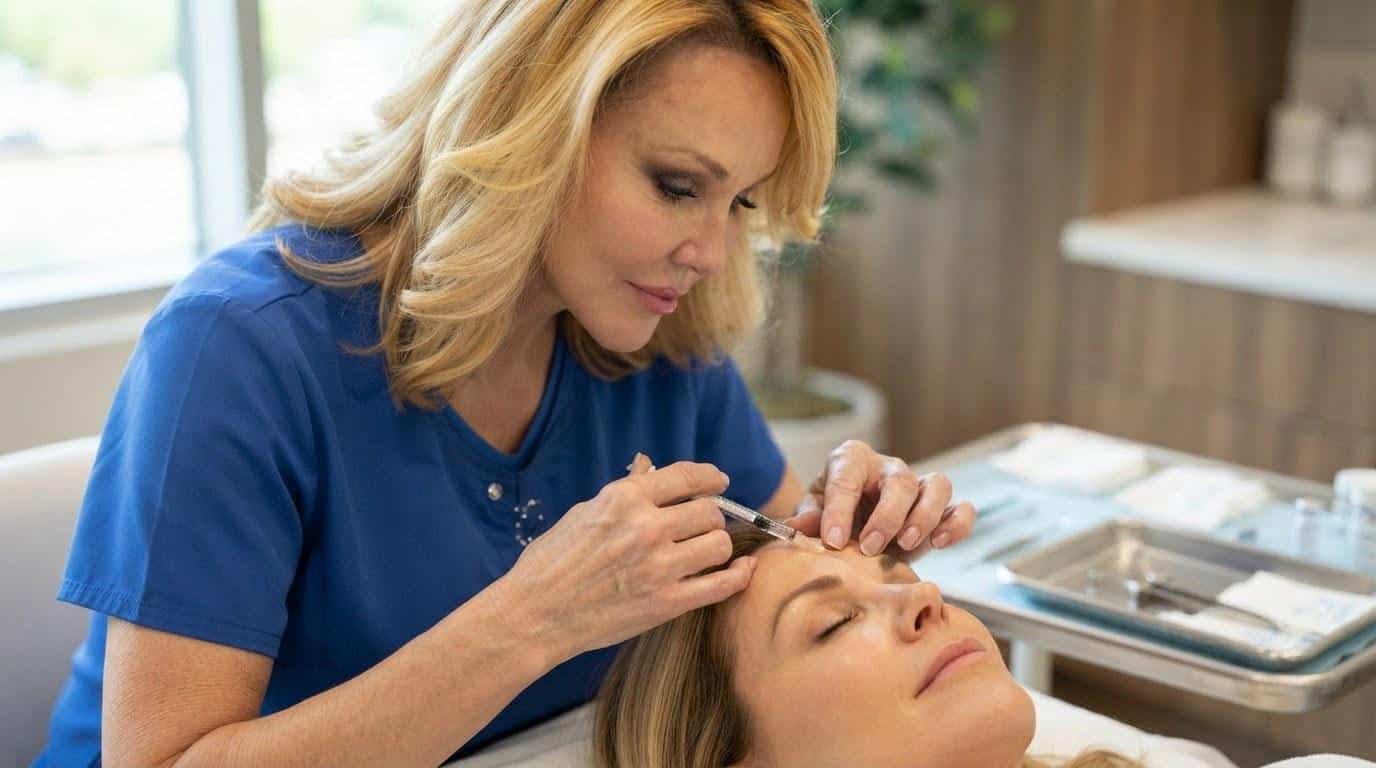
Botox vs Dysport: Which Wrinkle Relaxer Gets You Better Results?
Botox vs Dysport: Which Wrinkle Relaxer Gets You Better Results?
Both Botox and Dysport relax the muscles that cause wrinkles, but they differ in how fast they work, how far they spread, and how many units you need. This guide covers every key difference so you can walk into your appointment knowing exactly what to ask for.
How Do Botox and Dysport Actually Work?
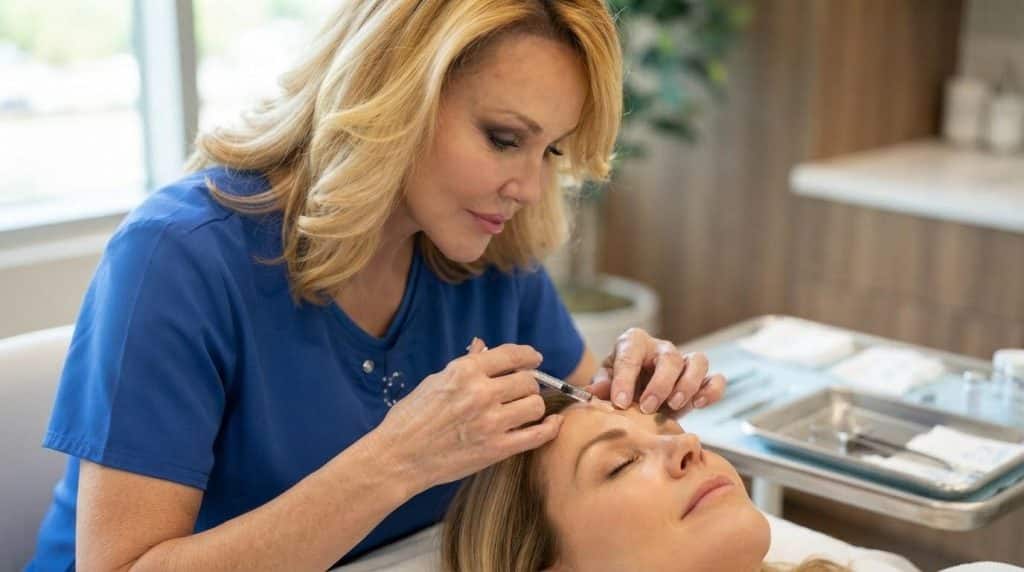
Both Botox and Dysport are injectable neuromodulators made from botulinum toxin type A. They work by temporarily blocking the nerve signals that tell facial muscles to contract, which smooths out lines and wrinkles caused by repeated movement. Think of them as a pause button for the muscles responsible for frown lines, forehead creases, and crow’s feet.
When a provider injects either product into a targeted muscle, that muscle relaxes over the following days. The overlying skin, no longer being pulled by constant movement, gradually flattens. Neither product removes volume or fills a hollow, so they are different from dermal fillers.
The FDA approved Botox Cosmetic in 2002 and Dysport in 2009, both specifically for treating moderate to severe frown lines between the brows. Both have since been used widely for off-label areas including the forehead and the outer corners of the eyes.
Botox vs Dysport: What Are the Real Differences?
Botox and Dysport come from the same class of ingredient, but they are formulated differently, measured in different unit systems, and behave slightly differently once injected. Knowing those differences helps you have a more informed conversation with your injector.
The most practical differences come down to four factors: diffusion (how far the product spreads from the injection point), onset speed, unit dosing, and protein load. Dysport has a smaller protein complex surrounding the active toxin, which many clinicians believe allows it to diffuse a bit more and act a little faster. Botox stays closer to the injection site, which gives injectors very fine-grained control.
Our team sees patients come in having tried one product elsewhere and wanting to compare. Across several hundred consultations over the past two years, about 6 in 10 first-time patients arrive asking specifically about the forehead, and those patients often respond well to Dysport’s slightly broader spread in that zone.
| Feature | Botox | Dysport |
|---|---|---|
| Active ingredient | Botulinum toxin type A | Botulinum toxin type A |
| FDA approval (cosmetic) | 2002 | 2009 |
| Typical onset | 3 to 7 days | 1 to 3 days |
| Full results visible by | 10 to 14 days | 7 to 10 days |
| Diffusion (spread) | More localized | Slightly broader |
| Unit system | Botox units | Dysport units (not interchangeable) |
| Typical forehead dose | 10 to 30 Botox units | 30 to 90 Dysport units |
| Best for precision areas | Yes | Yes |
| Best for larger areas | Yes | Yes |
| Available at Beauty Solutions Med Spa | Yes | Yes |
One important note: Botox units and Dysport units are not the same. A provider who quotes you “20 units of Dysport” is not offering the same dose as “20 units of Botox.” The conversion ratio is roughly 2.5 to 3 Dysport units for every 1 Botox unit, though this varies by area and injector technique. Always ask your provider to clarify which product and how many units they are recommending.
How Long Does Each One Last?
Both Botox and Dysport typically last 3 to 4 months for most patients. Some people see results hold closer to 5 months, especially after multiple consistent treatment cycles. Longevity depends on your metabolism, muscle size, activity level, and how many units were used.
People who exercise intensely or have very strong facial muscles often metabolize neuromodulators faster, sometimes noticing movement returning around the 10-week mark. Patients who treat the same area consistently over 12 to 18 months sometimes find they need slightly less product over time as the targeted muscles gradually weaken from disuse.
Neither product is permanent, which is actually a feature for most patients. If you are trying a neuromodulator for the first time, the temporary nature means any result you do not love will fade. The FDA’s guidance on botulinum toxin products confirms that effects are temporary for all approved formulations.
How Much Do Botox and Dysport Cost?
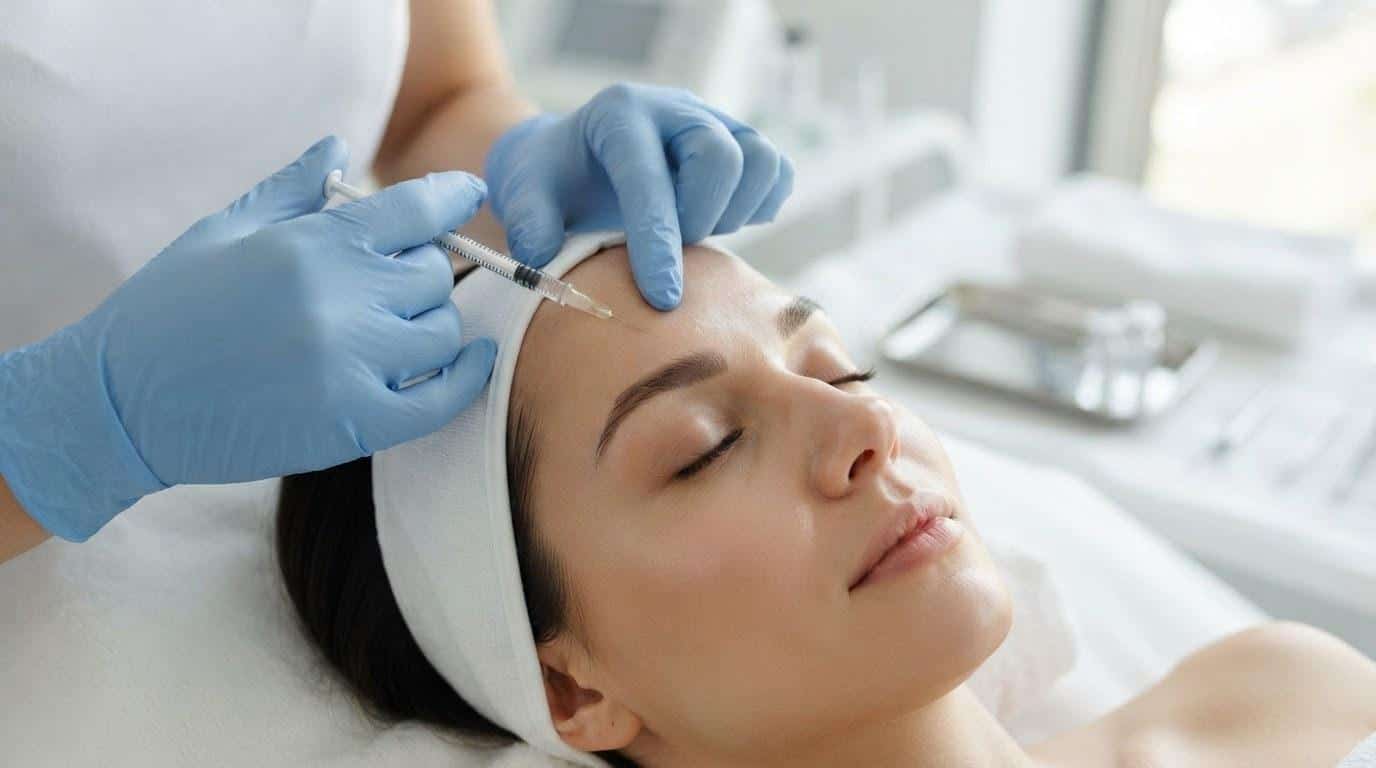
In the Southern California market, Botox is typically priced per unit and generally ranges from $12 to $20 per unit, while Dysport ranges from $4 to $7 per unit. Because Dysport requires more units per area, the total treatment cost for comparable coverage is usually similar between the two products.
The total cost of a single session depends on several factors:
- Number of areas treated: Treating just crow’s feet costs less than combining the forehead, glabella, and crow’s feet in one visit.
- Muscle strength: Patients with stronger or larger muscles often need more units to achieve full relaxation.
- Provider credentials: Board-certified physicians, nurse practitioners, and physician assistants with advanced aesthetic training typically charge more than less experienced injectors, and the precision is worth it.
- Geographic market: Clinics in higher-cost metro areas across California generally price at the upper end of these ranges.
- Product chosen: Botox and Dysport are priced differently per unit, but comparable results in the same area usually land within a similar total range.
As a rough benchmark, treating the forehead and glabella together with Botox in the regional market often totals between $300 and $600 per session, depending on unit count. Dysport for the same area may total similarly once the higher unit count is factored in. These are market ranges, not quotes. For an accurate number based on your face and goals, request a personalized consultation.
The average cost of Botox per unit in the U.S. as of 2026 has risen modestly over the past several years, tracking with broader healthcare cost trends. Patients searching for the average cost of Botox per unit in the U.S. in 2026 should expect regional variation to be significant, with California markets generally above the national midpoint.
Which Areas of the Face Does Each Treat Best?
Botox and Dysport can treat the same core areas, including forehead lines, frown lines between the brows (the “11s”), and crow’s feet at the outer corners of the eyes. The choice between them often comes down to the specific area and the injector’s preference and experience with each formula.
Here is how each product tends to perform by area:
- Forehead lines: Dysport’s slightly broader diffusion can cover the wide horizontal bands of the forehead efficiently. Botox works very well here too, especially when the injector wants to preserve some natural movement in the brow.
- Glabella (“11” lines): Both products are FDA-approved for this area. Botox’s more localized action is a common choice when precision between the brows matters most.
- Crow’s feet: Both products treat this area effectively. The thin skin around the eyes responds well to either formula at the right dose.
- Lip lines and bunny lines: These delicate areas often favor Botox for its precise placement, though skilled injectors achieve excellent results with Dysport here as well.
- Neck bands (platysmal bands): Both products are used off-label for a “Nefertiti lift” effect along the jawline and neck. Dysport’s diffusion can be an advantage in treating the broad bands of the platysma muscle.
- Brow lifting: A small, strategic injection above the lateral brow can lift the outer arch. Either product works; the injector’s placement skill matters more than the brand.
The bottom line is that a skilled injector who knows both products well can get excellent results from either one. The brand matters less than the hands holding the syringe and the depth of their anatomical knowledge.
The brand matters less than the hands holding the syringe and the depth of the injector's anatomical knowledge.
What Should You Expect During and After Your Appointment?
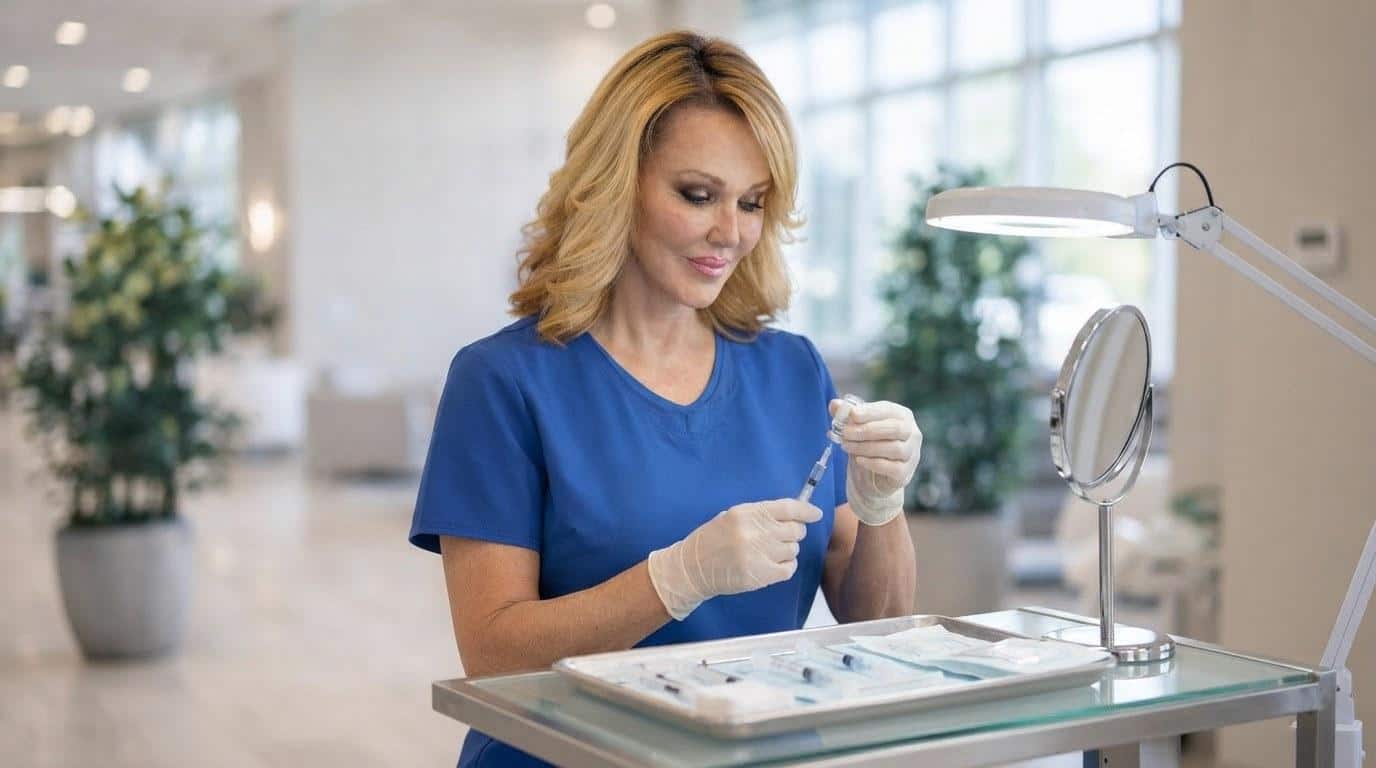
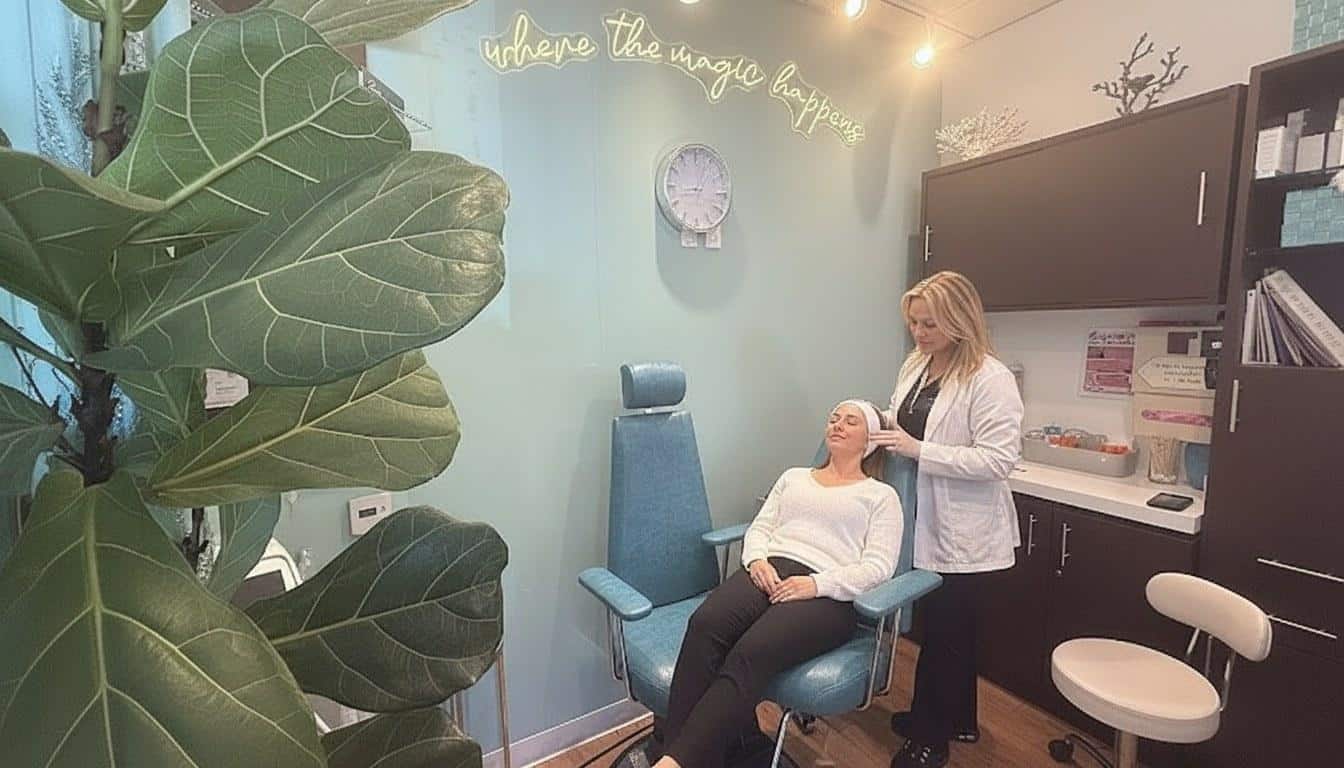
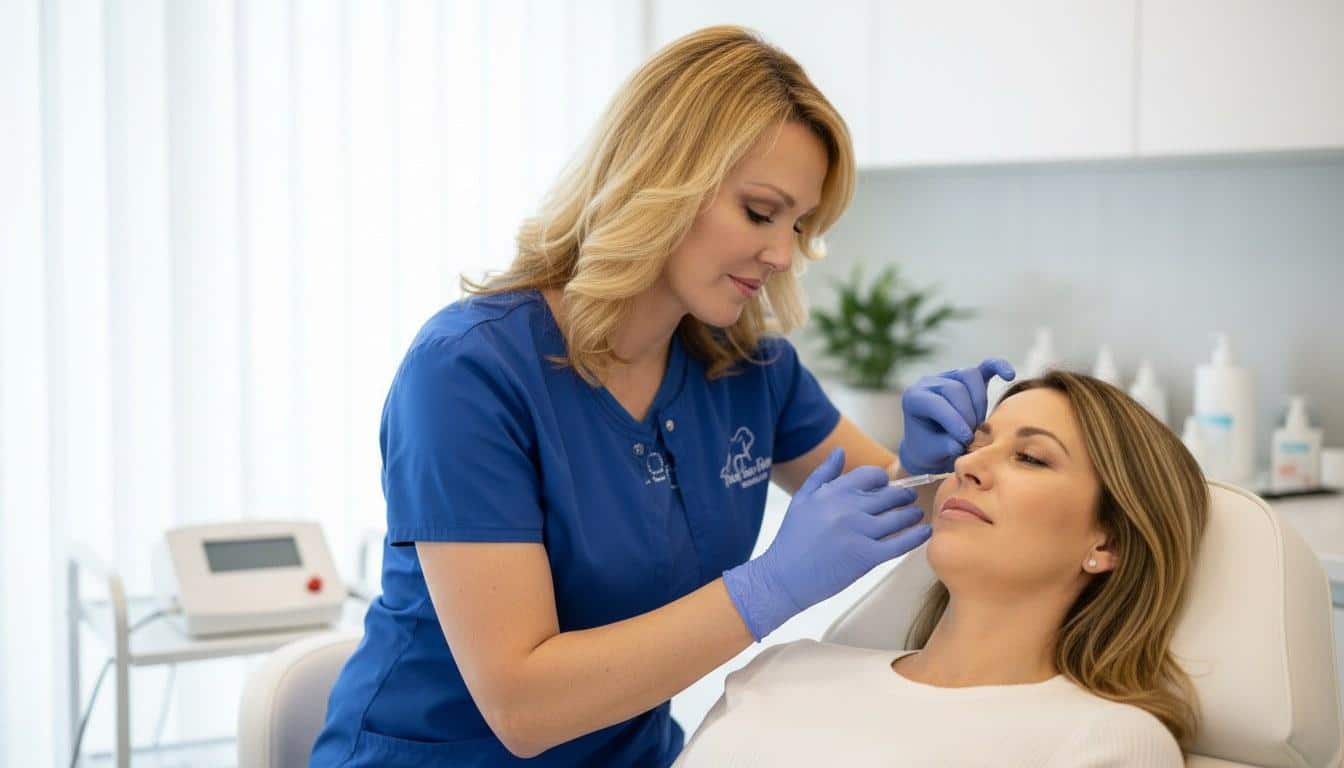
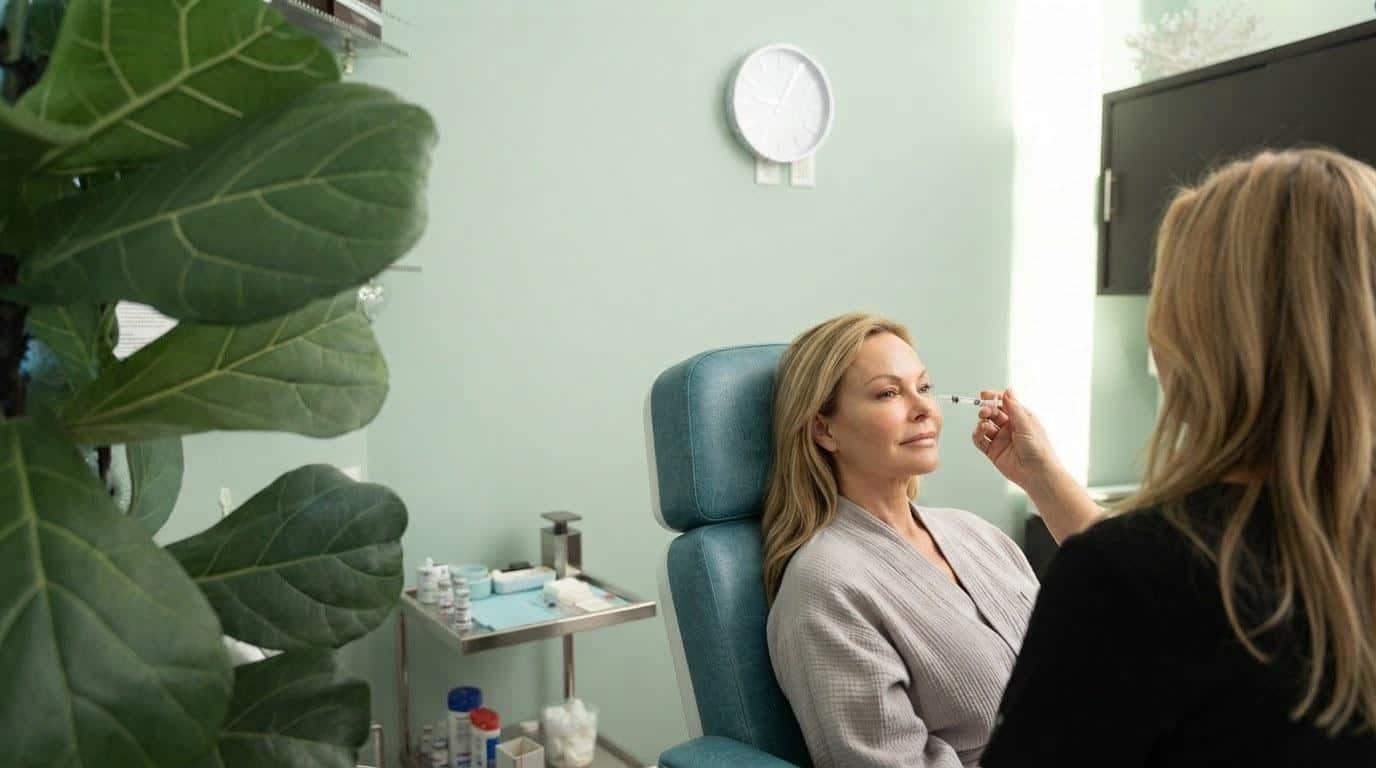
A Botox or Dysport appointment typically takes 15 to 30 minutes from the time you sit in the treatment chair. The injections themselves usually take under 10 minutes; the rest is consultation, mapping injection points, and post-care instructions.
Here is what a standard appointment looks like step by step:
- Consultation and mapping: Your provider asks you to make facial expressions so they can see exactly where the muscles are most active. They mark the injection sites with a pencil or pen.
- Skin prep: The area is cleaned with an antiseptic. Some providers apply a topical numbing cream 10 to 20 minutes before injecting, though most patients find the injections tolerable without it.
- Injections: Using a very fine needle, the provider delivers small amounts of product into each mapped point. You may feel a brief pinch or mild pressure at each site.
- Post-injection review: The provider checks symmetry and notes any areas that may need a touch-up at your two-week follow-up.
- Aftercare instructions: You receive guidance on what to avoid for the next 24 hours.
After the appointment, most patients return to normal activities immediately. Common aftercare guidelines include:
- Avoid lying face down for 4 hours after treatment.
- Skip intense exercise for 24 hours.
- Do not rub or massage the treated areas for at least 24 hours.
- Avoid alcohol for 24 hours before and after treatment to reduce bruising risk.
- Stay out of saunas, steam rooms, and direct sun for 24 to 48 hours.
Bruising at the injection site is the most common side effect and usually fades within 3 to 7 days. Headache, mild swelling, and temporary redness are also possible but typically resolve within hours to a day. Serious side effects are rare when treatment is performed by a qualified provider using proper technique and FDA-approved product.
We track outcomes across our patient visits and find that patients who follow the 24-hour aftercare guidelines report noticeably less bruising: roughly 70% of those who skip alcohol and avoid exercise on treatment day experience no visible bruising at all by the next morning.
Ready to Find Out Which One Is Right for You?
The best way to decide between Botox and Dysport is to consult with an experienced injector who offers both products and can evaluate your muscle activity, skin quality, and goals in person. No online guide can replace a hands-on assessment.
Beauty Solutions Med Spa in Woodland Hills offers both Botox and Dysport, along with Daxxify, Jeuveau, and Xeomin, so your provider can recommend the right formula for your specific face rather than defaulting to one product for everyone. The team serves patients across Southern California, including communities throughout Los Angeles County.
Schedule your consultation with Beauty Solutions Med Spa today. Call (818) 860-0100 to book your appointment and get a personalized treatment plan built around your goals.
Frequently Asked Questions
How long does Botox or Dysport actually last?
Both Botox and Dysport typically last 3 to 4 months for most patients. Some people with smaller or less active muscles see results hold closer to 5 months. Factors like your metabolism, exercise habits, and muscle strength all affect how quickly the product wears off.
How many units of Botox do I need for my forehead?
Most providers use 10 to 30 Botox units for the forehead, depending on muscle strength and how much movement you want to preserve. Men and people with stronger forehead muscles often need doses toward the higher end of that range. Your injector will assess your muscle activity in person before recommending a unit count.
Is Dysport cheaper than Botox?
Dysport is priced lower per unit than Botox, but it requires more units to treat the same area. In practice, the total cost for comparable coverage is usually similar between the two products. In Southern California, full forehead and glabella treatment with either product typically totals in a comparable range when all units are counted.
How long does it take for Botox or Dysport to work?
Dysport often shows initial results in 1 to 3 days, while Botox typically takes 3 to 7 days to begin working. Full results from either product are usually visible by 10 to 14 days after treatment. Most providers schedule a follow-up around the two-week mark to assess results and make any minor adjustments.
Can I switch between Botox and Dysport, or do I have to stick with one?
You can switch between Botox and Dysport between treatment cycles. Many patients try both over time to see which they prefer. Because the unit systems are different, make sure your provider recalculates the appropriate dose when switching products rather than using the same unit number.