

How Often Should You Get Botox Touch-Ups?
How Often Should You Get Botox Touch-Ups?
Wondering how often to get Botox touch-ups? Here's a realistic look at timing, why it varies from person to person, and the signs it's time to book your next appointment.
Why Does Botox Maintenance Matter?
Botox works best when treated as an ongoing maintenance routine, not a one-time fix. Climate plays a real role in how long results hold — patients in hot, dry, high-UV environments face more pressure on their results than those in cooler, cloudier regions. Mediterranean-climate zones with intense summer UV exposure and seasonal dry wind events that strip moisture from skin fast are particularly demanding on neuromodulator results.
Areas that regularly hit UV index levels of 8 to 11 during summer months see accelerated muscle activity that can break down Botox faster. Patients who spend significant time outdoors — hiking, exercising, or simply commuting — need to factor that exposure into their touch-up schedule.
Staying on a consistent schedule keeps results looking natural rather than letting them fade fully before returning for treatment. Maintenance timing is the single biggest factor most patients overlook.
How Long Does Botox Actually Last?
Most Botox injections last between 3 and 4 months. First-time patients sometimes see results fade closer to 2.5 months, while long-term patients on a regular schedule often stretch results to 4 months or slightly beyond. This happens because consistent treatment over time trains the targeted muscles to stay relaxed longer.
The science behind this is straightforward. Botox (onabotulinumtoxinA) works by temporarily blocking nerve signals to specific facial muscles, reducing contractions that cause lines. As those nerve connections gradually regenerate over roughly 90 to 120 days, muscle movement returns and lines begin to reappear.
A clear pattern emerges across patient populations: those who exercise intensely five or more days per week tend to metabolize Botox about 2 to 3 weeks faster than less active patients, likely due to higher metabolic rate and increased circulation. Highly active patients should factor that into their scheduling.
Botox results also vary by treatment area. Forehead lines and crow’s feet typically last the full 3 to 4 months. Finer areas around the lips may need attention closer to the 3-month mark.
What Are the Signs You Need a Botox Touch-Up?
The clearest sign you need a Botox touch-up is the return of muscle movement in treated areas, usually visible as lines reappearing when you make expressions. Most patients notice this between weeks 10 and 14 after their last appointment. Catching it early rather than waiting for full line return keeps results looking consistent.
Watch for these specific warning signs between appointments:
- Lines visible at rest: If you see forehead creases or crow’s feet even when your face is relaxed, the Botox has fully worn off in that zone.
- Brow heaviness returning: A subtle drooping or heaviness above the eyes often signals that the brow-lifting effect has faded.
- Squinting discomfort in bright light: High UV environments accelerate this. If you find yourself squinting and feeling tightness around the eyes again, the muscle block has worn down.
- Forehead tension or headaches: Some patients notice tension headaches returning as the frontalis muscle regains full movement.
- Asymmetry between sides: If one side of the forehead or eye area looks different from the other, uneven wear may need a small corrective touch-up.
- Deeper lines than before treatment: This is rare but signals you have waited too long and the muscles have been fully active for weeks.
The ideal time to book your next visit is when you first notice expression lines returning, not after they are fully back. Scheduling at that point — typically around the 3-month mark — keeps you in the maintenance window rather than starting over from scratch.
What Should You Do Each Season to Protect Your Botox Results?
Each season brings specific conditions that affect how long Botox results hold. Adjusting your skincare and scheduling habits by season helps you get the most from every treatment.
Spring (March through May)
- UV levels climb quickly by late March. Start daily SPF 30 or higher use to reduce UV-driven muscle hyperactivity.
- Book your spring appointment early in the season before summer heat ramps up metabolism.
- Add a hydrating serum to your routine as mornings give way to drier afternoons.
Summer (June through September)
- Heat and outdoor activity accelerate Botox breakdown. Consider scheduling your summer touch-up at the 10-to-11-week mark rather than waiting the full 3 months.
- Stay hydrated. Dehydration stresses skin and can make lines more visible even when Botox is still partially active.
- Avoid prolonged direct sun on treated areas for at least 24 hours after injections.
- Wear wide-brim hats during peak UV hours (10 a.m. to 4 p.m.) to reduce squinting and preserve crow’s-feet results.
Fall (October through November)
- Seasonal dry wind events can drop humidity dramatically, drying out skin and making fine lines more noticeable. A fall touch-up before wind season peaks helps maintain a smooth baseline.
- Add a richer moisturizer to your routine to offset drying conditions.
- Fall is a popular season for Botox bookings — schedule early to secure your preferred appointment slot.
Winter (December through February)
- Mild winters are generally the easiest season for Botox maintenance. Cooler temperatures and lower UV mean results may last slightly longer.
- Use this season to establish your baseline and set a consistent 3-to-4-month schedule heading into spring.
- Consider pairing Botox with dermal fillers if volume loss from the dry fall season needs addressing.
What Does a Professional Botox Treatment Visit Include?
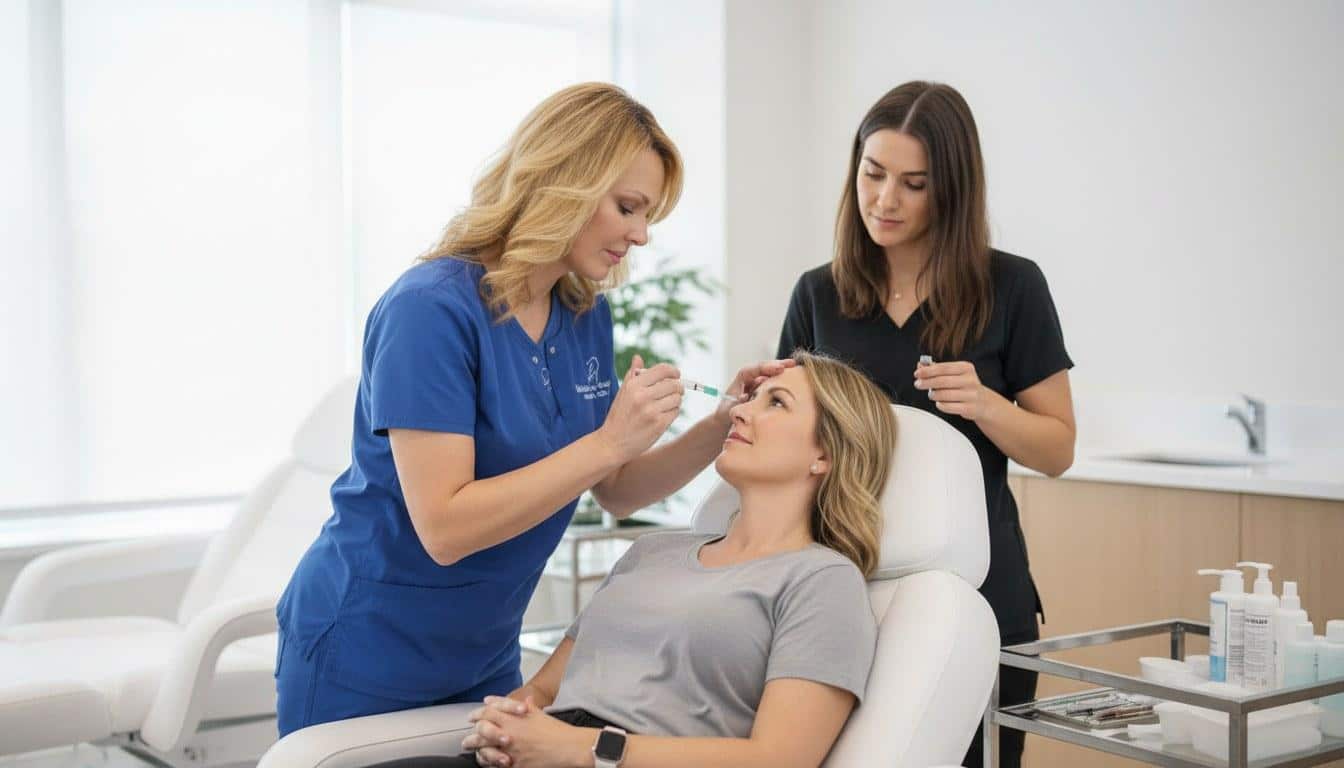
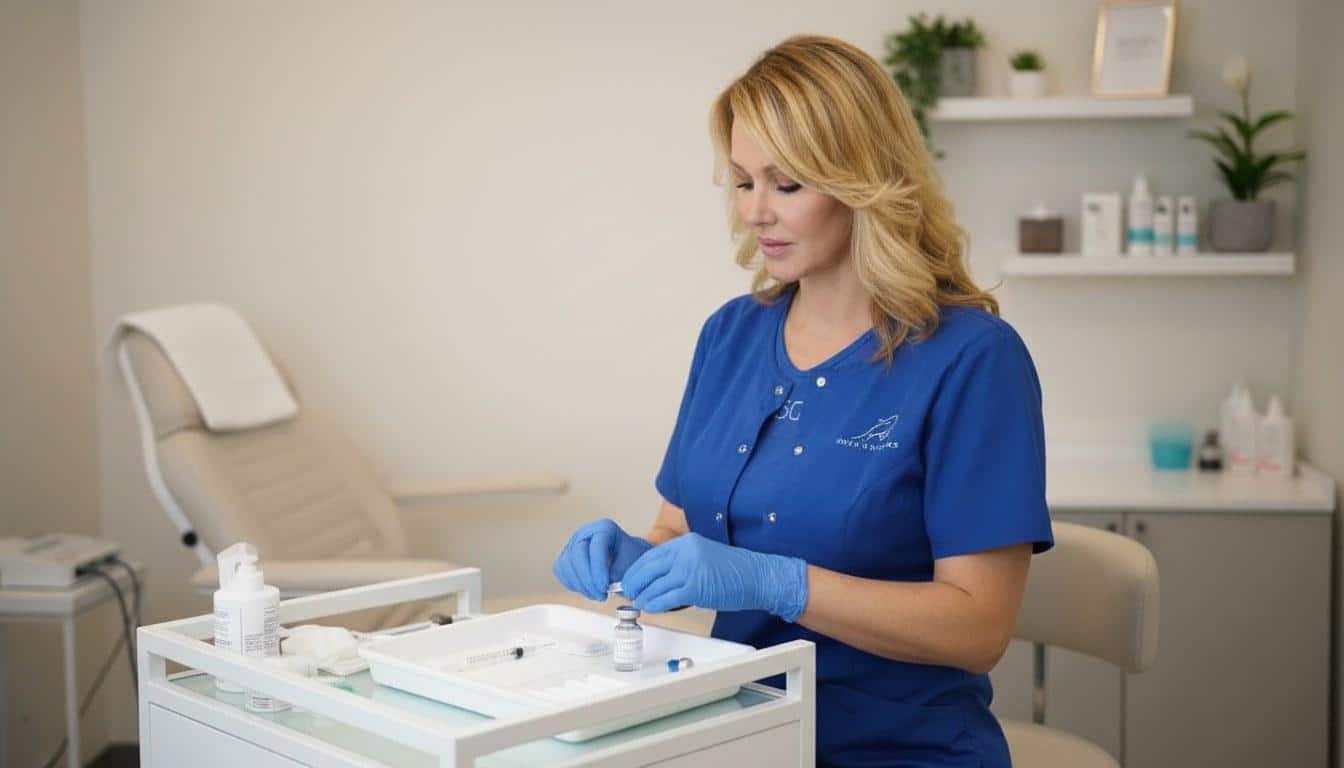
A standard Botox treatment visit at a qualified med spa takes roughly 30 to 45 minutes from consultation to completion. The actual injection portion is typically 10 to 15 minutes. The rest of the appointment covers a facial assessment, muscle mapping, and aftercare review.
Here is what a complete professional visit covers:
- Facial assessment: The injector evaluates your muscle movement, skin quality, and how your previous results held, noting any areas of uneven wear.
- Unit planning: The number of Botox units is mapped to your anatomy. Forehead lines typically require 10 to 30 units, while crow’s feet commonly use 6 to 15 units per side, depending on muscle strength.
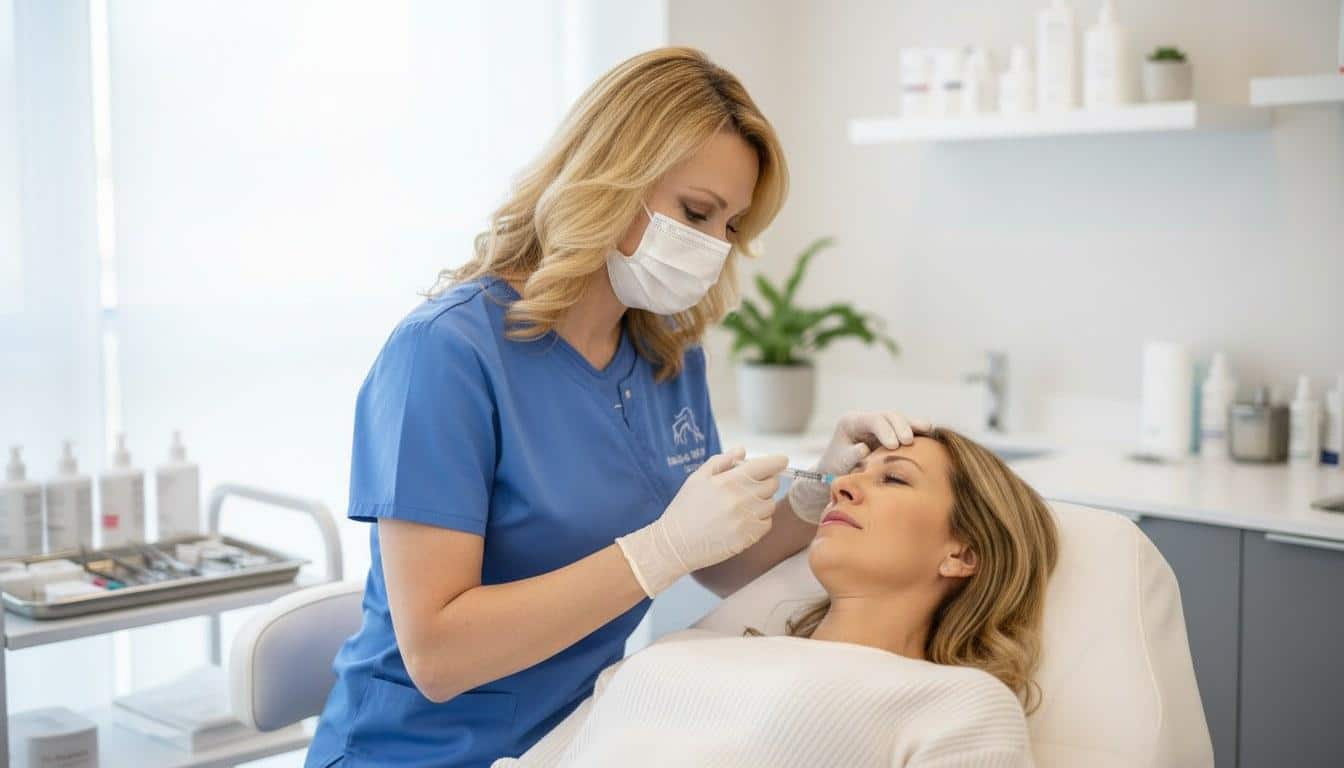
- Injection technique: A fine needle delivers precise amounts into targeted muscle points. Most patients describe the sensation as a small pinch lasting under 2 seconds per injection site.
- Results timeline review: You will see initial softening within 3 to 5 days. Full results are visible by day 10 to 14 after treatment.
- Aftercare instructions: Avoid lying down for 4 hours, skip intense exercise for 24 hours, and stay out of direct high heat (such as a sauna) for 48 hours.
- Next-appointment scheduling: A qualified provider will book your follow-up before you leave, keeping you on a consistent maintenance cycle.
Patients who schedule their next visit before leaving the office are substantially more likely to stay on a consistent 3-to-4-month cycle compared to those who wait to call back later. Consistency is what delivers the cumulative, natural-looking improvement most patients are after.
Patients who schedule their next visit before leaving the office are substantially more likely to stay on a consistent 3-to-4-month cycle.
How Much Does Botox Cost?
Botox treatment is typically priced either per unit or per area. Per-unit pricing in most markets generally ranges from roughly $12 to $20 per unit, depending on provider credentials, facility type, and the complexity of the treatment plan.
A full forehead and crow’s-feet treatment commonly involves 30 to 60 total units, which puts a typical full-face maintenance session in the range of $350 to $900. These figures depend on scope, muscle mass, and the number of areas treated.
Factors that move the price within that range include:
- Number of treatment areas: Forehead only versus forehead plus crow’s feet plus brow lift versus a full upper-face treatment each require different unit counts.
- Muscle strength: Stronger, more active muscles need more units to achieve the same result. Highly active patients often need slightly more units than less active patients.
- Provider qualifications: A board-certified injector or licensed medical professional commands a different rate than a less credentialed provider.
- Facility type: A dedicated medical spa with full consultation and follow-up care reflects a different value than a quick-service setting.
Some providers also offer loyalty pricing for patients on a consistent maintenance schedule. Ask about that option when you book. For an accurate quote based on your specific anatomy and goals, request a personalized consultation with a qualified provider.
Botox Maintenance: Key Takeaways
Staying on a consistent 3-to-4-month schedule is the most effective way to keep Botox results looking smooth and natural year-round. Hot, dry, high-UV climates and active lifestyles make proactive scheduling more important than in milder regions.
The ideal time to return is when expression lines are just beginning to reappear — not after they have fully returned. Booking at that point allows your provider to fine-tune rather than start from zero, which typically requires fewer units and delivers more consistent outcomes over time.
Frequently Asked Questions
How long does Botox usually last?
Botox typically lasts 3 to 4 months. Dry heat, high UV levels, and active outdoor lifestyles can push results toward the shorter end of that range. Patients who stay on a consistent maintenance schedule often find their results gradually last longer over time.
How many units of Botox do I need for my forehead?
Most forehead treatments require between 10 and 30 units of Botox, depending on how strong your forehead muscles are and how deep your lines are. Adding crow’s feet treatment typically adds another 6 to 15 units per side. Your injector will assess your muscle movement during the consultation and recommend the right unit count for your anatomy.
How long does it take for Botox to work after the injections?
You will usually see the first signs of softening within 3 to 5 days after your Botox injections. Full results are visible by day 10 to 14 as the neuromodulator fully takes effect in the treated muscles. If you have an event coming up, plan your appointment at least 2 weeks in advance to see the complete outcome.
Is Botox safe to get regularly every few months?
Yes, regular Botox maintenance every 3 to 4 months is considered safe for most healthy adults and is the standard approach recommended by most medical providers. Consistent treatment over time can actually reduce the number of units needed per session as targeted muscles gradually weaken from reduced use. Always receive treatment from a licensed medical professional to ensure proper dosing and technique.
What is the difference between Botox and dermal fillers?
Botox relaxes specific facial muscles to smooth dynamic lines caused by expression, such as forehead lines and crow’s feet. Dermal fillers add volume to areas that have lost fullness over time, like the cheeks, lips, or under-eye hollows. Many patients use both treatments together for a more complete result. A qualified provider can help you determine which approach fits your goals.