
How Many Units of Botox Do You Actually Need? A Realistic 2026 Pricing Guide
How Many Units of Botox Do You Actually Need? A Realistic 2026 Pricing Guide
How many units of Botox do you really need? A realistic 2026 guide to unit counts by treatment area, pricing ranges, and what drives the total cost.
How Many Units of Botox Do You Need by Treatment Area?
The number of units varies significantly by location on the face, typically ranging from 10 to 30 units per zone. Most full-face treatment plans land between 20 and 64 units total. The table below shows typical unit ranges for the most common Botox treatment areas, based on published clinical guidelines and standard injector practice.
| Treatment Area | Typical Unit Range | Notes |
|---|---|---|
| Forehead lines | 10 to 30 units | More units for stronger frontalis muscles |
| Glabellar lines (between brows) | 20 to 40 units | FDA-approved range; one of the most treated zones |
| Crow’s feet (each side) | 5 to 15 units per side | 10 to 30 units total for both sides |
| Brow lift | 2 to 5 units | Small doses placed precisely above the brow |
| Bunny lines (nose) | 5 to 10 units | Often added on to other treatments |
| Lip lines or lip flip | 4 to 8 units | Very small amounts; placement is critical |
| Chin dimpling | 5 to 10 units | Relaxes mentalis muscle |
| Jawline / masseter (each side) | 15 to 30 units per side | Higher doses for teeth grinders |
| Neck bands (platysma) | 25 to 50 units | Wide range based on band severity |
These are market-standard ranges used across the industry. Your actual unit count will be confirmed during a face-to-face consultation where your injector watches you make expressions and assesses muscle strength in real time.
How Does Botox Actually Work?
Botox is a purified form of botulinum toxin type A that temporarily blocks nerve signals to targeted muscles, reducing their ability to contract and form wrinkles. When a muscle cannot fully contract, the skin above it smooths out. The effect is not permanent because nerve endings gradually regrow their signaling ability over 3 to 6 months.
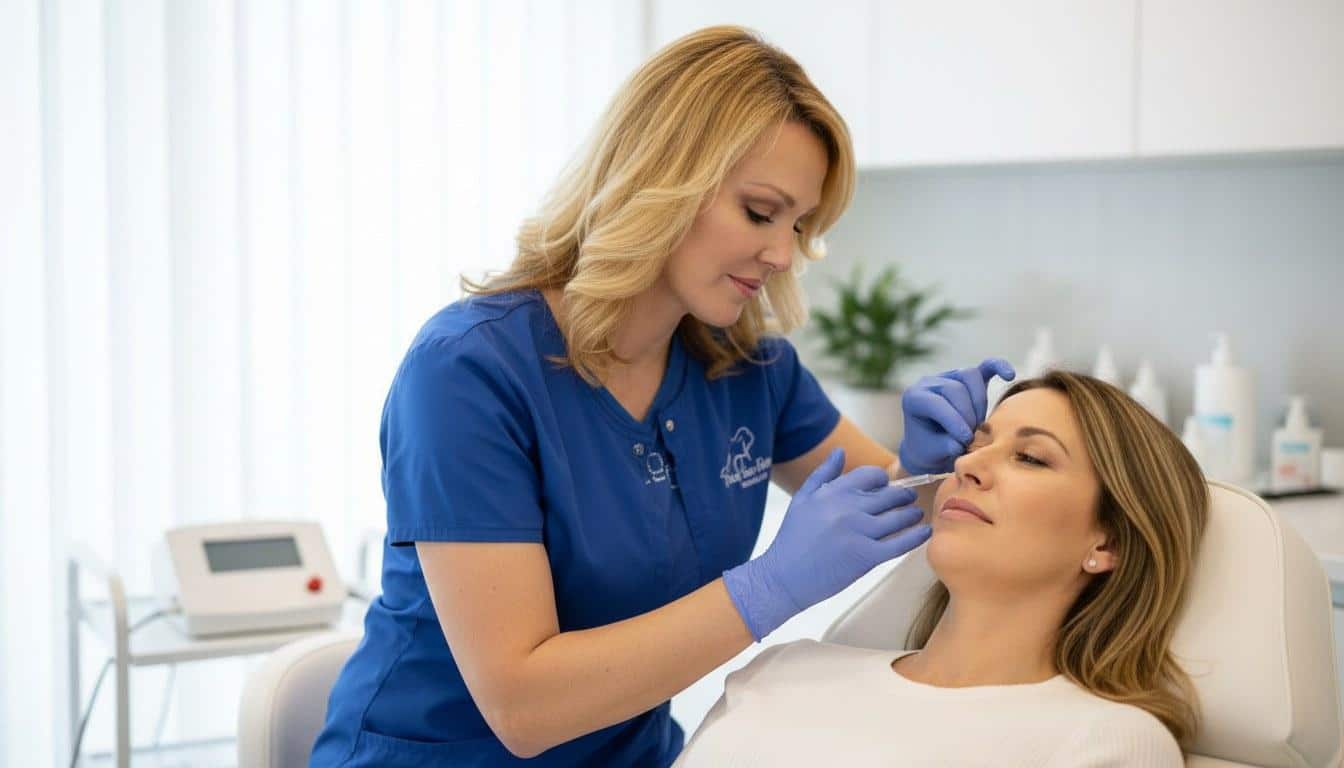
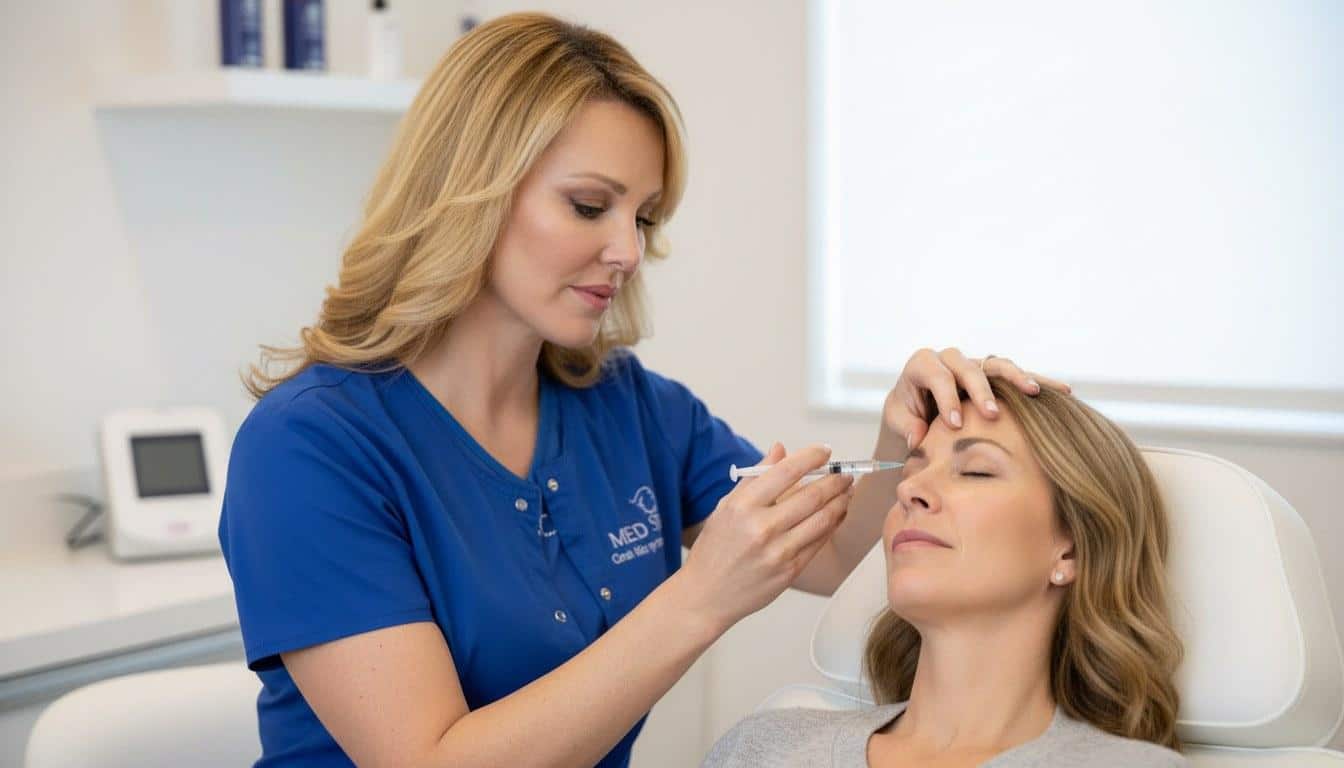
Botox injections are placed with a very fine needle directly into the muscle. Most patients describe the sensation as a small pinch. A full treatment session typically takes 10 to 20 minutes, depending on how many zones are included.
Results are not immediate. Most people begin to notice softening in 3 to 5 days, with the full effect visible at the 2-week mark. The FDA has approved Botox Cosmetic for several specific facial areas, including the glabellar lines, forehead, and crow’s feet in adults.
People who spend significant time outdoors and in high-UV environments often present with more active crow’s feet muscles than those with minimal outdoor exposure. Chronic squinting — whether from sun, wind, or dry air — strengthens the orbicularis oculi muscle over time, and a more active muscle typically requires 2 to 4 additional units per side in that zone compared to patients with lower outdoor exposure histories.
What Does Botox Cost?
Across most markets in the United States, Botox injections range from $10 to $25 per unit, with the national average commonly cited between $12 and $20 per unit depending on the provider’s credentials, the geographic market, and the scope of treatment. Some clinics price by the area treated rather than by the unit, which can make comparison shopping harder.
Here is how typical costs break down by treatment zone at mid-range market rates:
- Forehead only: Generally $120 to $600, depending on unit count and price per unit.
- Glabellar lines (11s): Typically $240 to $800 for the full treatment zone.
- Crow’s feet (both sides): Usually $120 to $600 total.
- Full upper face (forehead + 11s + crow’s feet): Commonly $480 to $1,200.
- Masseter / jawline: Often $360 to $1,200 per session given the higher unit counts involved.
Factors that move pricing up or down include the injector’s level of training and licensure, the brand of neurotoxin used — Botox, Dysport, Xeomin, and Daxxify are all FDA-approved options available at many med spas — and whether a consultation fee is charged separately or bundled into the first treatment visit.
Botox is a cosmetic procedure and is not covered by health insurance, making it an out-of-pocket expense in virtually all cases. Some providers offer membership plans or package pricing that reduce the per-unit cost for patients who commit to regular maintenance visits. A personalized cost estimate requires a consultation where your injector can assess your anatomy and goals directly.
What Factors Change How Many Units You Need?
Muscle mass, age, skin thickness, and prior Botox history are the four biggest variables that shift your unit count up or down. No two faces are identical, which is why published unit ranges span such a wide window.
- Muscle strength: Larger or more active muscles require more units to achieve the same degree of relaxation. Men typically need 20 to 30% more units than women in the same treatment zone because of greater muscle mass.
- Treatment area size: A wider forehead or a more prominent masseter muscle simply has more surface area to cover, requiring more injection points and higher total units.
- Desired result: A subtle, movement-preserving outcome uses fewer units than a fully relaxed, maximally smooth appearance. Many patients prefer a middle ground that softens lines while preserving natural expression.
- Age and skin laxity: Deeper static lines — lines present even when the face is at rest — may require more units, or may also benefit from a dermal filler alongside Botox injections for optimal correction.
- Prior treatment history: First-time patients often start at the lower end of the published range to gauge their individual response. Repeat patients typically have a well-established unit count that delivers consistent results for them.
- Metabolism: Some individuals metabolize neurotoxins faster than average, meaning their results fade closer to the 3-month mark rather than the 4-to-6-month range. Higher-metabolism patients may benefit from slightly higher unit counts or more frequent maintenance intervals.
- Sun and environmental exposure history: Chronic squinting from sun exposure or dry, windy conditions strengthens the muscles around the eyes over time. Patients with high cumulative outdoor exposure often require more units in the crow’s feet zone than the published baseline suggests.
Determining how many units of Botox you need is not something a chart alone can fully answer. A skilled injector will assess your dynamic movement — watching you raise your brows, squint, frown, and smile — alongside your skin quality and stated goals before recommending a specific unit count.
Neurotoxin Options: Botox vs. Alternatives
Botox is the most recognized brand name, but it is one of several FDA-approved botulinum toxin type A products available at med spas today. Understanding the differences helps patients have more informed conversations with their injector.
- Botox Cosmetic (onabotulinumtoxinA): The original and most extensively studied product. FDA-approved for glabellar lines, forehead lines, and crow’s feet. Unit dosing is the standard against which other products are compared.
- Dysport (abobotulinumtoxinA): Tends to diffuse slightly more than Botox, which can be advantageous for larger treatment areas like the forehead. Dosed in different units — approximately 2.5 to 3 Dysport units equal 1 Botox unit — so direct unit comparisons between brands are not straightforward.
- Xeomin (incobotulinumtoxinA): A “naked” neurotoxin without accessory proteins, which some providers prefer for patients who may have developed resistance to other formulations. Dosing is roughly equivalent to Botox unit for unit.
- Daxxify (daxibotulinumtoxinA-lanm): A newer formulation with a proprietary peptide excipient. Clinical trials have shown duration extending to 6 months or longer in many patients, compared to the 3-to-4-month average for traditional Botox. Dosing is similar to Botox by unit.
Your qualified provider will recommend the most appropriate product based on your anatomy, treatment goals, and response history. Switching between brands should always be discussed with your injector rather than assumed to be a direct unit-for-unit substitution.
How Long Does Botox Last and When Should You Come Back?
Most Botox treatments last 3 to 6 months, with the average patient returning every 3 to 4 months to maintain results. First-time patients often see results fade closer to the 3-month mark as their muscles gradually regain activity after the initial treatment.
According to the American Academy of Dermatology, consistent treatment over time can train muscles to contract less forcefully. This means some long-term patients find they need slightly fewer units per session after two or more years of regular Botox injections, as the underlying muscles atrophy modestly from sustained reduced use.
Timing maintenance appointments thoughtfully can help preserve results through periods of higher environmental stress on the skin. Dry seasonal air — whether from winter heating systems, arid climates, or wind-heavy weather patterns — can desiccate the skin and make fine lines more apparent. Scheduling a Botox treatment ahead of these periods, and again before peak UV seasons, keeps results looking consistent year-round.
Patients who space appointments at 4-month intervals generally maintain a more stable baseline than those who wait until lines fully return. Allowing lines to fully re-establish between treatments often requires resetting with a slightly higher unit count to achieve the same level of correction, which can increase the overall cost of maintenance over time.
What to Expect at Your First Botox Appointment
A well-run first Botox appointment follows a consistent structure: consultation, assessment, treatment, and aftercare guidance. Knowing what to expect reduces anxiety and helps you ask better questions.
- Consultation: Your injector will review your medical history, current medications, and any prior cosmetic treatments. Certain medications — including blood thinners, some supplements like fish oil and vitamin E, and NSAIDs — can increase bruising risk and may be recommended to pause before treatment.
- Dynamic assessment: The injector will ask you to make a series of facial expressions — raising your brows, squinting, frowning, smiling — to observe exactly where and how strongly your muscles contract. This is the most important step in determining unit placement and count.
- Treatment: Injections are administered with a very fine-gauge needle. Most patients tolerate the procedure without topical anesthetic, though some providers offer a numbing cream for particularly sensitive areas like the lip or neck. The injection session itself typically takes 10 to 20 minutes.
- Immediate aftercare: Avoid lying flat, strenuous exercise, and rubbing the treated areas for 4 hours post-treatment. These precautions reduce the risk of product migration to unintended muscle groups.
- Follow-up: A 2-week follow-up is standard practice. At this point the full effect is visible, and any asymmetry or areas of insufficient correction can be addressed with a small touch-up if needed.
Side effects are generally mild and temporary. Minor bruising, swelling, or redness at injection sites typically resolves within 24 to 72 hours. Headache is occasionally reported after forehead or glabellar treatment and usually resolves within a day. Rare complications such as eyelid ptosis (drooping) are technique-dependent and underscore the importance of choosing a qualified, experienced injector.
Frequently Asked Questions
How many units of Botox do I need for just my forehead?
Most people need between 10 and 30 units for the forehead alone, depending on muscle size and how expressive the area is. Men typically land at the higher end of that range. A qualified injector will watch you raise your brows and frown during the consultation to gauge the right amount. Starting at a moderate dose and adjusting at a follow-up is a common and conservative approach for first-time patients.
How long does Botox last after you get it?
Botox typically lasts 3 to 6 months, with most patients returning every 3 to 4 months for maintenance. First-time patients often notice results fading closer to the 3-month mark. Over time, with consistent treatment, some patients find their results last slightly longer as muscles gradually become less active between sessions.
How do I know if I need Botox or a filler?
Botox works best on lines caused by muscle movement — forehead lines, frown lines, and crow's feet are the clearest examples. Dermal fillers address volume loss and static lines that are present even when your face is fully relaxed. Many patients benefit from a combination of both, but a licensed injector can assess your specific anatomy and recommend the most appropriate approach during a consultation.
How quickly does Botox start working after the injections?
Most patients begin to notice softening within 3 to 5 days of their Botox injections. The full result is typically visible at the 2-week mark. If the effect appears uneven or insufficient after 2 weeks, a follow-up appointment can address any touch-up needs with a small additional dose.
Can Botox look natural, or will it make my face look frozen?
A well-dosed, precisely placed Botox treatment should look natural — softening lines and reducing muscle hyperactivity without eliminating normal expression. The "frozen" appearance most people want to avoid is the result of over-treatment, typically too many units placed without preserving adequate movement. Communicating your preference for a natural result to your injector before treatment, and starting conservatively if you are new to neurotoxins, is the most reliable way to achieve a refreshed rather than overdone outcome.