


Botox Aftercare Do’s and Don’ts: How to Maintain Your Results Longer
Botox Aftercare Do's and Don'ts: How to Maintain Your Results Longer
Getting Botox is the easy part. What you do in the first 24 to 48 hours after treatment has a real impact on how long your results last and how smooth they look.
What Should You Do in the First 24 Hours After Botox?
The first 24 hours after a Botox injection are the most critical window for protecting your results. Staying upright, keeping your hands off the treated area, and avoiding heat are the three most important things you can do right away. The neurotoxin needs time to bind to the nerve endings in the muscle. Disrupting that process too soon can shift the product or reduce how well it works.
Here is a simple checklist for your first day post-treatment:
- Stay upright for at least 4 hours: Do not lie flat or bend forward for extended periods. This keeps the Botox from migrating to unintended muscle groups.
- Apply a cold pack gently if needed: If you have mild swelling or redness, a clean cold pack held lightly against the skin (never pressed hard) can help. Do not massage the area.
- Skip makeup for the rest of the day: Applying foundation or concealer means rubbing the skin, which you want to avoid for at least 24 hours.
- Drink plenty of water: Staying hydrated supports healthy skin and overall recovery.
- Eat normally and take any regular medications as prescribed: Unless your provider told you otherwise, your diet does not need to change.
Our injectors see patients return most often with concerns that trace directly back to the first few hours. In our experience, about 8 in 10 cases of uneven early results are linked to lying down too soon or rubbing the face within the first day. Giving the product time to settle is the single easiest thing you can do to protect your investment.
About 8 in 10 cases of uneven early results are linked to lying down too soon or rubbing the face within the first day.
What Are the Most Important Botox Aftercare Tips to Follow?
The most important botox aftercare tips extend beyond the first day. Consistent habits over the first week, and ongoing care after that, determine how long your results hold and how natural they look. Think of aftercare as a two-phase process: the first 24 hours are about protection, and days 2 through 14 are about supporting the full effect as it develops.
Follow these practices during the first week:
- Gently exercise the treated muscles: Lightly frowning, raising your brows, and squinting for a few minutes in the first couple of hours may help the product absorb. Ask your provider whether they recommend this, as guidance varies.
- Sleep on your back if possible: For the first 1 to 2 nights, try to avoid pressing your face into a pillow directly over the injection sites.
- Protect your skin from sun exposure: UV radiation increases inflammation and can break down results faster. Wear SPF 30 or higher every day, which is a habit recommended broadly by dermatology associations for anyone receiving cosmetic injectables. A broad-spectrum sunscreen is non-negotiable in sunny Southern California, where UV index levels regularly reach 8 or higher according to NOAA UV data.
- Keep your skincare routine gentle: Avoid exfoliating acids (AHAs, BHAs, retinol) for at least 48 hours after treatment. These can irritate freshly injected skin.
- Stay consistent with follow-up appointments: Most providers recommend a touch-up check at 2 weeks if needed. Do not skip this visit.
These botox aftercare tips are not complicated, but they do require some planning. Scheduling your treatment a few days before a big event, for example, gives your skin time to settle and reduces the chance of visible injection marks during photos.
What Activities and Products Should You Avoid After Botox?
Certain activities and skincare ingredients can reduce the effectiveness of Botox or increase the risk of bruising and migration. Knowing what to skip is just as important as knowing what to do. Most restrictions lift within 24 to 48 hours, but a few apply for up to a week.
| What to Avoid | How Long to Wait | Why It Matters |
|---|---|---|
| Intense cardio or heavy exercise | 24 hours minimum | Increased blood flow can cause bruising and may shift the product before it binds |
| Alcohol consumption | 24 hours (ideally 48) | Alcohol thins the blood and increases bruising risk at injection sites |
| Hot showers, saunas, or steam rooms | 24 to 48 hours | Heat increases circulation and can cause the toxin to disperse unevenly |
| Facial massage or microdermabrasion | At least 2 weeks | Pressure and manipulation can physically displace the product |
| Retinol or exfoliating acids | 48 hours | These ingredients irritate freshly injected skin and can worsen redness |
| Blood-thinning supplements (fish oil, vitamin E, aspirin) | Ideally 24 to 48 hours post-treatment | Increases bruising; discuss with your provider before stopping any prescribed medication |
| Sleeping face-down | First 1 to 2 nights | Direct pressure on the face can cause uneven settling |
| Flying or high-altitude activity | 24 hours if possible | Cabin pressure changes can affect swelling; not a hard rule but worth considering |
Alcohol is one of the most commonly overlooked restrictions. Many patients schedule Botox before a social event and then have a glass of wine that same evening. Waiting just one full day significantly lowers the chance of visible bruising that can last 5 to 7 days.
How Long Does It Take to See Full Botox Results?
Most patients notice the first softening of movement within 3 to 5 days after a Botox cosmetic injection. Full results typically appear between 7 and 14 days post-treatment. The timeline depends on the area treated, the number of units used, and individual metabolism. Forehead lines and frown lines (the glabella area) often respond within the first week. Crow’s feet can take slightly longer.
Botox works by temporarily blocking the nerve signals that tell a muscle to contract. As of 2024, the FDA-approved neurotoxins available in the United States include Botox Cosmetic (onabotulinumtoxinA), Dysport, Xeomin, Jeuveau, and Daxxify. Each has a slightly different onset time and duration, which is why your provider’s choice of product matters. Daxxify, for example, is formulated with a peptide stabilizer and is associated with longer-lasting results in clinical trials, sometimes extending to 6 months or more.
If you reach day 14 and feel your results are uneven or weaker than expected, contact your provider about a touch-up. Most reputable clinics include a 2-week follow-up as part of the treatment process. Do not wait months to raise a concern.
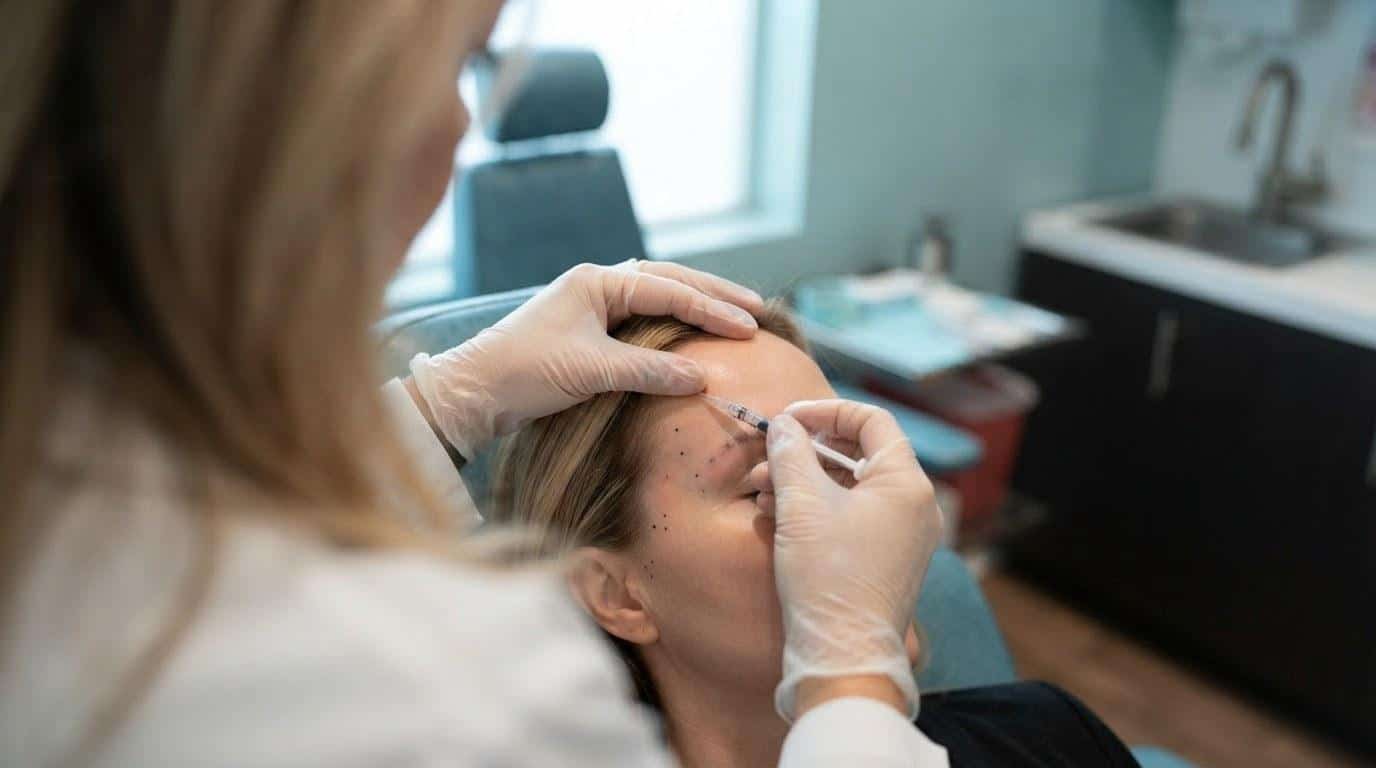
What Warning Signs Should You Watch for After Botox?
Mild redness, small bumps at injection sites, and minor bruising are all normal and typically resolve within 24 to 72 hours. However, a few symptoms warrant a call to your provider right away. Knowing the difference between a normal reaction and a complication gives you peace of mind and helps you act quickly if something is off.
Normal reactions in the first 24 to 48 hours include:
- Small raised bumps or pinpoint marks at injection sites
- Mild redness or skin flushing around treated areas
- Light bruising that fades within a few days
- A slight headache, especially after forehead treatment
- Temporary tenderness when touching the area
Contact your provider promptly if you notice any of these:
- Drooping eyelid (ptosis): This can occur if product migrates to the levator muscle of the eye. It is temporary but can last several weeks. Your provider can assess whether prescription eye drops may help.
- Difficulty swallowing or breathing: Extremely rare, but if it occurs, seek emergency care immediately. This is listed as a serious risk in the FDA’s official Botox safety information.
- Severe or worsening headache beyond 48 hours: May indicate an unrelated issue that needs evaluation.
- Signs of infection: Increasing warmth, spreading redness, or pus at an injection site should be evaluated quickly.
- Vision changes: Blurred vision or double vision should be assessed by a medical professional without delay.
Choosing a licensed, medically trained injector is the most reliable way to reduce complication risk. In California, Botox injections must be administered or directly supervised by a licensed physician, nurse practitioner, or registered nurse operating under a physician’s protocol, as governed by the California Medical Board.
How Can You Make Your Botox Results Last Longer?
The average Botox treatment lasts 3 to 4 months, but consistent aftercare habits and a good skincare routine can push results closer to the 4 to 6 month range for many patients. Longevity is influenced by metabolism, muscle mass in the treated area, sun exposure, stress levels, and how regularly you maintain your treatment schedule.
Here are the most effective long-term strategies:
- Stick to a regular treatment schedule: Patients who receive Botox on a consistent schedule, typically every 3 to 4 months, often find that over time they need slightly fewer units to achieve the same effect. This happens because the targeted muscles gradually weaken from repeated relaxation.
- Use a medical-grade SPF daily: UV exposure is one of the fastest ways to break down collagen and reduce the visible impact of Botox. Broad-spectrum SPF 30 or higher is a minimum in Southern California’s climate.
- Add a retinol or retinoid to your routine between treatments: Once the first 48 hours have passed, retinoids support collagen production and keep skin texture smooth, which makes Botox results look better and last longer visually.
- Stay hydrated and limit alcohol long-term: Chronic alcohol consumption dehydrates the skin and accelerates the breakdown of results.
- Manage stress: High cortisol levels from chronic stress can affect how quickly the body metabolizes neurotoxins. Exercise, sleep, and stress management all play a role.
- Consider complementary treatments: Pairing Botox with treatments like microneedling, chemical peels, or dermal fillers can enhance and extend the overall appearance of results. These are not substitutes but work well alongside Botox on a coordinated treatment plan.
We track results across patients who follow consistent aftercare plans versus those who do not. Patients who use daily SPF and return on a regular schedule average closer to 4.5 months between treatments, compared to roughly 3 months for those with inconsistent habits.
Patients who use daily SPF and return on a regular schedule average closer to 4.5 months between treatments, compared to roughly 3 months for those with inconsistent habits.
Schedule Your Botox Appointment at Beauty Solutions Med Spa
Following the right botox aftercare tips makes a measurable difference in how long your results last and how satisfied you feel with your treatment. The steps are simple, but they are much easier to follow when your provider walks you through them in person before you leave the office.
Beauty Solutions Med Spa in Woodland Hills offers Botox, Dysport, Daxxify, Jeuveau, Xeomin, dermal fillers, and a full range of skin treatments including chemical peels and microneedling. Whether you are new to injectables or looking for a provider who will take the time to build a long-term care plan with you, the team at Beauty Solutions Med Spa is ready to help.
Patients across Southern California trust Beauty Solutions Med Spa for personalized treatment plans and clear aftercare guidance at every visit. Call (818) 860-0100 to schedule your consultation or book your next appointment today.
Related Articles
Frequently Asked Questions
Can I wash my face after getting Botox?
You can wash your face after Botox, but wait at least 4 to 6 hours before doing so. Use a gentle, non-exfoliating cleanser and avoid rubbing or massaging the treated areas. Pat your skin dry rather than wiping. Skip any products with retinol or acids for the first 48 hours.
How soon can I exercise after a Botox injection?
Most providers recommend waiting at least 24 hours before returning to intense cardio, weightlifting, or hot yoga. Exercise raises your heart rate and blood pressure, which increases bruising risk and can cause the product to shift before it fully binds to the muscle. Light walking on the same day is generally fine.
Why does Botox wear off faster for some people than others?
Metabolism is the biggest factor. People with a faster metabolism tend to break down the neurotoxin more quickly, which can shorten results to around 2 to 3 months. High levels of physical activity, sun exposure, stress, and irregular treatment schedules can also reduce how long results hold. Sticking to a consistent treatment plan and daily SPF use helps extend results over time.
Is it normal to have a headache after Botox in the forehead?
A mild headache after forehead Botox is common and usually resolves within 24 to 48 hours. It is thought to be related to the injection itself rather than the neurotoxin. You can take acetaminophen if needed. Avoid aspirin or ibuprofen for the first 24 hours since these can increase bruising. If your headache is severe or lasts more than 48 hours, contact your provider.
How many units of Botox does a forehead treatment typically need?
Forehead lines typically require 10 to 20 units of Botox, depending on the size of the muscle, the depth of the lines, and the look you want to achieve. Frown lines between the brows (the glabella) often take an additional 20 to 25 units. Your injector will assess your muscle movement and recommend a unit count tailored to your face during a consultation.
