

Signs You Need Botox: 7 Clues It’s Time to Book a Treatment
Signs You Need Botox: 7 Clues It's Time to Book a Treatment
Not sure if you're ready for Botox? These 7 clear signs can help you decide, plus what to expect, how long results last, and how to choose a trusted provider.

What Are the Signs You Need Botox?
The most reliable signs you need Botox are lines that stay on your face even when you are not making any expression. These are called static wrinkles, and they signal that muscle movement has been creasing your skin long enough to leave a permanent mark. Dynamic wrinkles, the ones that appear only when you smile, squint, or frown, are the earlier warning. Catching them before they become static is exactly when Botox works best.
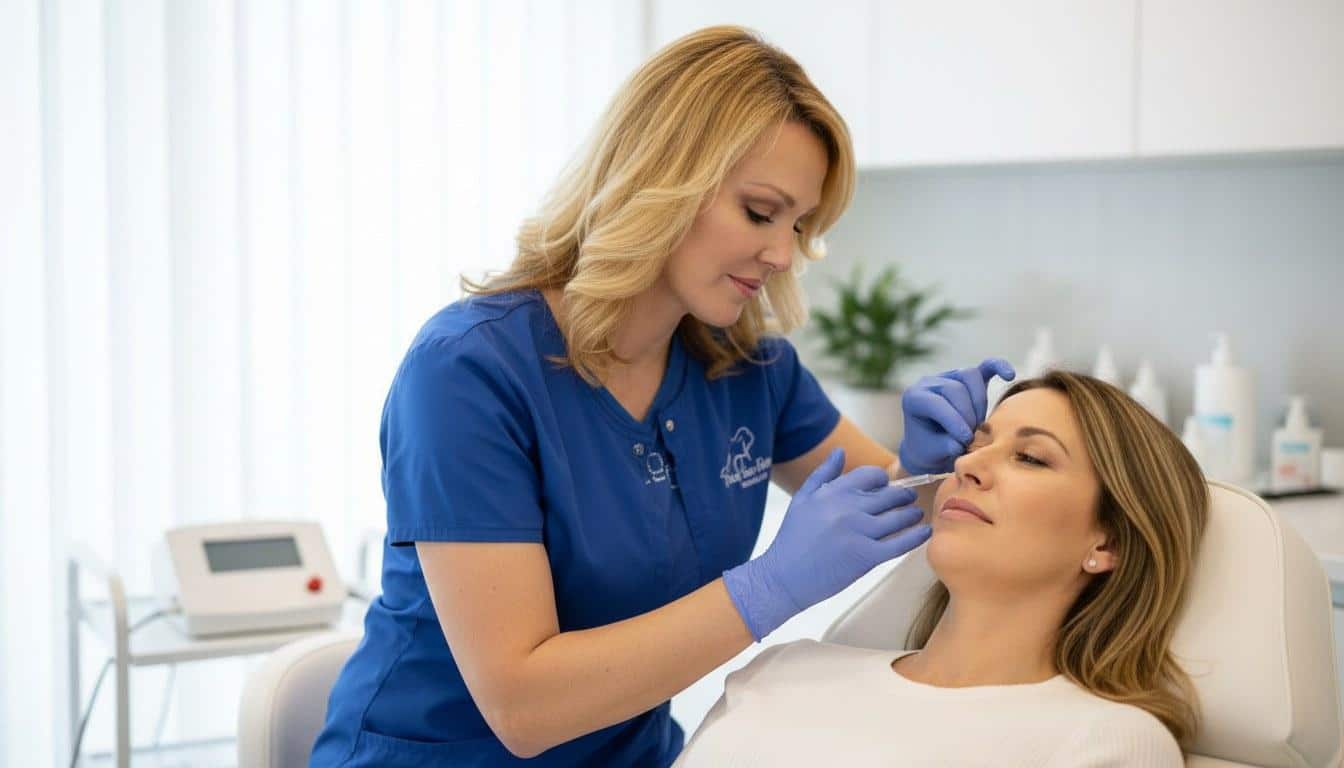
Botox is an injectable form of botulinum toxin that temporarily relaxes targeted facial muscles. The FDA approved Botox Cosmetic for cosmetic use in 2002, and it remains one of the most studied aesthetic treatments available. Understanding the specific clues your face is giving you helps you decide whether now is the right time to act.

What Are the Warning Signs Your Skin Is Telling You Something?
Seven distinct patterns tend to show up before most people realize they are ready for a Botox treatment. Recognizing them early gives you the best results with the fewest units needed.
- Forehead lines at rest: Horizontal creases across your forehead that are visible even when your face is completely relaxed, not just when you raise your brows.
- Frown lines between the brows (“11s”): Vertical lines between your eyebrows that remain after you stop frowning. These are among the most common reasons people seek Botox treatment.
- Crow’s feet at rest: Fine lines fanning out from the corners of your eyes that stay put even when you are not squinting or laughing.
- Brow heaviness or drooping: A subtle downward pull of the brow that makes you look tired or stern even when you feel fine. A small amount of Botox can lift the tail of the brow by 1 to 2 millimeters.
- Bunny lines on the nose: Diagonal wrinkles that appear on the sides of your nose when you scrunch your face. These deepen over time with repeated muscle movement.
- Lip lines and a downturned mouth: Vertical lines above the upper lip (“smoker’s lines”) or corners of the mouth that pull downward, giving a resting expression that reads as unhappy.
- Neck bands (platysmal bands): Vertical cords running down the front of the neck that become more prominent with age. Botox injected into the platysma muscle softens these bands noticeably.
| Symptom | Likely Cause | DIY or Pro? |
|---|---|---|
| Forehead lines visible at rest | Repeated frontalis muscle movement over years | Pro, requires precise unit placement to avoid brow drop |
| Frown lines (“11s”) between brows | Overactive corrugator and procerus muscles | Pro, most commonly treated area; needs accurate dosing |
| Crow’s feet at rest | Orbicularis oculi muscle contraction over time | Pro, thin skin around eyes is sensitive to overdose |
| Brow heaviness or hooding | Depressor muscles pulling brow downward | Pro, a brow-lift technique requires careful mapping |
| Bunny lines on nose | Nasalis muscle repeated scrunching | Pro, small muscle, easy to over-treat without experience |
| Downturned mouth corners | Depressor anguli oris muscle pulling corners down | Pro, affects smile symmetry if placed incorrectly |
| Neck bands visible at rest | Platysma muscle laxity and aging | Pro, neck injections require advanced injector skill |
What Can You Check Yourself Before Booking?
A simple at-home mirror test takes about 2 minutes and gives you a clear picture of where you stand. Doing this in natural daylight, not bathroom vanity lighting, gives the most accurate read.
- Relax your face completely. Drop your jaw slightly, let your forehead go slack, and look straight into a mirror. Note every line you see right now, before any expression.
- Make your typical expressions. Raise your brows, squint, smile, and frown. Watch which lines deepen dramatically with each movement.
- Check if lines fade. After each expression, return to a neutral face and wait 5 seconds. Lines that disappear completely are dynamic, Botox can prevent them from becoming permanent. Lines that stay are static, Botox softens them but may not erase them entirely.
- Check your skin texture. Run a clean finger lightly across the crease. A deep groove with a textured edge has been there longer than a fine surface line.
- Photograph yourself in three angles. Front, 45 degrees, and full profile. Photos catch asymmetry and depth that your eye misses in real time.
If you find lines that stay visible at rest in step 1, or lines that deepen significantly in step 2 and are starting to linger after step 3, those are clear signs you need Botox sooner rather than later.

How Does Botox Actually Work, and How Long Does It Last?
Botox works by blocking the nerve signal that tells a specific muscle to contract. Without that signal, the muscle relaxes, the skin above it smooths out, and new creases stop forming in that zone. The active ingredient is a purified form of botulinum toxin type A. According to the U.S. Food and Drug Administration, the cosmetic form is approved for glabellar lines (the “11s”), forehead lines, and crow’s feet in adults.
Results are not immediate. Most people see the first changes within 3 to 5 days, with full results visible at the 2-week mark. The effects last 3 to 4 months on average, though first-time patients sometimes notice results fading closer to 10 to 12 weeks as their muscles gradually regain movement. People who have been treated consistently for 2 or more years often find their results stretch to 4 to 5 months because the targeted muscles have weakened slightly over time.
Botox does not fill volume, that is the job of dermal fillers. It relaxes movement. For deep static lines with significant volume loss, a combination approach using both Botox and a hyaluronic acid filler often produces the most natural outcome.
Our injectors see patients return an average of 3 times in their first year, then shift to 2 to 3 appointments annually once their baseline muscle activity has been managed consistently.
How Much Does Botox Cost, and What Affects the Price?
In the Southern California market, Botox is priced either per unit or per treatment area. Per-unit pricing in this region typically ranges from $12 to $20 per unit, depending on the provider’s credentials and the clinic’s overhead. Per-area flat rates are also common, usually falling between $200 and $500 per zone.
The total cost of a session depends on several factors:
- Number of units used: A forehead treatment typically requires 10 to 20 units. Crow’s feet use 6 to 15 units per side. Frown lines (“11s”) commonly need 20 to 30 units. The more areas treated, the higher the unit count.
- Injector credentials: Board-certified physicians, nurse practitioners, and physician assistants with advanced aesthetic training typically charge more than entry-level providers, and produce more consistent, safer results.
- Geographic market: Providers in the Los Angeles County and Ventura County markets reflect the cost of living and overhead in those areas.
- Product brand: FDA-approved botulinum toxin products include Botox Cosmetic (Allergan), Dysport, Xeomin, and Jeuveau. Each has slightly different unit equivalencies and price points.
- Repeat patient discounts: Many med spas offer loyalty pricing or membership plans for patients who return every 3 to 4 months.
As of 2026, the Inflation Reduction Act federal tax credit does not apply to cosmetic Botox, which is considered elective. However, Botox used for medical conditions such as chronic migraine or hyperhidrosis may qualify for insurance coverage, a separate conversation to have with your provider.
For an accurate quote based on your specific goals and unit needs, request a custom consultation with Beauty Solutions Med Spa at (818) 860-0100.

When Should You See a Professional Instead of Waiting?
See a licensed injector as soon as you notice static lines, lines that do not disappear when your face is at rest. Waiting until wrinkles are deeply etched makes them harder to treat and often requires more units per session.
Certain situations call for professional evaluation right away rather than a wait-and-see approach:
- Lines are visible in photos taken in natural light, not just up close in a mirror.
- You are consistently told you look tired, angry, or stressed when you feel none of those things.
- Forehead or brow heaviness is affecting how open your eyes appear.
- You are in your late 20s or early 30s and dynamic lines are deepening quickly, preventive Botox at this stage uses fewer units and slows the formation of static lines.
- A previous Botox treatment has worn off and the lines returned to their pre-treatment depth within 8 weeks rather than the typical 12 to 16 weeks.
There are also situations where you should delay or avoid treatment. Botox is not recommended during pregnancy or breastfeeding. People with certain neuromuscular conditions, such as myasthenia gravis or Lambert-Eaton syndrome, should not receive botulinum toxin injections. Anyone currently taking aminoglycoside antibiotics should discuss timing with their provider, as these drugs can amplify the effect of the toxin.
A qualified injector will review your full medical history before proceeding. In California, med spa injections must be performed or directly supervised by a licensed physician, nurse practitioner, or physician assistant operating under a valid medical director agreement, a standard that protects patients from under-qualified providers.
According to the California Contractors State License Board (CSLB), verifying any professional’s license before allowing them to perform a medical procedure is a basic consumer protection step, the same principle applies to med spa providers, whose credentials are verifiable through the California Medical Board and the Board of Registered Nursing.
Across our consultations, we find that roughly 6 in 10 first-time patients come in thinking they need a large number of units but actually achieve their goal with 20 to 35 units total, a much more manageable investment than they expected.
Related Articles



Frequently Asked Questions
How do I know if I actually need Botox or if it's too soon?
The clearest sign is lines that stay visible on your face when you are completely relaxed; these are called static wrinkles. If your lines only appear during expressions like smiling or squinting and disappear right after, you are in the preventive window where smaller amounts of Botox can slow their progression. A consultation with a qualified injector, like those at Beauty Solutions Med Spa, can confirm which stage you are at.
How long does Botox usually last before I need to go back?
Botox results typically last 3 to 4 months for most people. First-time patients sometimes see results fade a little sooner, around 10 to 12 weeks, while long-term patients who have been treated consistently for 2 or more years often enjoy results that stretch to 4 to 5 months. Staying on a regular schedule helps maintain results more efficiently over time.
How many units of Botox does a forehead treatment usually take?
A forehead treatment typically requires 10 to 20 units, depending on the strength of your frontalis muscle and the depth of your lines. Frown lines between the brows usually need 20 to 30 units, and crow's feet take about 6 to 15 units per side. Your injector will assess your muscle movement during the consultation and recommend a unit count tailored to your face.
What exactly is Botox made of, and is it safe?
Botox is made from a highly purified form of botulinum toxin type A, produced by the bacterium Clostridium botulinum. The cosmetic form is FDA-approved and has been used safely for over 20 years. When injected by a trained, licensed provider in the correct dosage, it is considered very safe for healthy adults who are not pregnant or living with certain neuromuscular conditions.
Can I get Botox if I have never had it before and I am in my late 20s?
Yes, many people in their late 20s and early 30s start Botox as a preventive measure before static lines develop. Starting earlier typically means fewer units are needed per session because the muscles have not yet created deep, permanent creases. If you are noticing dynamic lines deepening quickly, a consultation is a smart next step to discuss whether preventive treatment makes sense for you.
