


Botox vs. Dysport vs. Daxxify vs. Jeuveau: Which Neuromodulator Is Right for You in 2026?
Botox vs. Dysport vs. Daxxify vs. Jeuveau: Which Neuromodulator Is Right for You in 2026?
Not all neuromodulators are the same. This guide breaks down Botox, Dysport, Daxxify, and Jeuveau so you can find the best fit for your goals and budget.

What Are Neuromodulators and How Do They Work?
Neuromodulators are injectable proteins that temporarily block nerve signals to targeted muscles, preventing them from contracting and forming wrinkles. Botox is the most recognized brand, but Dysport, Daxxify, and Jeuveau work through the same core mechanism.
All four products are forms of botulinum toxin type A, a purified protein approved by the FDA for cosmetic use. When injected into a specific muscle, the product blocks the release of acetylcholine, the chemical that tells that muscle to contract. The muscle relaxes, and the overlying skin smooths out.
Results are not permanent. Nerve endings gradually regenerate, muscle activity returns, and lines reappear. That is why most patients return every 3 to 6 months depending on which product they use. The treatment itself takes about 15 to 30 minutes, with no downtime for most people.
Common treatment areas include the forehead, the area between the brows (glabella), and crow’s feet around the eyes. These are also the FDA-approved cosmetic indications shared across all four brands.

Botox vs. Dysport vs. Daxxify vs. Jeuveau: How Do They Compare?
When comparing botox vs dysport vs daxxify vs jeuveau, the key differences are protein formulation, unit dosing, how quickly results appear, how far the product spreads, and how long results last. All four are safe and effective when administered by a trained injector, but those differences matter depending on your goals.
Here is a side-by-side breakdown of the four main neuromodulators available in 2026:
| Product | Manufacturer | Onset | Duration | Spread | Unit Dosing vs. Botox |
|---|---|---|---|---|---|
| Botox Cosmetic | AbbVie / Allergan | 3 to 7 days | 3 to 4 months | Moderate, predictable | 1:1 reference standard |
| Dysport | Galderma | 2 to 5 days | 3 to 4 months | Slightly wider diffusion | Roughly 2.5:1 vs. Botox |
| Daxxify | Revance Therapeutics | 2 to 3 days | 6 to 9 months | Moderate, precise | Different peptide formulation |
| Jeuveau | Evolus | 3 to 5 days | 3 to 4 months | Similar to Botox | Roughly 1:1 vs. Botox |
Daxxify stands out because it uses a peptide-based stabilizer instead of human serum albumin, which is used in the other three products. That formulation difference is linked to its longer duration. The FDA approved Daxxify in 2022, making it the newest entry in this group.
Dysport’s slightly wider spread can be an advantage for large, flat muscle areas like the forehead, where broad coverage is desirable. For smaller, more precise areas, a tighter spread like Botox or Jeuveau gives injectors more control.
Our injectors see patients switch between products regularly when their lifestyle changes. For example, we see roughly 30% of patients who travel frequently or have demanding schedules shift to Daxxify once they realize they can cut their annual treatment visits from 3 to 4 sessions down to 2.
Roughly 30% of patients who travel frequently or have demanding schedules shift to Daxxify once they realize they can cut their annual treatment visits from 3 to 4 sessions down to 2.
How Long Does Each Neuromodulator Last?
Botox, Dysport, and Jeuveau typically last 3 to 4 months. Daxxify lasts 6 to 9 months in most patients, making it the longest-lasting option currently available in the U.S.
Duration varies from person to person based on several factors:
- Metabolism: People with faster metabolisms often break down the product more quickly, sometimes seeing results fade in under 3 months.
- Muscle mass and activity: Stronger or more active muscles, common in people who chew frequently or have very expressive faces, tend to shorten the effect.
- Treatment area: Areas with high muscle activity, like the forehead, may fade faster than crow’s feet.
- Dosing: Higher doses within the safe range generally extend duration. An undertreated area fades faster.
- Frequency of treatment: Patients who stay on a consistent schedule often find their results last longer over time, as the target muscles weaken gradually with repeated treatment.
According to clinical trial data reviewed by the FDA, Daxxify demonstrated median durations of 6 months in pivotal trials, with some patients maintaining results up to 9 months. No other approved neuromodulator has matched that duration in head-to-head trials as of 2026.
Daxxify demonstrated median durations of 6 months in pivotal trials, with some patients maintaining results up to 9 months, no other approved neuromodulator has matched that duration as of 2026.

What Does Botox or a Neuromodulator Treatment Cost?
In the Southern California regional market, neuromodulator treatments are typically priced either per unit or per area. Per-unit pricing generally ranges from $12 to $20 per unit for Botox and Jeuveau, with Dysport often priced slightly lower per unit due to its higher unit volume per session.
Daxxify is typically priced higher per session than the other three, reflecting its longer duration. However, when you factor in fewer annual visits, many patients find the annual cost comparable or even lower than a standard 3-to-4-month cycle.
Here is how typical session costs break down by treatment area in this market:
- Forehead lines: Generally requires 10 to 30 units of Botox or Jeuveau per session.
- Glabella (between the brows): Typically 20 to 30 units of Botox, or 50 to 75 units of Dysport.
- Crow’s feet: Usually 10 to 15 units per side with Botox or Jeuveau.
- Full upper face (all three areas): Commonly 40 to 70 total units of Botox or Jeuveau in one session.
Factors that move the final cost include the number of areas treated, the injector’s level of training, the specific product chosen, and the med spa’s geographic location. Always request a custom quote based on your specific goals. Call Beauty Solutions Med Spa at (818) 860-0100 for a personalized estimate.
Which Neuromodulator Is Right for Your Treatment Area?
The best neuromodulator depends on where you want to treat, how much precision is needed, and how often you want to come in for maintenance. There is no single best product for everyone, but there are clear patterns that guide the choice.
When comparing botox vs dysport vs daxxify vs jeuveau for specific areas, here is what the evidence and clinical practice suggest:
- Forehead and glabella: All four work well here. Dysport’s wider diffusion can be an advantage for broad forehead coverage. Botox and Jeuveau offer more predictable precision for the glabella, where unintended spread toward the eyelid muscles is a concern.
- Crow’s feet: Botox and Jeuveau are popular here due to their controlled spread. Dysport can also work well in experienced hands.
- Patients wanting fewer appointments: Daxxify is the clear choice. Its 6-to-9-month duration means most patients need only 2 treatments per year instead of 3 or 4.
- First-time patients: Botox is often recommended for first-timers because it has the longest safety record, the most published clinical data, and injectors are most familiar with its dosing behavior.
- Patients with prior Botox resistance: Some people develop antibodies to Botox over time. Switching to Jeuveau, Dysport, or Daxxify, which have slightly different protein structures, can restore results.
- Budget-conscious patients: Jeuveau was designed with competitive pricing in mind and often comes with manufacturer promotions through the Evolus loyalty program.
We see a consistent pattern across our treatment consultations: patients in their 20s and early 30s often start with Botox or Jeuveau as a preventive measure, while patients in their 40s and 50s with established lines increasingly ask about Daxxify for its extended results.

What Should You Expect During and After Treatment?
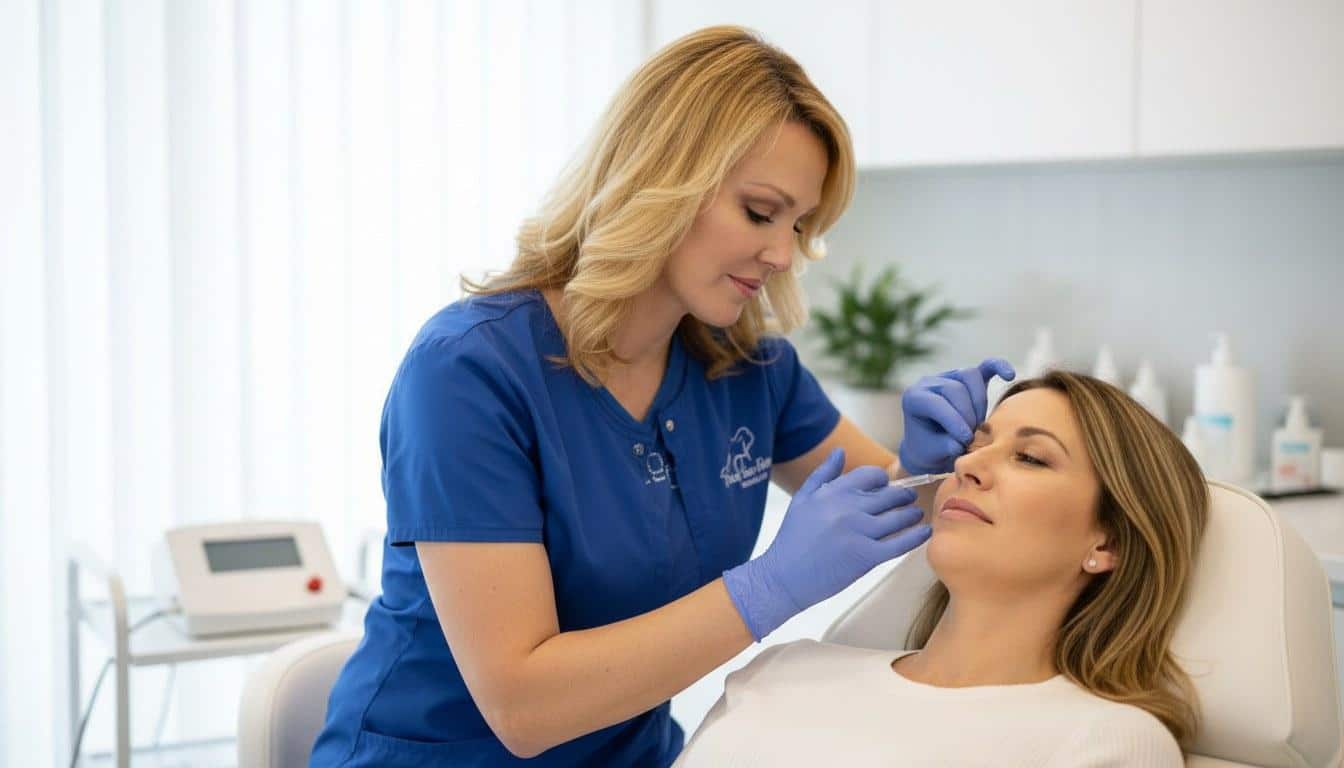
A neuromodulator appointment typically takes 15 to 30 minutes from consultation to injection. Most patients return to normal activity the same day, though there are a few post-treatment guidelines to follow for the first 4 to 6 hours.
Here is what a typical appointment looks like step by step:
- Consultation: Your injector reviews your goals, assesses your facial anatomy, and recommends a product and dose. First-time patients may have photos taken for before-and-after tracking.
- Preparation: The treatment area is cleaned. A topical numbing cream may be applied, though most patients find the injections tolerable without it, needles are very fine gauge.
- Injection: The injector places small amounts of product at precise points. A full upper-face treatment may involve 10 to 20 individual injection points.
- Post-care instructions: You will be asked to avoid lying flat, strenuous exercise, and rubbing the treated area for 4 to 6 hours. Avoid saunas and excessive heat for 24 hours.
- Follow-up: Most providers schedule a 2-week check-in to assess results and make any minor adjustments if needed.
Common side effects are mild and temporary. They include small bruises at injection sites, slight redness, and occasional mild headache in the first 24 hours. Serious complications are rare when treatment is performed by a trained professional. The FDA’s botulinum toxin safety communication outlines the full risk profile for all four products.
Results from Daxxify and Dysport are often visible within 2 to 3 days. Botox and Jeuveau typically show full results by day 7 to 14. If you have a special event, plan your appointment at least 2 weeks in advance to allow results to fully settle.
Frequently Asked Questions
How long does Botox actually last compared to Daxxify?
Botox typically lasts 3 to 4 months for most patients. Daxxify lasts significantly longer, clinical trials showed a median duration of 6 months, with some patients seeing results hold for up to 9 months. If you want fewer annual appointments, Daxxify is worth discussing with your injector.
How many units of Botox do I need for my forehead?
Most patients need between 10 and 30 units for horizontal forehead lines alone, depending on muscle strength and the depth of the lines. Treating the forehead together with the glabella (between the brows) often requires 40 to 50 units total. Your injector will assess your specific anatomy at your consultation and recommend a dose.
What is Botox actually made of, and is it safe?
Botox is made from a highly purified form of botulinum toxin type A, produced by the bacterium Clostridium botulinum. The cosmetic doses used in facial treatments are extremely small, far below any toxic threshold. The FDA has approved Botox Cosmetic for aesthetic use, and it has a safety record spanning more than 20 years of clinical use.
Is Jeuveau basically the same as Botox, or is there a real difference?
Jeuveau and Botox use the same active ingredient, botulinum toxin type A, and have very similar onset times, dosing, and duration of around 3 to 4 months. The main practical difference is that Jeuveau is often priced competitively and comes with its own manufacturer loyalty program. Some patients also report that switching between the two refreshes their results if they feel one product has become less effective over time.
How quickly does Dysport work compared to Botox?
Dysport tends to show results slightly faster than Botox, many patients notice softening of lines within 2 to 5 days, compared to 3 to 7 days for Botox. Both products reach their full effect by about 2 weeks. If you have an event coming up, plan either treatment at least 14 days in advance for the best outcome.