

Choosing Anti-Aging Products to Pair With Your Med Spa Treatments
Choosing Anti-Aging Products to Pair With Your Med Spa Treatments
The right at-home skincare can extend and enhance your med spa results. Here's how to choose anti-aging products that work with your treatments, not against them.
Why Daily Anti-Aging Products Matter Alongside Med Spa Treatments
Pairing the right at-home products with professional med spa treatments is not a luxury add-on — it is a core part of getting lasting results. UV exposure, seasonal dryness, and environmental oxidative stress work against your skin every day, and without a targeted product routine, even well-executed in-office treatments lose their gains faster than they should. The National Weather Service notes that Mediterranean climate zones — characterized by intense sun and periods of very low humidity — present some of the most demanding daily conditions for skin health, with summer UV indexes regularly reaching 10 or higher between 10 a.m. and 3 p.m.
Intense UV exposure accelerates collagen breakdown and causes cumulative surface cell damage. Seasonal dry-wind events strip moisture from the skin rapidly. Both conditions compound over time, making consistent daily product use a protective strategy rather than an optional routine. The right ingredients, applied in the right order at the right times, extend the life of professional treatments and keep the skin barrier strong between appointments.
What Anti-Aging Ingredients Actually Do for Your Skin
The most effective anti-aging products work by stimulating collagen production, accelerating cell turnover, or shielding existing collagen from UV and environmental damage. Not every product does all three, which is why layering the right ingredients in the right sequence matters more than using any single product in isolation.
Here are the key ingredient categories and what each one targets:
- Retinoids (Retinol, Tretinoin): Speed up cell turnover by roughly 25–40% over 12 weeks of consistent use. Best applied at night, 3–4 times per week when starting out. Prescription tretinoin works faster than over-the-counter retinol but requires a provider recommendation.
- Vitamin C (L-Ascorbic Acid): Neutralizes free radicals generated by UV exposure and brightens uneven tone. Most effective at concentrations between 10% and 20%. Apply in the morning before SPF for maximum antioxidant synergy.
- Peptides: Short amino acid chains that signal skin cells to produce more collagen. Gentler than retinoids, making them a strong option for sensitive skin types or during post-treatment recovery windows when stronger actives are paused.
- Hyaluronic Acid: A humectant that binds up to 1,000 times its weight in water. Especially useful during low-humidity periods when transepidermal water loss accelerates. Apply to damp skin and seal with a moisturizer for best effect.
- Broad-Spectrum SPF 30+: The single most evidence-backed anti-aging step available. The American Academy of Dermatology recommends daily SPF 30 or higher regardless of cloud cover, year-round.
- Niacinamide: A form of vitamin B3 that reduces redness, tightens the appearance of pores, and reinforces the skin barrier. Works compatibly alongside both retinoids and chemical exfoliants, making it a versatile supporting ingredient.
- AHAs and BHAs (Glycolic Acid, Salicylic Acid): At-home chemical exfoliants that dissolve dead surface cells. Because they overlap directly with professional chemical peel chemistry, timing relative to in-office treatments is critical.
One of the most consistent observations among experienced injectors and peel providers is that clients who pause retinoid use for 5–7 days before a peel appointment experience significantly less post-peel irritation than those who do not. Skipping that pause is among the most common causes of unnecessary sensitivity after superficial peels.
How Anti-Aging Products Work With Chemical Peels
Chemical peels and at-home anti-aging products work on the same biological target — accelerated cell renewal — but at very different depths and concentrations. When timed correctly, they amplify each other. When stacked incorrectly, they cause over-exfoliation, sensitivity, and barrier damage.
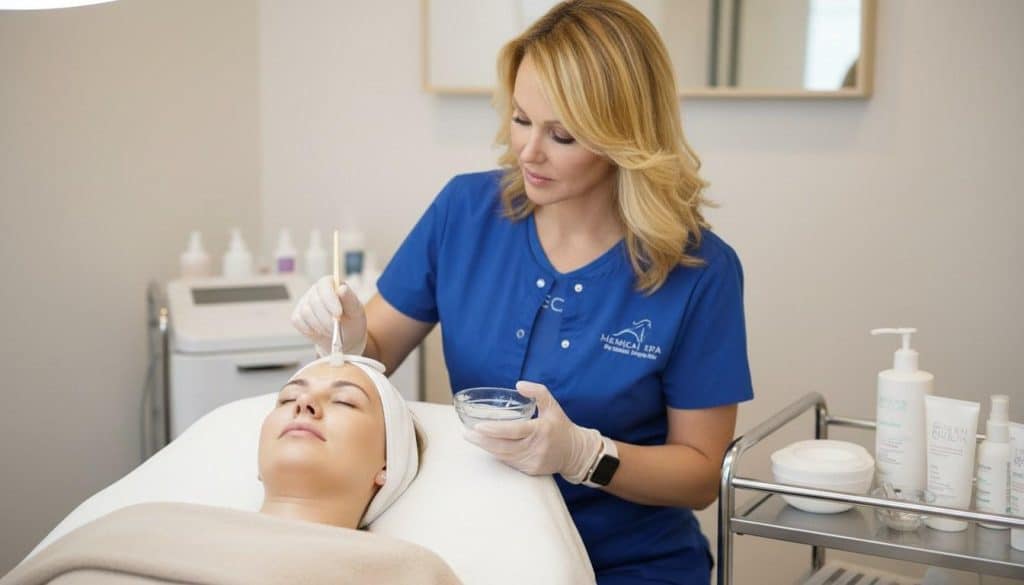
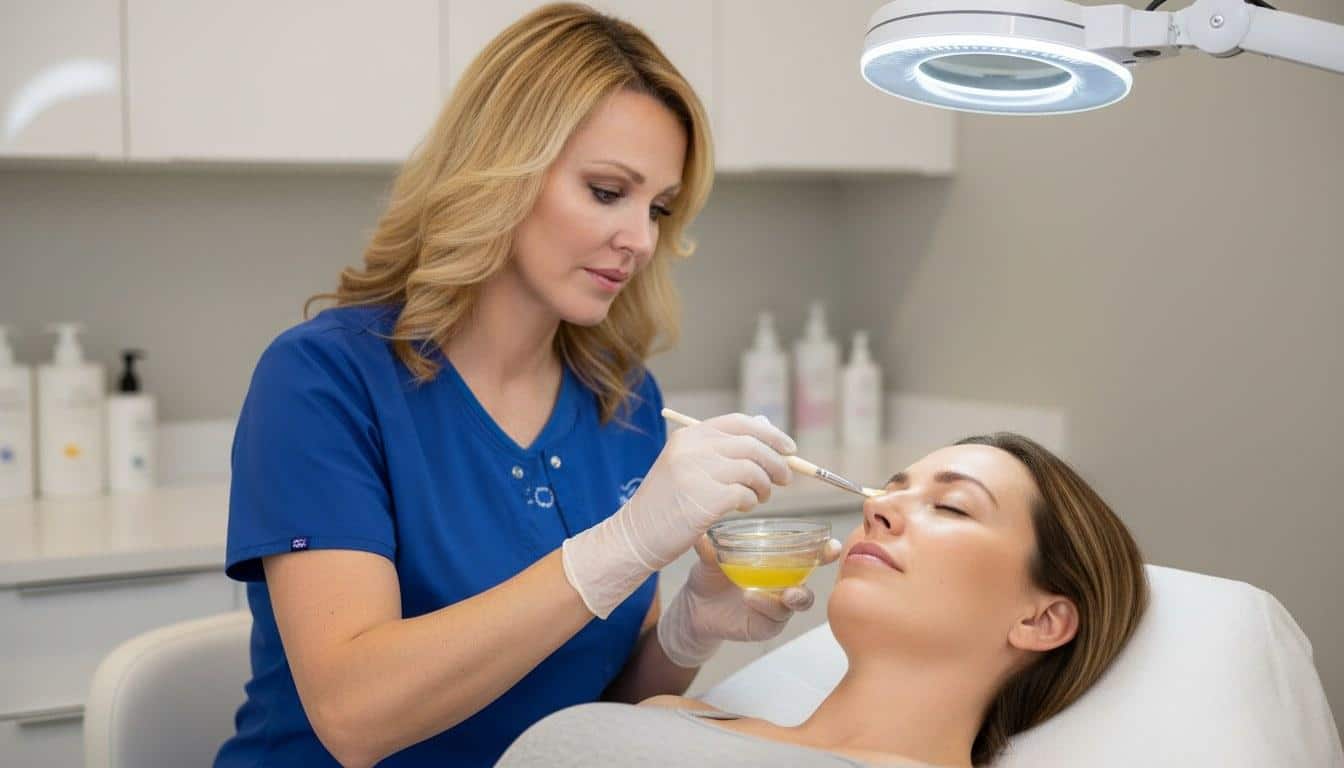
A professional chemical peel uses acids such as glycolic, lactic, salicylic, or trichloroacetic acid (TCA) at concentrations ranging from 20% to 70%, depending on the intended peel depth. Superficial peels remove only the outermost epidermal layer; medium-depth peels reach the upper dermis. Lighter “lunchtime” peels have become among the most requested med spa services in recent years because they require minimal downtime — typically 2–5 days of mild flaking — while still delivering measurable improvement in tone, texture, and fine lines.
Here is how at-home products interact with each phase of the peel cycle:
| Phase | Timing | Products to Use | Products to Avoid |
|---|---|---|---|
| Pre-Peel Prep | 2–4 weeks before | Retinoids, Vitamin C, SPF 30+ | Waxing, depilatory creams |
| 48-Hour Pre-Peel Window | 2 days before | Gentle cleanser, SPF, hyaluronic acid | Retinoids, AHAs, BHAs, benzoyl peroxide |
| Active Peel Recovery | Days 1–5 post-peel | Fragrance-free moisturizer, SPF 30+, peptides | All exfoliants, retinoids, Vitamin C serums |
| Post-Peel Maintenance | Day 7 onward | Retinoids (reintroduce slowly), Vitamin C, SPF | Overuse of AHAs without provider guidance |
Clients who follow a structured pre-peel prep routine for at least two weeks consistently show faster and more even results than those who arrive with no prior product regimen. When the skin is already in an accelerated renewal cycle, the peel has a primed surface to work with, and the acid penetrates more uniformly across the treatment area.
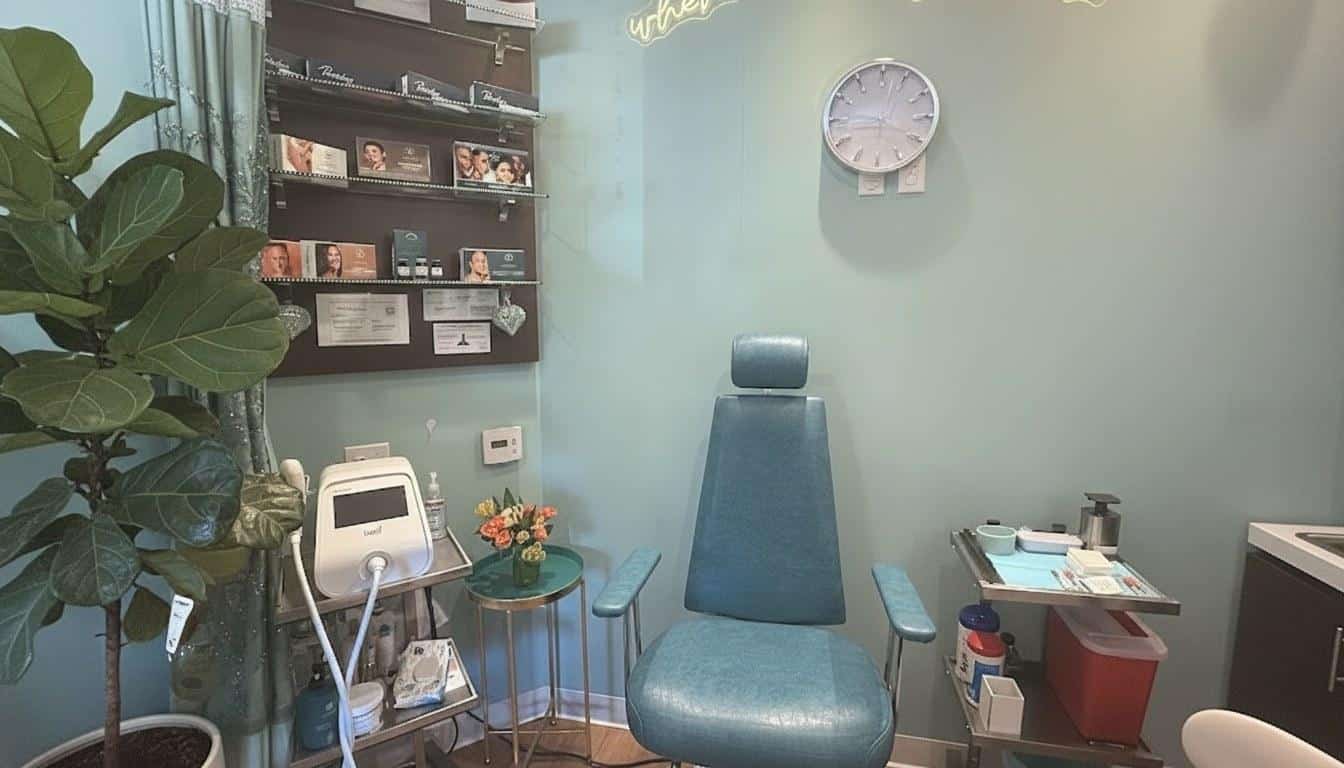
Which Products to Use Before and After a Chemical Peel
Before a chemical peel, the goal is to prime the skin for even acid penetration. After a peel, the goal shifts entirely to barrier repair, hydration, and sun protection. These are two completely different product jobs, and using the wrong products at the wrong phase is the most common mistake people make between appointments.
Before Your Peel: 2–4 Weeks Out
During the prep phase, consistent use of a retinoid three nights per week helps thin the stratum corneum so the peel acid can penetrate more evenly across the skin surface. A vitamin C serum applied each morning adds antioxidant protection and begins addressing uneven tone before the peel amplifies that process. Daily SPF 30 or higher is non-negotiable throughout this phase — according to NOAA data, average daily solar radiation peaks significantly during summer months in sun-heavy climates, and photoprotection during prep directly affects how evenly the skin responds to the peel.
Two days before your appointment, simplify the routine entirely. Switch to a gentle cleanser, hyaluronic acid, and SPF only. Stop retinoids, AHAs, BHAs, and benzoyl peroxide. This brief pause reduces the risk of the peel compounding on an already-sensitized barrier.
After Your Peel: The First 7 Days
Post-peel skin is temporarily more vulnerable to UV damage, dehydration, and irritation. The product list gets shorter, not longer. A fragrance-free, ceramide-based moisturizer applied twice daily helps rebuild the skin barrier. SPF 30 or higher every morning is mandatory — skipping sun protection after a peel can undo results and trigger post-inflammatory hyperpigmentation, a risk that increases in medium and deeper Fitzpatrick skin tones.
- Gentle cleanser: Use a pH-balanced, non-foaming formula. Avoid anything with scrub beads, salicylic acid, or fragrance.
- Ceramide moisturizer: Apply morning and night to support barrier recovery. Look for ceramides NP, AP, and EOP listed on the ingredient label — these are the three most studied for barrier function.
- Broad-spectrum SPF 30+: Apply every morning without exception. Reapply every two hours if spending time outdoors. Mineral sunscreens containing zinc oxide are gentler on freshly treated skin than chemical UV filters.
- Hyaluronic acid serum: Apply to slightly damp skin before moisturizer to maximize water binding during dry, low-humidity periods.
After day seven, reintroduce active ingredients gradually. Start retinoids at one night per week before building back to your normal frequency. Vitamin C can typically return at the same time. Wait for provider clearance before reintroducing AHAs or BHAs.
What a Professional Skin Care Plan Includes
A professional skin care plan built around med spa treatments typically combines 3–6 in-office treatments per year with a daily home routine that includes 4–6 targeted products. The exact mix depends on your Fitzpatrick skin type, primary concerns, and how your skin responds to exfoliation.
A series of three superficial chemical peels spaced four weeks apart is a common starting point for clients addressing fine lines, uneven tone, or mild sun damage. Medium-depth peels are typically scheduled as single treatments with a longer recovery window of 7–10 days and are better suited to more significant textural concerns or moderate photodamage.
Pricing for chemical peels at qualified med spas generally ranges from approximately $100 to $400 per session for superficial peels, and from $300 to $800 or more for medium-depth treatments, depending on the acid used, the peel depth, and the provider’s clinical credentials. Combination treatments pairing a peel with a brightening serum application have grown in popularity, offering a layered approach within a single appointment.
A complete professional plan typically includes the following components:
- Skin analysis: A qualified provider evaluates your Fitzpatrick skin type, existing photodamage, and any active skin conditions before recommending peel depth or specific product ingredients.
- Treatment schedule: A written timeline of in-office appointments spaced to allow full recovery between sessions and aligned with seasonal UV patterns.
- Home product protocol: A specific list of products, application order, and frequency — not just brand names, but a clear sequence that accounts for ingredient interactions.
- Adjustment checkpoints: A follow-up at 4–6 weeks to assess how your skin is responding and modify the plan if tolerance, sensitivity, or goals have shifted.
- Sun protection strategy: Specific SPF guidance tailored to your outdoor activity level and the UV exposure profile of your climate.
A consistent pattern seen during initial consultations is that clients who arrive with three or more active exfoliating products already in their daily routine almost always need a two-week product pause before their first peel. Layering professional and at-home acids without a recovery break is the leading cause of sensitivity complaints during early treatment phases. Identifying and resolving this before the first appointment prevents the most common barrier-damage scenario seen in new peel clients.
Frequently Asked Questions
How soon after a chemical peel can I start using anti-aging products again?
Most providers recommend waiting at least 5–7 days after a superficial peel before reintroducing retinoids or vitamin C serums. For medium-depth peels, that window extends to 10–14 days. It is especially important to wait until active flaking has fully stopped before adding any exfoliating ingredients back into your routine. Your injector or peel provider can give you a specific reintroduction schedule based on your peel depth and how your skin healed.
Can I use retinol every night if I am also getting regular chemical peels?
Using retinol every night alongside regular chemical peels is too much exfoliation for most skin types. A safer approach is to use retinol 2–3 nights per week and pause it entirely in the 48 hours before each peel appointment. A qualified provider can help you find a frequency that delivers results without compromising your skin barrier over time.
What SPF level should I use after a chemical peel?
After a chemical peel, broad-spectrum SPF 30 or higher every morning is the minimum standard. In high-UV climates where indexes regularly reach 10 or above during summer months, many providers recommend SPF 50 for the first two weeks post-peel. Mineral sunscreens with zinc oxide are generally gentler on freshly treated skin than chemical UV filters and are the preferred choice during the recovery window.
How many chemical peels are needed to see a real difference in fine lines?
Most people begin to see noticeable improvement in fine lines and skin texture after a series of three superficial peels spaced four weeks apart. Deeper concerns — significant sun damage, pronounced wrinkles, or uneven pigmentation — may require 4–6 sessions or a medium-depth peel. Results also depend heavily on how consistently supporting anti-aging products are used at home between appointments. The in-office treatment and the home routine work as a system; neither alone produces the same outcome as both together.
Is it possible to over-exfoliate by combining at-home acids with professional peels?
Yes, and it is more common than most people expect. At-home AHAs and BHAs, retinoids, and professional chemical peels all accelerate cell turnover. When layered without appropriate spacing, they can compromise the skin barrier, causing redness, sensitivity, and prolonged recovery. The solution is not to avoid active ingredients but to sequence them correctly — using a structured prep and recovery protocol around each in-office treatment rather than maintaining the same daily routine year-round regardless of your appointment schedule.