How to Choose a Med Spa: A Complete Guide
How to Choose a Med Spa: A Complete Guide
Not all med spas are equal. This guide covers exactly what to look for — provider credentials, safety, treatment menus, and pricing — so you can choose with confidence.

What Is a Med Spa?
A med spa — short for medical spa — occupies a middle ground between a traditional day spa and a clinical medical office. It offers aesthetic treatments that go beyond what a licensed cosmetologist or esthetician can legally perform, all within an environment that is supervised by a licensed medical professional. The result is a setting that feels more relaxed than a hospital or dermatology clinic while still delivering medically regulated procedures.
Unlike a standard spa, a med spa can administer prescription-grade injectables, operate certain laser and energy-based devices, and perform procedures that require a medical license. The defining characteristic is medical oversight: a physician, nurse practitioner, or physician assistant must be involved in the clinical governance of the practice, even if they are not present for every appointment.
Understanding this distinction matters when you are choosing where to go. A facility calling itself a med spa without proper medical oversight is operating outside the law in most states — and the risk to you as a patient is real.
Medical Oversight and Provider Credentials to Verify
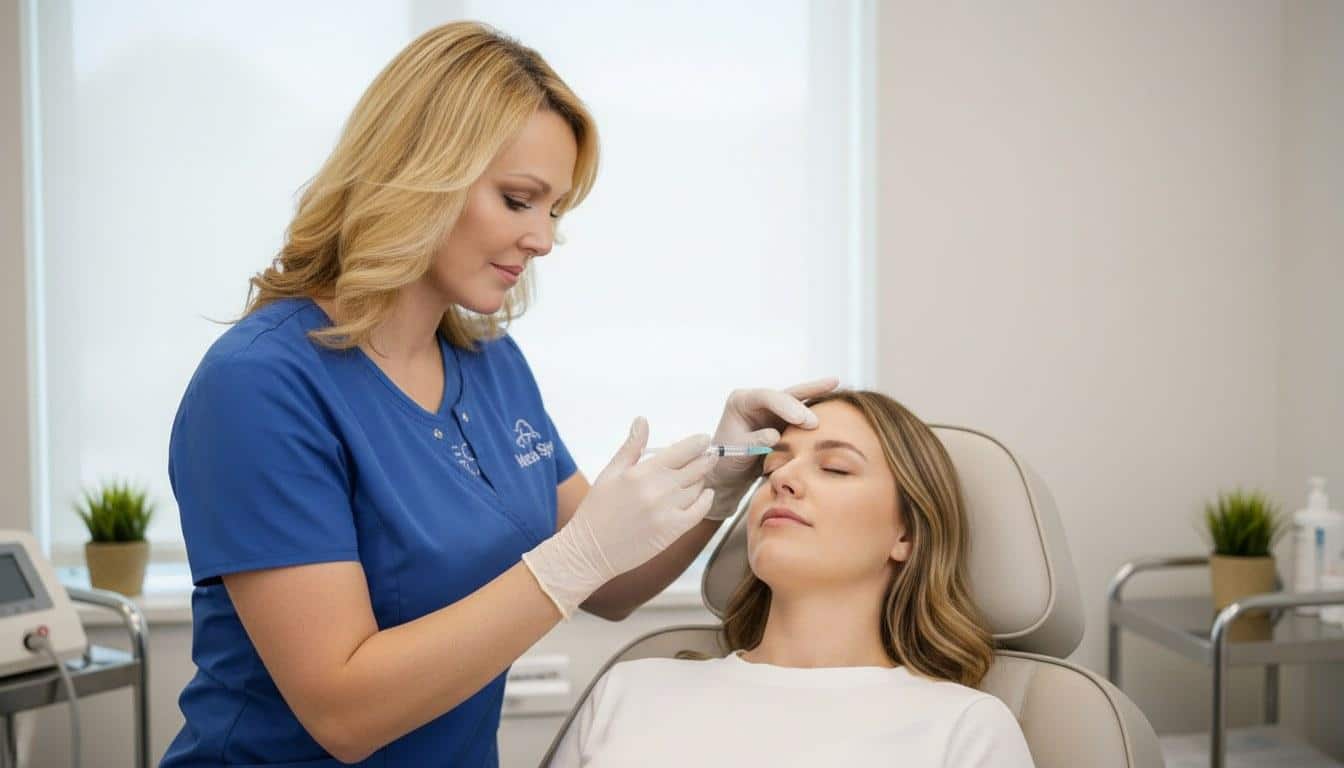
The single most important factor in med spa safety is who is performing your treatment and who is medically responsible for the practice. Before booking any appointment, verify the following.
The Medical Director
Every legitimate med spa must have a licensed physician serving as medical director. This person is legally responsible for the clinical protocols of the practice. Ask who the medical director is and confirm their license is active through your state’s medical board website. Most state boards publish free, searchable license lookup tools online.
The Injector or Treatment Provider
Depending on state law, injections may be performed by a physician, nurse practitioner, physician assistant, or registered nurse working under physician supervision. Ask specifically:
- What is the provider’s license type and license number?
- How many injection appointments do they perform each week?
- Have they completed formal training in facial anatomy and advanced injection techniques beyond their base licensure?
- Are they recognized by any manufacturer training programs (such as Allergan’s tiered provider program)?
Volume matters. A provider performing injections daily develops a level of precision and pattern recognition that someone doing occasional treatments cannot match. Asking how many appointments they complete per week is a practical and reasonable question that a confident provider will answer directly.
Facility Licensing
Med spas are regulated differently across states, but most require a business license specific to medical aesthetic practice, and some states require facility accreditation. Ask whether the clinic holds all required state and local operating permits. A reputable med spa will have this documentation available and will not be offended by the question.
Common Treatment Categories and What They Do
Most med spas organize their services into a few core categories. Understanding what each one does helps you ask better questions and set realistic expectations before your consultation.
Neurotoxin Injections (Botox, Dysport, Xeomin, Daxxify, and Others)
Neurotoxin injections work by temporarily blocking the nerve signals that tell specific facial muscles to contract. When those muscles relax, the wrinkles they create — called dynamic wrinkles — soften or disappear. Common treatment areas include the forehead, the glabellar lines between the brows (often called the “11s”), and the crow’s feet at the outer corners of the eyes. Smaller applications include the brow lift and lip flip.
All neurotoxins used in aesthetic medicine are derived from a purified form of botulinum toxin type A, which the FDA has approved for specific cosmetic indications. At clinical doses, the product does not travel systemically beyond the injection site. Results typically appear within three to five days and reach peak effect around day fourteen. Duration varies by individual but generally falls in the three-to-four-month range.
The table below shows typical unit ranges by treatment area, based on commonly published clinical guidelines. Individual anatomy varies, and a qualified provider will assess your specific muscle activity before recommending a unit count.
| Treatment Area | Typical Units Used | Average Duration |
|---|---|---|
| Forehead lines | 10 to 20 units | 3 to 4 months |
| Glabellar lines (“11s”) | 20 to 25 units | 3 to 4 months |
| Crow’s feet (both sides) | 20 to 30 units | 3 to 4 months |
| Brow lift | 4 to 8 units | 2 to 3 months |
| Lip flip | 4 to 6 units | 2 to 3 months |
Dermal Fillers
Where neurotoxins address movement-driven wrinkles, dermal fillers address volume loss. As the face ages, fat compartments shift and diminish, and bone density in the midface can decrease. Fillers physically replace that lost volume. Hyaluronic acid fillers — the most widely used category — are gel-like substances that integrate with tissue and can be dissolved with an enzyme called hyaluronidase if needed. Common treatment areas include the cheeks, lips, nasolabial folds, and under-eye hollows. Many clients combine neurotoxins and fillers in a single session for more comprehensive results.
Laser and Energy-Based Treatments
This category covers a wide range of devices that use light, radiofrequency, or ultrasound energy to address skin texture, pigmentation, laxity, and vascular concerns. Laser skin resurfacing can target sun damage, hyperpigmentation, acne scarring, and fine lines. Radiofrequency and ultrasound devices stimulate collagen production to tighten skin without incisions. The specific devices available vary by clinic, and results depend heavily on the operator’s training and the device’s maintenance and calibration.
Chemical Peels
Medical-grade chemical peels use acids — such as glycolic, salicylic, trichloroacetic (TCA), or phenol — to exfoliate the outer layers of skin and stimulate collagen remodeling. Depth ranges from light lunchtime peels with no downtime to deeper treatments requiring several days of healing. A qualified provider will assess your skin type, Fitzpatrick scale classification, and treatment goals before recommending a peel depth, since deeper peels carry higher risk of post-inflammatory hyperpigmentation in darker skin tones.
Microneedling
Microneedling devices create controlled micro-channels in the skin to trigger the body’s natural wound-healing response, which stimulates collagen and elastin production. It is used to improve skin texture, tone, fine lines, and mild scarring. Some providers combine microneedling with radiofrequency energy (RF microneedling) for enhanced skin tightening. Results build over a series of sessions, typically three to six spaced four weeks apart.
Body Contouring
Non-surgical body contouring treatments use cold, heat, ultrasound, or radiofrequency energy to reduce localized fat deposits or tighten skin on the abdomen, flanks, thighs, and arms. These are not weight-loss treatments; they are best suited to patients near their goal weight who want to address specific areas resistant to diet and exercise. Results are gradual and typically require multiple sessions.
Medical-Grade Facials
Medical-grade facials go deeper than standard spa facials by incorporating prescription-strength exfoliants, growth factors, peptides, or professional-grade devices. They are often used as maintenance between more intensive treatments or as a starting point for clients new to medical aesthetics.
Realistic Pricing Expectations
Med spa pricing varies significantly by geography, provider credentials, and treatment complexity. The following ranges reflect general market data and should be used as a starting framework, not a guarantee.
- Neurotoxin injections: Most practices price by the unit. Rates typically range from $10 to $20 per unit in the United States, with higher-cost markets (major metropolitan areas, coastal cities) at the upper end of that range. A full forehead and crow’s feet treatment using 40 to 50 units would fall in the $400 to $1,000 range depending on the market and provider.
- Dermal fillers: Priced per syringe, with most hyaluronic acid fillers ranging from $600 to $1,200 per syringe. Biostimulatory fillers (such as Sculptra or Radiesse) may be priced differently.
- Laser treatments: Highly variable based on the device and the area treated. A single session may range from $200 for a basic IPL treatment to $3,000 or more for ablative resurfacing of the full face.
- Chemical peels: Light peels typically range from $100 to $300. Medical-grade deeper peels can run $400 to $800 or more.
- Microneedling: Generally $300 to $700 per session, with RF microneedling at the higher end.
Cosmetic procedures are not covered by health insurance and are generally out-of-pocket expenses. Some flexible spending accounts (FSAs) may cover medically necessary neurotoxin treatments — for example, Botox prescribed for hyperhidrosis or TMJ — but not cosmetic applications. Confirm with your FSA administrator before assuming coverage. Some practices offer membership programs that reduce per-unit or per-session costs for clients who maintain regular appointments; these can offer meaningful savings if you plan to return consistently.
Be cautious of pricing that seems significantly below market rates. Unusually low prices can indicate diluted product, counterfeit product sourced outside authorized distribution channels, or an undertrained provider. The cost of correcting a poor result — in time, additional treatment, and emotional stress — typically exceeds any initial savings.
Consultation Red Flags and Green Flags
The consultation is your most important tool for evaluating a med spa before committing to treatment. Here is what to watch for on both sides.
Green Flags
- The provider conducts a thorough intake, asking about your medical history, current medications, allergies, and prior aesthetic treatments before discussing any specific service.
- They assess your facial anatomy in motion — asking you to raise your brows, squint, and smile — rather than immediately recommending a unit count.
- They explain what they plan to inject, where, and why, in plain language you can understand.
- They show you a portfolio of real patient results, ideally including patients with similar anatomy and age to yours.
- They discuss realistic outcomes and are honest about what a treatment cannot achieve.
- They explain the follow-up process, including whether a two-week check-in is included in the treatment cost.
- They have hyaluronidase on hand for filler emergencies and can articulate their protocol for managing adverse reactions.
- They are willing to confirm that injectables are purchased directly from the manufacturer through authorized distributors.
Red Flags
- The provider recommends a specific treatment or unit count before examining your face or asking about your goals.
- They are vague or evasive about their license type, the medical director’s identity, or the source of the products they use.
- Pricing is dramatically below local market rates with no clear explanation.
- There is pressure to purchase a package or add-on services during the initial consultation.
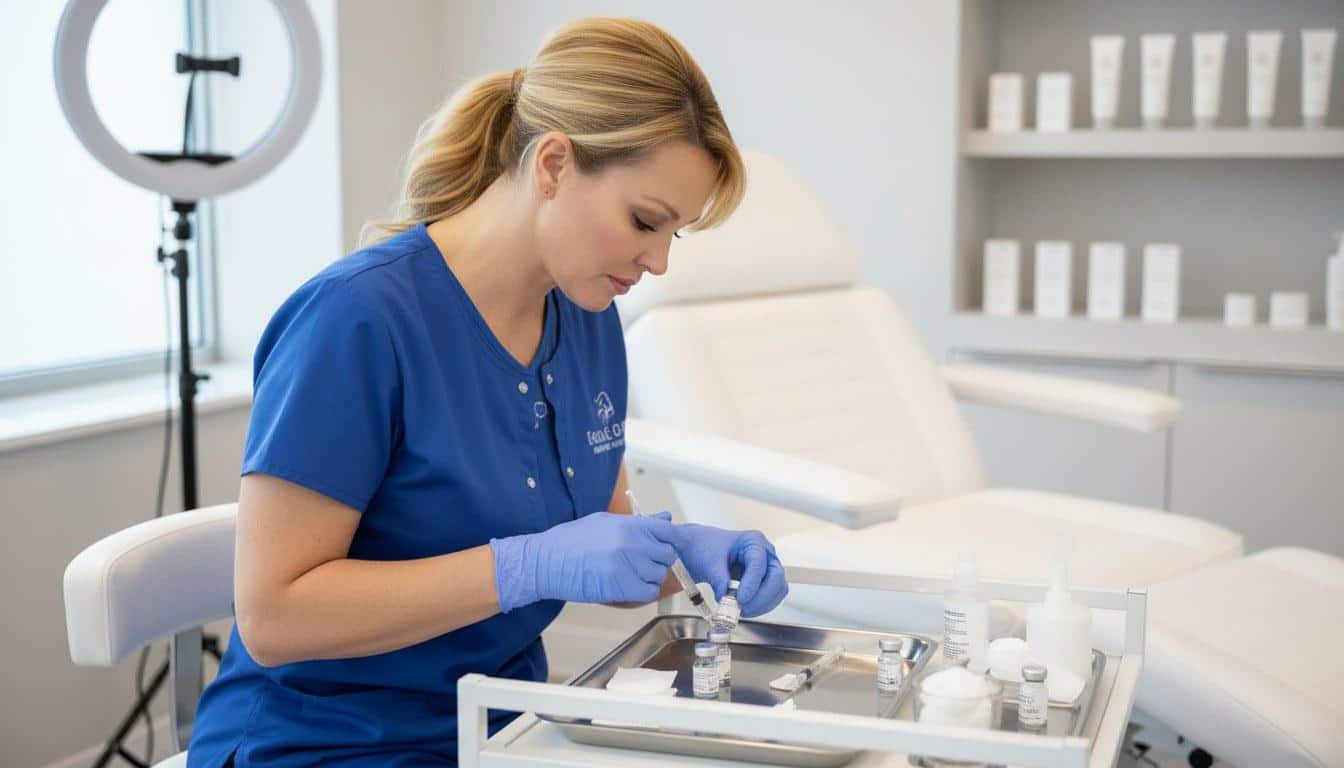
- The clinic cannot produce a product vial with a manufacturer label and lot number when asked.
- Before-and-after photos are stock images or are not attributed to real patients of that specific provider.
- There is no clear process for follow-up if you experience a complication or are unhappy with your result.
Questions to Ask Before You Book
Use this list as a starting point when evaluating any med spa. A qualified, confident provider will welcome these questions.
- Who is the medical director, and is their license current and in good standing?
- What is your license type, and how long have you been performing this specific treatment?
- How many injections or treatments of this type do you perform each week?
- Where do you source your injectables, and can I see the product vial before treatment?
- What does the follow-up process look like if I want an adjustment?
- What is your protocol if I have an adverse reaction?
- Can I see before-and-after photos of patients with similar concerns to mine?
- Are there any contraindications in my medical history that I should discuss with you?
- What realistic results can I expect from this treatment, and what are its limitations?
How to Evaluate Reviews and Results
Online reviews are useful but require critical reading. Look for patterns rather than individual outliers. A provider with consistently high ratings across a large number of reviews over several years is more meaningful than a handful of five-star reviews posted within a short window. Pay attention to reviews that describe the consultation experience, the provider’s communication style, and how the practice handled any follow-up concerns — these details reveal more about the quality of care than a simple star rating.
When reviewing before-and-after photos, look for results that appear natural and proportionate rather than dramatically altered. Photos should show consistent lighting and angle between the before and after images; mismatched lighting can artificially flatter the after image. Ideally, the portfolio should include patients across a range of ages, skin tones, and starting conditions, not only the most dramatic transformations.
Be aware that a small percentage of first-time patients — industry data suggests roughly one in three — benefit from a minor touch-up at a two-week follow-up after neurotoxin treatment, as muscle balance and product distribution become clearer once initial swelling resolves. A reputable practice will include or clearly communicate the cost of this follow-up before you book your first appointment. Correcting an overdone neurotoxin result requires waiting eight to twelve weeks for the product to fully metabolize before retreating safely, which is why conservative initial dosing and a structured follow-up process are hallmarks of a skilled provider.
Choosing a med spa well means prioritizing credentials, transparency, and a thorough consultation process over price or convenience. The treatments available at a qualified med spa can produce meaningful, lasting aesthetic improvements — but the quality of the outcome depends almost entirely on the skill and integrity of the provider you choose.
Frequently Asked Questions
How long does Botox actually last before I need to come back?
Botox results typically last 3 to 4 months for most people. Areas with stronger muscles, like the forehead, may metabolize the product a little faster, while areas with less movement can hold results closer to 4 months. Most clients schedule maintenance appointments 3 to 4 times per year to keep their results consistent.
How many units of Botox do I need for my forehead?
Most providers use between 10 and 20 units for the forehead alone, but the right number depends on how strong your muscles are and how much movement you want to preserve. A thorough consultation at a med spa will include an assessment of your muscle activity before any product is drawn. Starting conservatively and adding units at a two-week follow-up is a common and safe approach.
Is Botox safe, and what are the most common side effects?
Botox has been FDA-approved for cosmetic use since 2002 and has a well-established safety record when administered by a licensed provider. The most common side effects are mild bruising, swelling, or redness at the injection site, which typically resolve within 24 to 72 hours. Headache and a temporary heavy feeling in the brow area are less common and usually fade within a week.
What is the difference between Botox and dermal fillers?
Botox relaxes the muscles that cause dynamic wrinkles like forehead lines and crow's feet. Dermal fillers add physical volume to areas that have lost fullness over time, such as the cheeks, lips, and under-eye hollows. Many clients benefit from both treatments used together. A provider at a med spa can help you decide which approach fits your specific concerns.
How do I know if a med spa is using real, authentic Botox?
Authentic Botox Cosmetic is manufactured by Allergan and distributed through authorized medical supply channels. You can ask the clinic to show you the product vial, which should carry the Allergan label and a lot number. Reputable providers like a qualified med spa purchase directly through verified distributors and are happy to answer questions about product sourcing before your appointment. If a clinic cannot confirm the product origin, that is a reason to look elsewhere.
Related Articles
Related reading
When Should You Start Laser Hair Removal?
