

Why Your Botox Results Aren’t Lasting as Long as Expected
Why Your Botox Results Aren't Lasting as Long as Expected
Botox usually lasts 3–4 months, but for some people it fades in weeks. Here are the real reasons results break down early, what you can do about it, and when to see your provider.
Why Botox Fades Faster for Some People
Botox typically lasts 3 to 4 months, but results can fade in as little as 6 to 8 weeks when specific lifestyle, environmental, or technique factors are present. Understanding why this happens — and what you can do about it — is the most practical starting point for anyone whose results are not meeting expectations.
Heat is one of the most consistent accelerants. High ambient temperatures increase circulation and overall metabolic rate, which means the body clears botulinum toxin from muscle tissue faster than it would in a cooler environment. People who spend significant time outdoors, exercise frequently, or work in sun-exposed settings face a compounded effect. Dry wind conditions add another layer of stress by accelerating skin dehydration, making fine lines appear more prominent even before the toxin itself has fully worn off.
Beyond environment, the technique and dosage used during injection matter enormously. Under-dosing by even a few units in a high-movement area like the forehead can cut longevity by several weeks. Placement that misses the target muscle by a few millimeters also reduces how long you will see a smooth result. These are clinical variables that no amount of post-treatment skincare can compensate for — they have to be addressed at the injection stage itself.
Individual physiology plays a role as well. Patients with higher baseline muscle mass in the face, faster resting metabolic rates, or a history of very frequent treatments may consistently sit at the shorter end of the duration range. None of these factors are disqualifying, but they do inform how a treatment plan should be structured.
What Are the Warning Signs Your Botox Results Are Breaking Down Too Soon?
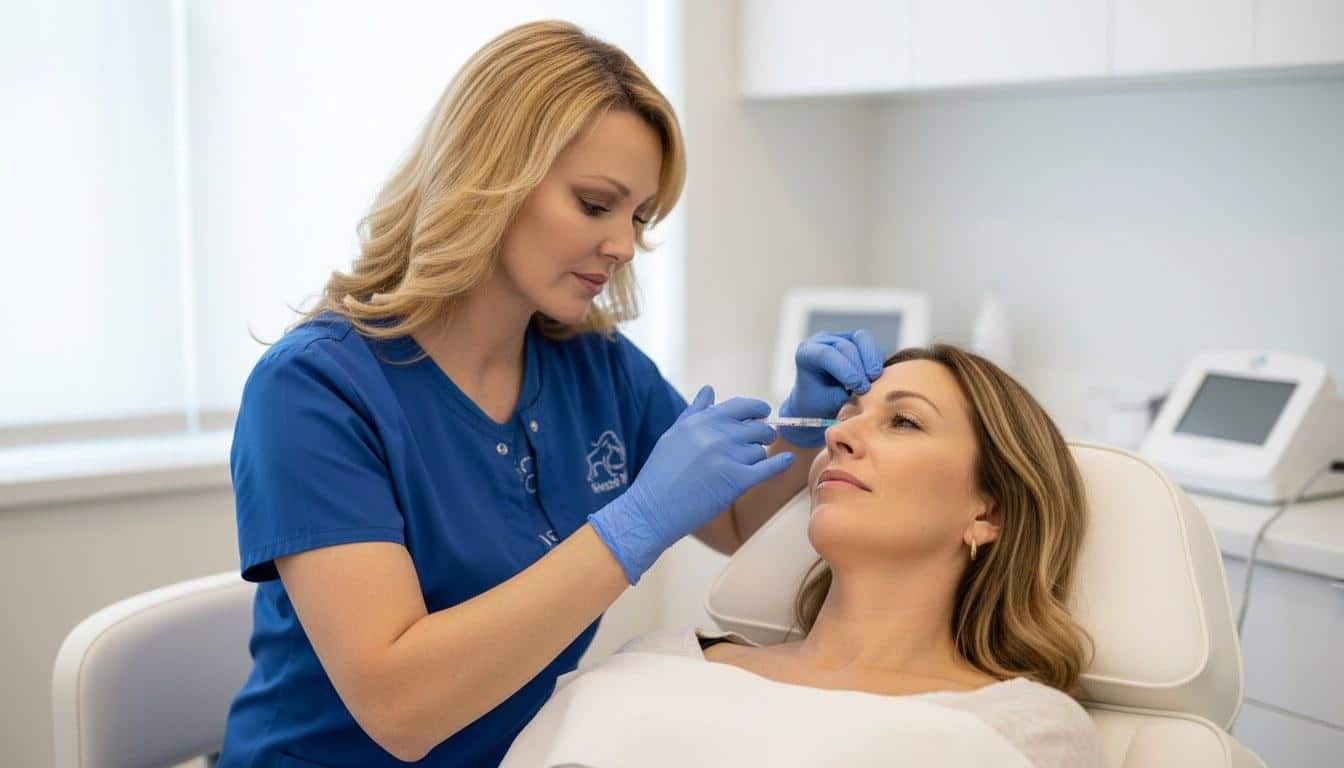
The clearest sign that your Botox treatment is fading prematurely is the return of dynamic wrinkles — like forehead lines or crow’s feet — before the 10-week mark. Most patients should see consistent smoothing through at least weeks 10 to 12 after injection. Earlier movement return points to a specific problem worth investigating.
Watch for these warning signs that your results may be breaking down ahead of schedule:
- Early forehead movement: You can raise your brows or scrunch your forehead within 6 weeks of treatment, well before the expected plateau phase ends.
- Uneven relaxation: One side of the face still looks smooth while the other has regained movement, suggesting inconsistent dosing or placement.
- Crow’s feet returning before 8 weeks: The eye area is high-movement and sensitive to under-dosing, especially in active patients who squint frequently in bright sun.
- Brow heaviness or drooping: This can signal that the toxin migrated slightly from the target muscle — a placement technique issue worth discussing with your injector.
- No initial smoothing at all: If lines did not soften within 7 to 14 days of injection, the product may have been stored improperly, diluted incorrectly, or placed in the wrong muscle layer.
- Patchy results across the treatment area: Uneven smoothing across the forehead or glabella often means the injection pattern did not cover the full muscle anatomy.
- Results fading faster with each treatment cycle: Some patients develop antibodies to botulinum toxin after repeated treatments, reducing effectiveness over time.
| Symptom | Likely Cause | DIY or Pro? |
|---|---|---|
| Movement returns before 8 weeks | Under-dosing, high metabolism, or intense physical activity | Pro — discuss dosage adjustment at next visit |
| Uneven results, one side relaxed, one side moving | Inconsistent injection placement or asymmetric muscle anatomy | Pro — touch-up appointment within 2 weeks |
| No smoothing within 14 days | Improper product storage, incorrect dilution, or wrong muscle target | Pro — return to clinic immediately for assessment |
| Brow drooping after forehead treatment | Toxin migration from intended muscle | Pro — do not attempt to self-correct; schedule a follow-up |
| Results fading faster each cycle | Possible antibody development or dosing plateau | Pro — discuss treatment intervals and dose with injector |
| Crow’s feet returning before 8 weeks | High sun exposure, squinting, or insufficient units placed | DIY prevention (sunglasses, SPF) plus Pro dosage review |
| Patchy smoothing across forehead | Incomplete injection pattern for muscle anatomy | Pro — mapping correction at follow-up |
What Can You Do on Your Own to Make Botox Last Longer?
Several habits within your control can add 2 to 4 extra weeks to your Botox results without any additional injections. These steps are especially important for patients who live in hot, sunny climates or lead active outdoor lifestyles, where UV exposure and elevated body temperature create a more demanding environment for the skin.
- Apply broad-spectrum SPF 30 or higher every morning. High UV index readings are common during summer months across much of the country. Squinting from sun exposure activates the exact muscles Botox is meant to relax, burning through results faster. Daily sun protection reduces this involuntary muscle activity meaningfully.
- Wear UV-blocking sunglasses outdoors. Reducing squinting around the eye area directly preserves crow’s feet and glabellar results. This is one of the simplest, most effective habits for any patient who spends time outside regularly.
- Avoid intense heat exposure for at least 48 hours after treatment. Hot yoga, saunas, and outdoor workouts in temperatures above 85°F in the first two days can cause the toxin to disperse before it fully binds to the target muscle. This window is critical for optimal uptake.
- Stay well hydrated. Dehydration thins the skin and makes fine lines more visible, making it appear as though Botox has worn off even when it has not. Aim for at least 8 cups of water daily, and increase intake during periods of dry heat or wind.
- Maintain a consistent treatment schedule. FDA-approved Botox Cosmetic studies show that patients who stay on a regular 3-to-4-month schedule often see progressively longer-lasting results because the treated muscles weaken gradually over time. Irregular scheduling resets this cumulative benefit.
- Reduce high-intensity cardio in the week before and after treatment. Very high metabolic activity accelerates how quickly the body clears botulinum toxin. Patients who run daily or do frequent HIIT workouts consistently report shorter result windows. Moderating intensity in that two-week window around treatment can make a measurable difference.
Patients who combine daily SPF use with a regular 3-to-4-month treatment schedule tend to report results lasting 4 months or longer in the majority of cases, compared to those on irregular schedules who typically average closer to 10 weeks. The consistency of the schedule matters almost as much as the individual session itself.
When Should You See a Professional About Short-Lived Botox Results?
Schedule a professional consultation if your Botox results are consistently fading before the 10-week mark, if you notice asymmetry within the first 2 weeks, or if you had no visible smoothing at all within 14 days of treatment. These are not situations where waiting or adjusting habits at home will fix the underlying issue.
A qualified injector will evaluate several clinical factors that cannot be assessed in a mirror at home. These include your muscle mass and anatomy, the number of units placed per area, the dilution ratio used, and whether your injection pattern matched your specific facial structure. Forehead muscles, for example, vary significantly in width and height between patients, and a one-size-fits-all pattern will under-treat some faces entirely.
Precision in placement is the single biggest factor separating 3-month results from 4-month results. Patients who present with short-lived results have most often received 10 to 15 fewer units than their muscle mass required for the area treated. A proper unit count for the forehead and glabella together typically falls between 20 and 40 units, depending on muscle strength and the look the patient wants.
Patients who present with short-lived results have most often received 10 to 15 fewer units than their muscle mass required for the area treated.
Antibody resistance is a real but uncommon concern. As of 2024, clinical literature suggests that a small percentage of patients who receive Botox injections frequently and at high doses over several years may develop neutralizing antibodies. If you have had more than 6 treatment cycles and are noticing progressively shorter results, this is worth a direct conversation with your provider about dosing strategy or alternative neuromodulators such as Dysport, Xeomin, or Daxxify, which use slightly different protein formulations and may not trigger the same immune response.
A thorough provider will also review your full treatment history — not just the most recent session — to identify patterns. If you have been treated at multiple clinics with varying dosing approaches, that inconsistency alone can make it difficult to determine whether the issue is biological or technique-related. Consolidating your care with a single experienced injector who tracks your anatomy and response over time tends to produce the most stable, predictable results.
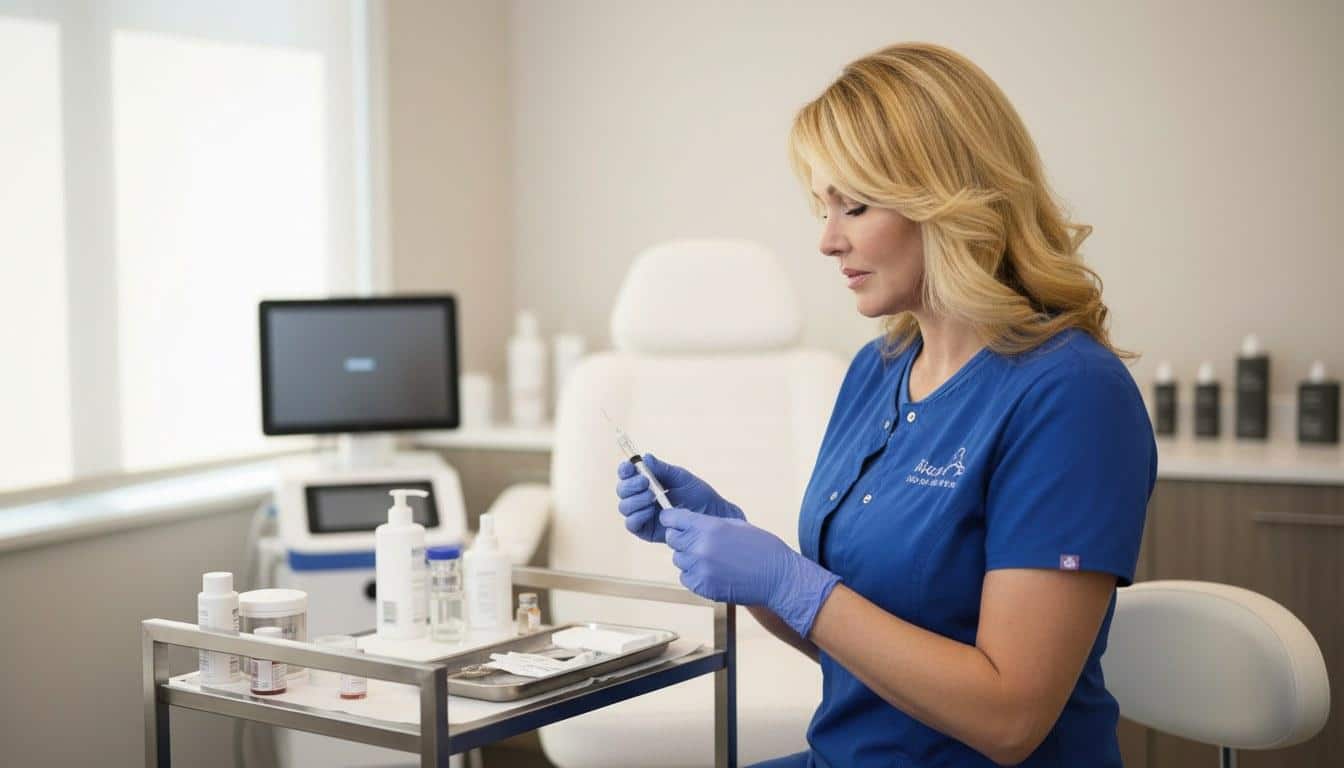
Understanding Botox Dosing and Muscle Anatomy
Dosing is not one-size-fits-all, and the gap between an adequate dose and an insufficient one is often just 5 to 10 units. Understanding the basics of how dosing relates to anatomy helps patients have more productive conversations with their injectors and recognize when a treatment plan may need adjustment.
Common treatment areas and typical unit ranges
| Treatment Area | Typical Unit Range | Notes |
|---|---|---|
| Forehead lines | 10–20 units | Higher end for larger or stronger forehead muscles |
| Glabella (11 lines between brows) | 10–25 units | One of the most common under-dosed areas |
| Crow’s feet (both sides) | 10–20 units total | High-movement area; benefits from adequate dosing |
| Brow lift | 2–5 units per side | Precise placement critical to avoid drooping |
| Lip lines / lip flip | 4–8 units | Low-dose area; over-treatment affects speech and eating |
| Chin dimpling | 4–8 units | Targets mentalis muscle |
| Neck bands (platysma) | 25–50 units | Large muscle; requires experienced injector |
These ranges reflect published clinical guidance and common practice, but individual anatomy always takes precedence. A patient with a particularly strong corrugator muscle — the primary driver of the 11 lines — may need the upper end of the glabella range to achieve full relaxation, while someone with naturally weaker muscles may respond well to fewer units. An experienced injector assesses muscle strength dynamically, watching how you move your face before placing a single injection.
How dilution affects your results
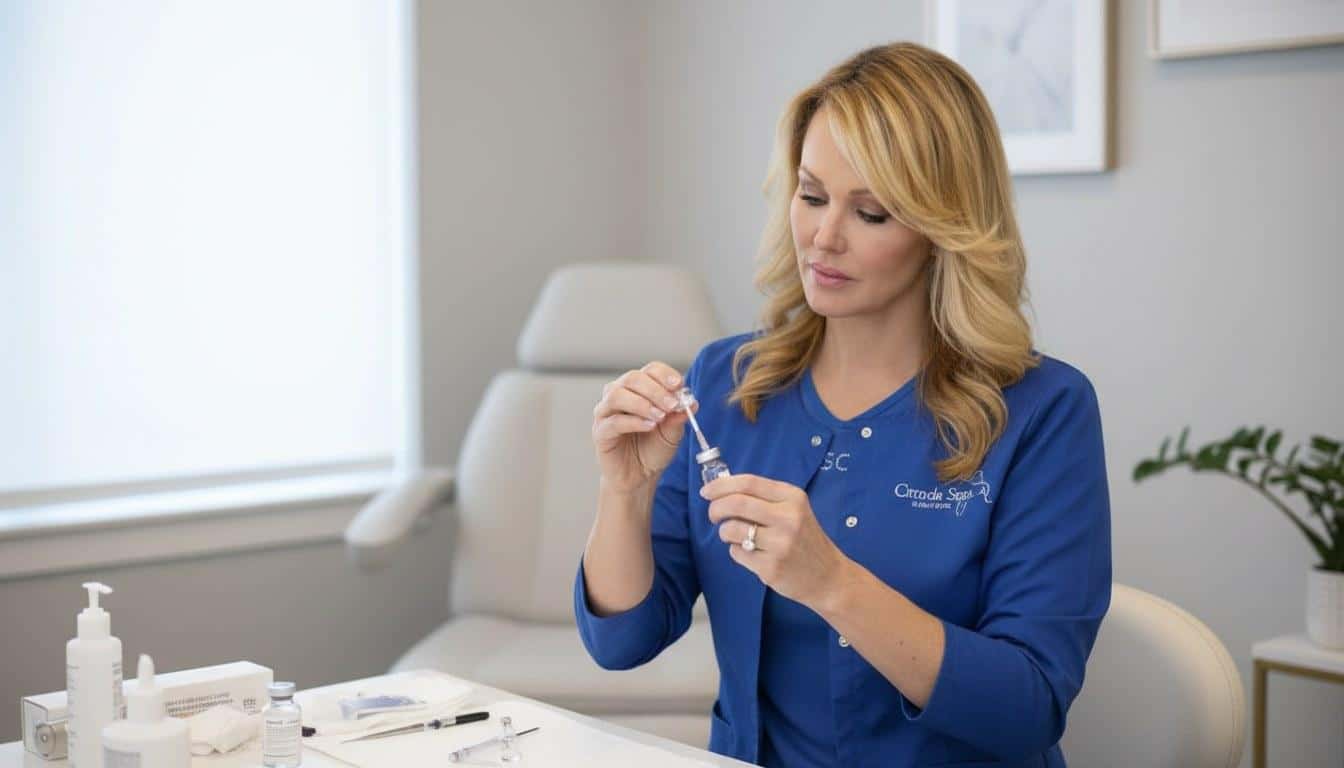
Botox is supplied as a freeze-dried powder and must be reconstituted with saline before use. The volume of saline used — the dilution ratio — affects how the product spreads within the tissue. A more dilute solution spreads more broadly; a more concentrated solution stays closer to the injection point. Neither approach is universally superior, but the dilution must be appropriate for the target muscle and the desired outcome. Clinics that reconstitute product incorrectly — whether too dilute or too concentrated — can produce results that look uneven or fade faster than expected. This is not something a patient can assess from the outside, which is why provider credentials and transparency matter.
Frequently Asked Questions
How long does Botox typically last?
Botox typically lasts 3 to 4 months for most patients. However, high UV exposure, heat, and active lifestyles can shorten that window to 6 to 10 weeks for some people. Staying on a consistent treatment schedule and protecting your skin from sun exposure are the two most effective ways to extend your results.
How many units of Botox do I need for my forehead?
The forehead and glabella area together typically require between 20 and 40 units of Botox, depending on your muscle strength, forehead size, and the level of relaxation you want. Patients with stronger or larger forehead muscles generally need more units to see full smoothing. A qualified injector can assess your anatomy and provide a specific recommendation during a consultation.
Why did my Botox stop working after just a few weeks?
Botox can fade early for several reasons, including under-dosing, incorrect placement, high physical activity levels, or intense heat exposure in the days after treatment. In rare cases, patients who have had many treatment cycles develop antibodies that reduce the toxin's effectiveness. If your results are consistently lasting less than 10 weeks, schedule a consultation to review your dosing history and injection pattern.
What does Botox actually do to the muscles in my face?
Botox is a purified form of botulinum toxin that temporarily blocks the nerve signals that tell specific facial muscles to contract. When the muscle cannot contract, the overlying skin stays smooth instead of folding into wrinkles. The FDA approved Botox Cosmetic for cosmetic use, and the effect is temporary, wearing off as the nerve signals gradually return over 3 to 4 months.
How much does Botox typically cost?
Botox injections typically range from $10 to $20 per unit, with total session costs depending on how many areas are treated and how many units each area requires. A forehead and crow's feet treatment together could involve anywhere from 30 to 60 units depending on your anatomy and muscle strength. Requesting a consultation with a unit-count recommendation before committing to treatment gives you the clearest picture of what your plan will involve.