

How to Keep Your Botox Looking Fresh Between Appointments
How to Keep Your Botox Looking Fresh Between Appointments
Want to stretch the time between Botox appointments without losing your results? Here's how to keep your look fresh — from daily habits to smart timing.
Why Botox Fades Faster in Certain Conditions
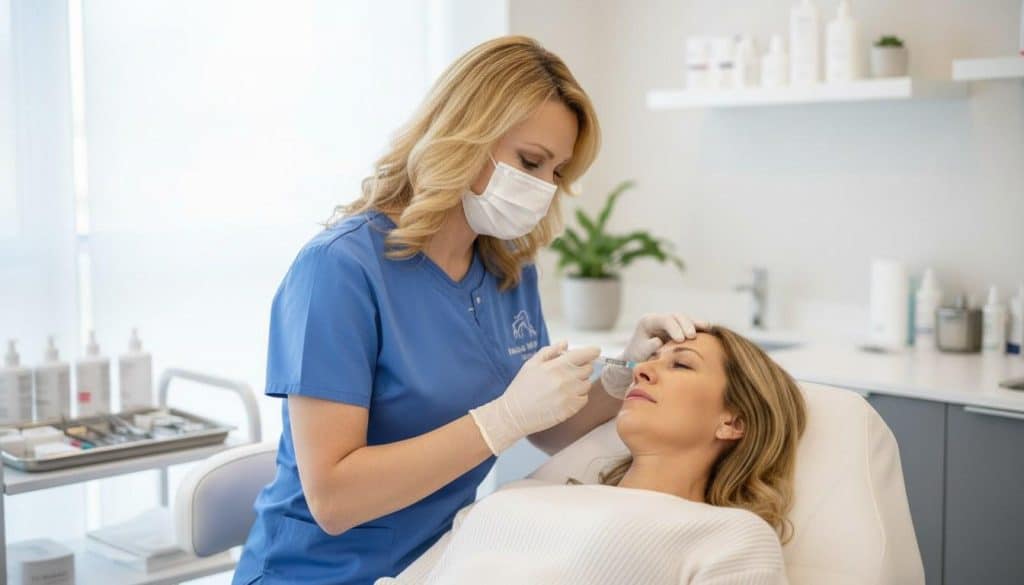
Botox typically lasts 3 to 4 months per treatment, but environmental and lifestyle factors can push results toward the shorter end of that range. Heat, UV exposure, and seasonal dry winds all stress the skin and accelerate how quickly the body metabolizes the neuromodulator.
High ambient temperatures increase circulation and overall metabolic rate. When the body is running hotter — whether from outdoor heat, exercise, or fever — it tends to break down injected neuromodulators more quickly than it would under cooler, more stable conditions. Patients who are very physically active or who spend significant time outdoors in warm weather often notice their results fading closer to the 10-week mark rather than 12 to 14 weeks.
Seasonal dry wind events, common in many parts of California between October and January, can drop relative humidity below 10 percent on some days. That level of dryness dehydrates the skin, weakens the barrier, and makes fine lines more visible even when the Botox is still technically active. The effect is not that the product has worn off sooner — it is that dehydrated skin makes remaining results look less smooth.
UV radiation is the other major accelerant. Sun exposure breaks down collagen and can make treated areas appear less refined over time, even before the neuromodulator itself has fully worn off. Wearing a broad-spectrum SPF 30 or higher every day is one of the most straightforward ways to protect your results between appointments.
What to Do Each Season to Protect Your Botox Results
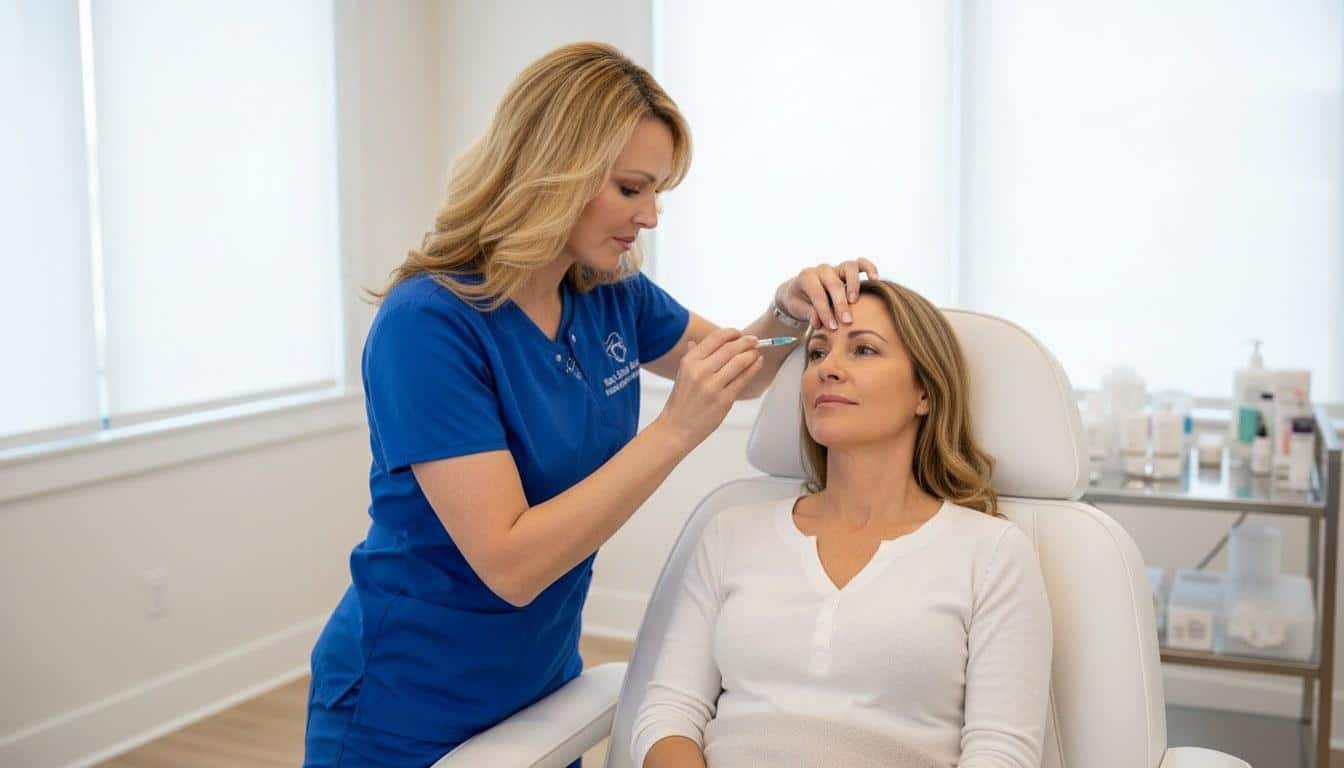
Matching your skincare habits to the seasonal calendar helps you get the most out of every Botox treatment. Each season brings a different challenge to your results, and a short seasonal checklist keeps you ahead of the curve.
Winter (December through February)
- Moisturize daily: Cool nights and low indoor humidity dry out the skin barrier. Use a fragrance-free moisturizer with hyaluronic acid morning and night.
- Keep SPF in your routine: Winter sun is still strong. UV index levels can reach moderate even in December, especially at midday. Do not skip sunscreen because the temperature has dropped.
- Schedule your next appointment proactively: Book your next Botox session 10 to 12 weeks after your last one so you are not playing catch-up when spring arrives.
- Stay hydrated: Aim for at least 64 ounces of water daily. Dehydrated skin makes lines more visible and can make results look less smooth even when the product is still active.
Spring (March through May)
- Upgrade your sunscreen: Switch to a broad-spectrum SPF 50 as daylight hours increase and outdoor activity picks up.
- Add an antioxidant serum: A vitamin C serum applied in the morning helps neutralize free radicals from increased sun exposure and supports collagen integrity in treated areas.
- Review your results: Spring is a good time to assess how your Botox is holding up and whether a touch-up is needed before summer heat arrives.
Summer (June through September)
- Avoid prolonged heat exposure: Hot yoga, saunas, and extended time in direct sun can accelerate Botox metabolism. Limit these activities for at least 48 hours after any injection appointment.
- Reapply sunscreen every 2 hours: During outdoor activities, reapplication matters as much as the initial application.
- Keep skin cool after injections: If you receive a treatment in summer, avoid strenuous outdoor exercise for 24 hours to reduce flushing and swelling at injection sites.
- Expect a slightly shorter cycle: Many patients find they need to return closer to the 10-week mark rather than 12 weeks during the hottest months. Plan your calendar accordingly.
Fall (October through November)
- Prepare for dry wind events: Stock up on a rich barrier cream before seasonal wind events hit. Cracked, dehydrated skin makes treated areas look uneven and can exaggerate the appearance of lines.
- Book a pre-holiday appointment: Many patients schedule a Botox treatment in October or November to look refreshed for holiday gatherings. Book early, as appointment availability tightens during this period.
- Avoid rubbing or touching your face: Wind-driven dust and irritation can tempt you to rub your face, which can displace freshly injected product within the first 4 hours post-treatment.
Botox Maintenance Task Guide: Frequency and Who Handles It
Knowing which tasks you can handle at home and which ones require a licensed professional keeps your results consistent and safe. The table below covers the most important maintenance actions for Botox patients.
| Task | Frequency | DIY or Pro? |
|---|---|---|
| Apply broad-spectrum SPF 30 or higher | Daily, every morning | DIY |
| Use a hydrating moisturizer with hyaluronic acid | Twice daily | DIY |
| Apply antioxidant vitamin C serum | Every morning | DIY |
| Drink at least 64 oz of water | Daily | DIY |
| Avoid saunas and hot yoga within 48 hours of injection | After every appointment | DIY (post-care rule) |
| Schedule a Botox touch-up or full treatment | Every 10 to 14 weeks | Pro only |
| Professional skin assessment and treatment plan review | Every 6 months | Pro only |
| Professional chemical peel or hydrating facial (to complement results) | Every 4 to 6 weeks if recommended | Pro only |
What a Professional Botox Maintenance Appointment Includes
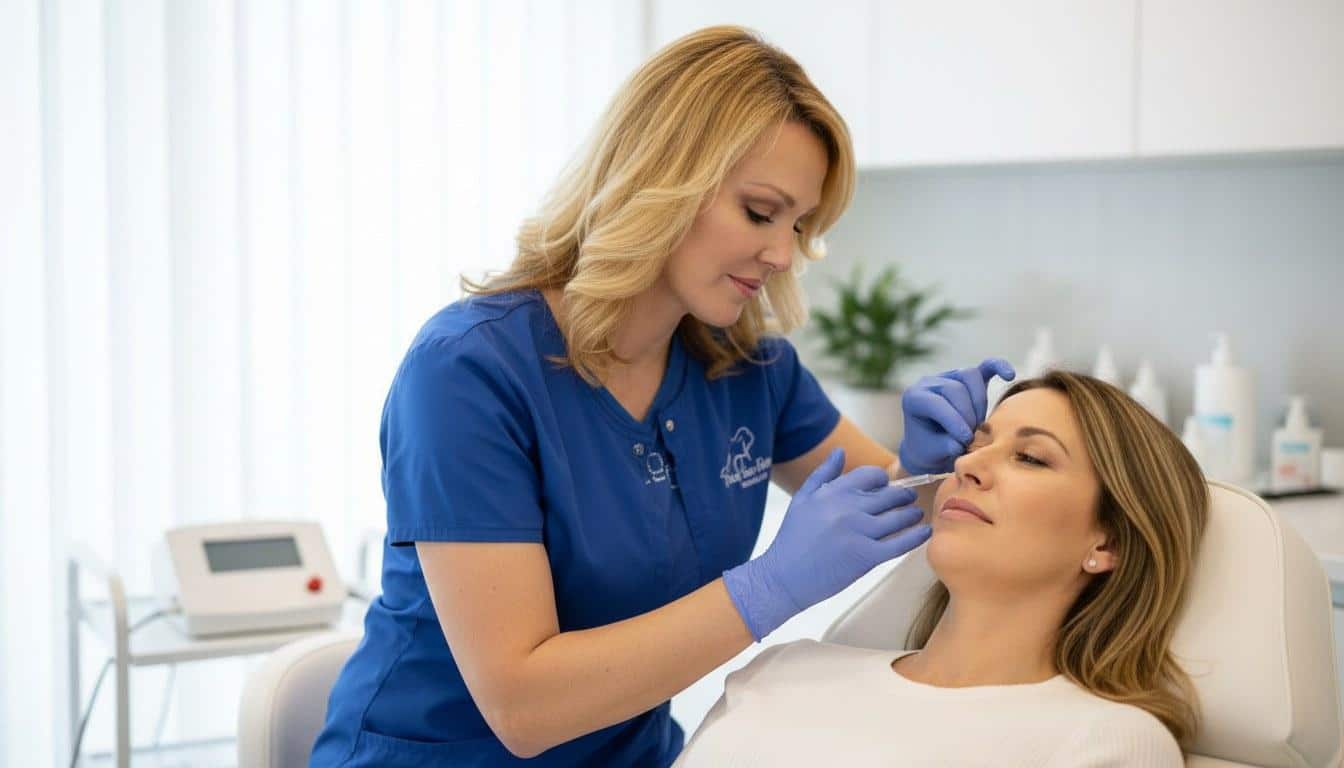
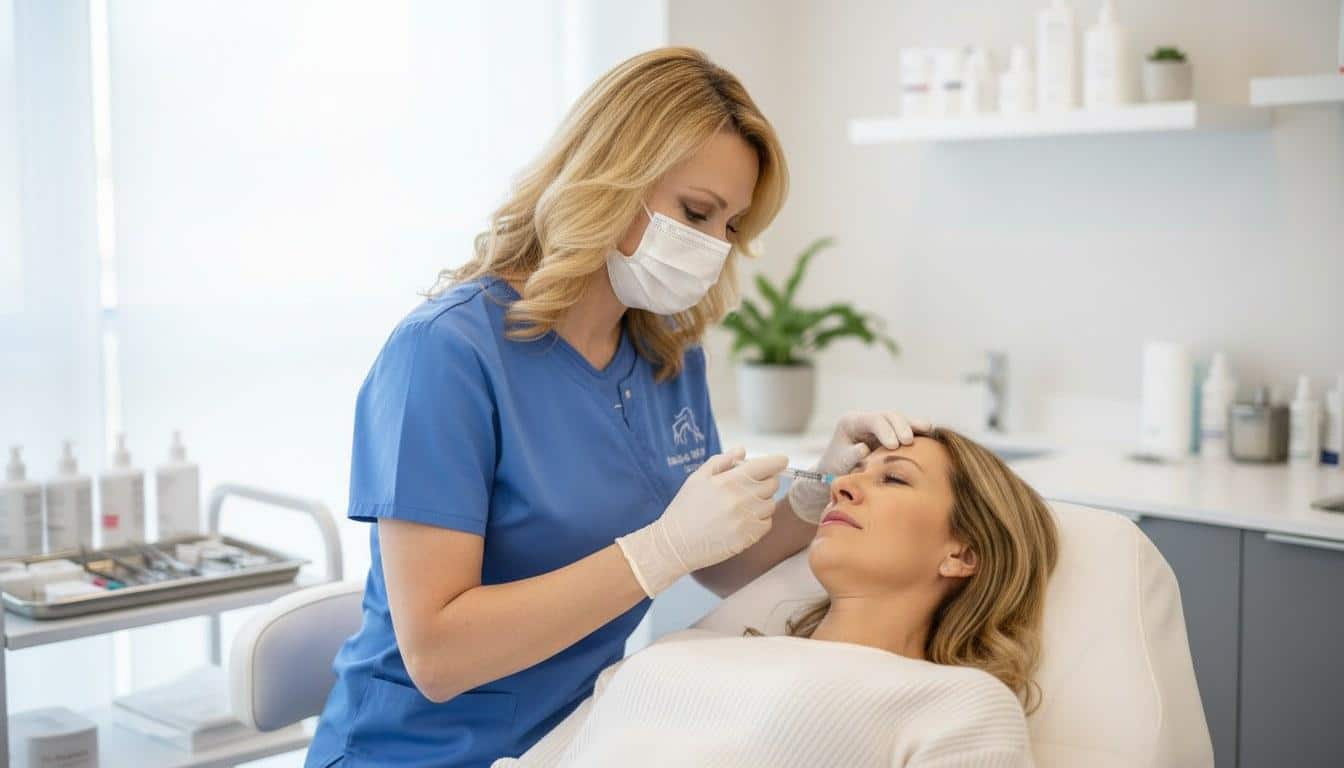
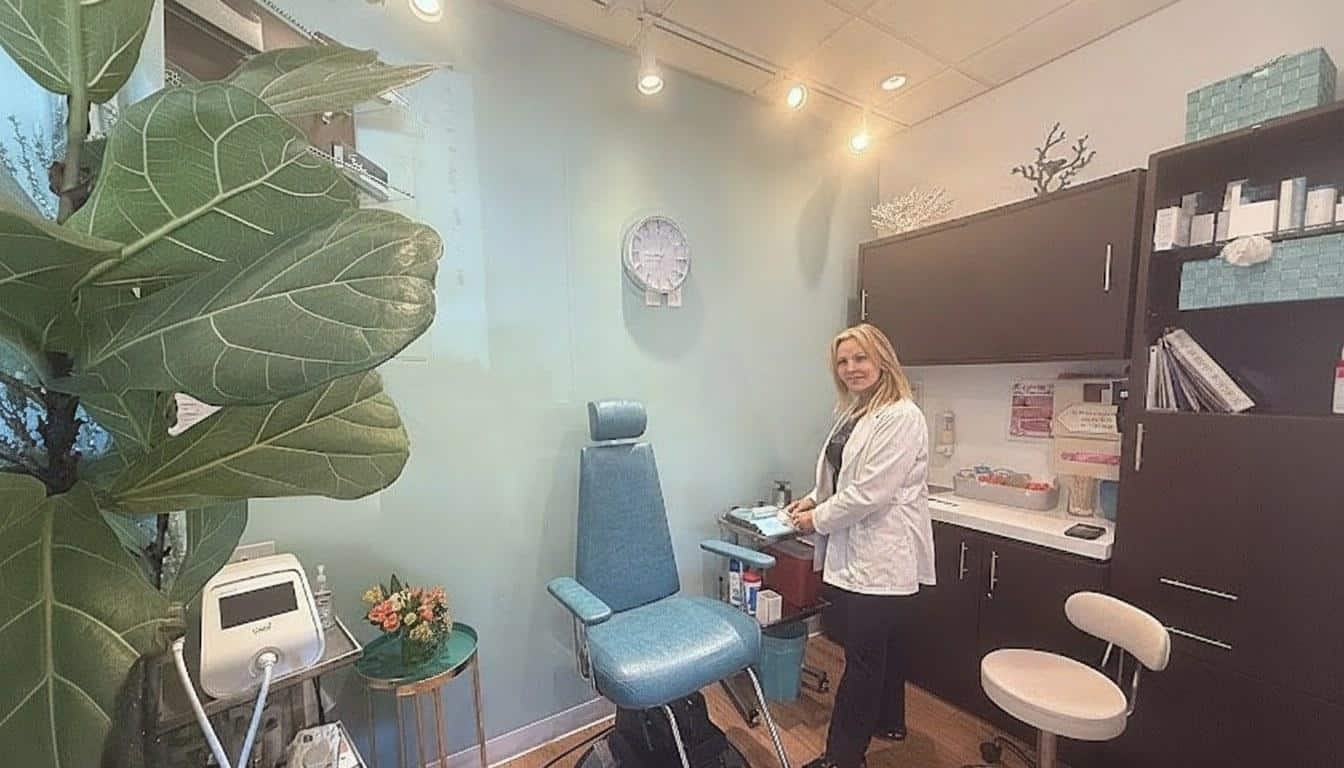
A standard Botox maintenance visit at a med spa typically takes 20 to 45 minutes from consultation to completion. It covers a facial assessment, unit count review, injection, and a short observation period before you leave.
Your provider will first review how your previous treatment held up. They will examine the forehead, glabellar lines (the “11s” between the brows), and crow’s feet to see where movement has returned and where product is still active. This assessment typically takes 5 to 10 minutes and informs everything that follows.
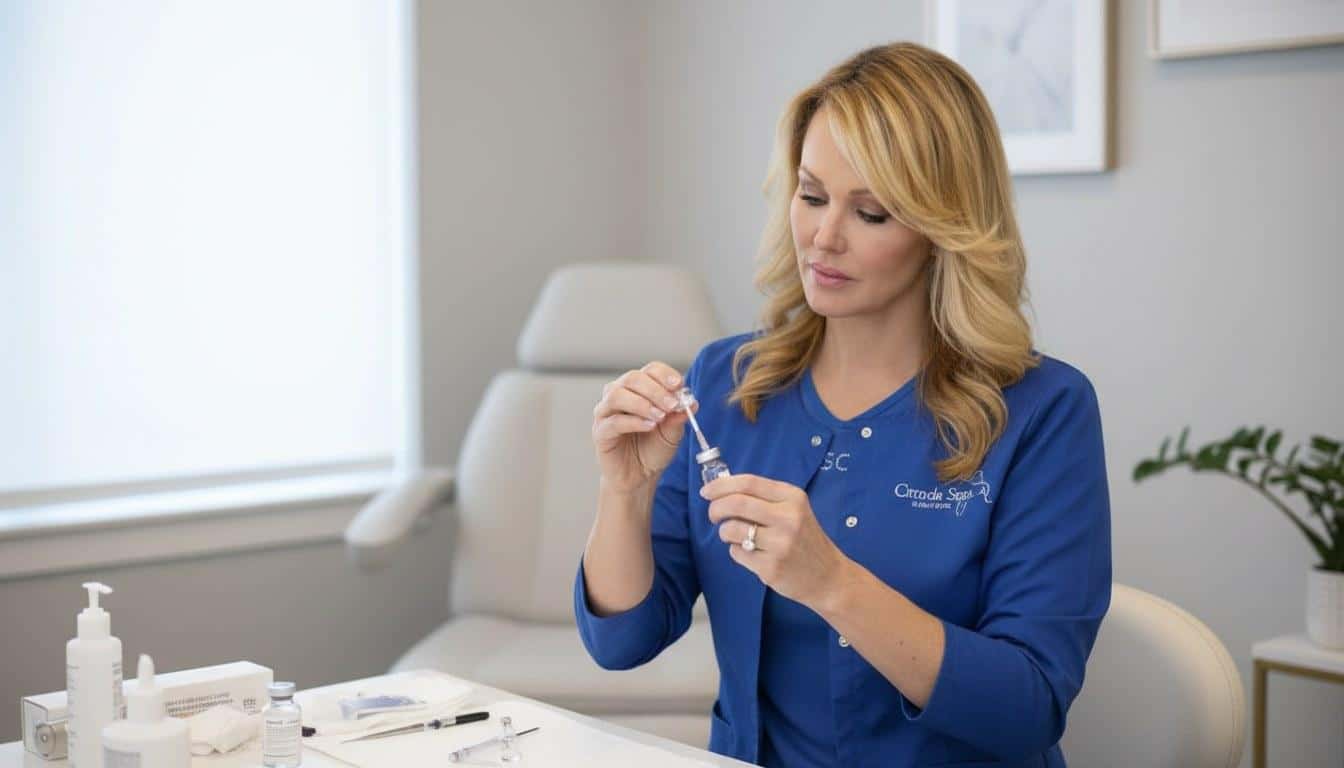
The injector then maps out which areas need product and how many units to use. For reference, forehead lines generally require 10 to 30 units, crow’s feet around 5 to 15 units per side, and the glabella area typically 15 to 25 units. These are standard clinical ranges; the exact count for your anatomy is determined by your qualified provider at the appointment based on muscle strength, facial symmetry, and your aesthetic goals.
After injections, most patients sit upright for 15 minutes and then resume normal activity. The provider will give specific post-care instructions, including avoiding lying flat for 4 hours and skipping strenuous exercise for 24 hours. Full results are typically visible within 5 to 14 days as the neuromodulator takes effect at the neuromuscular junction.
Patients who come in on a consistent 10-to-12-week schedule tend to use roughly 15 to 20 percent fewer total units per year than patients who wait until full movement returns before rebooking, because the muscles are easier to relax when they have not fully recovered their baseline tone.
This pattern makes clinical sense. When the muscle has been consistently kept in a partially relaxed state, the injector does not need to work against fully re-engaged muscle fibers. Over time, consistent treatment can also lead to some softening of static lines — those visible even at rest — because the underlying muscle has had extended periods of reduced activity.
Warning Signs to Watch for Between Botox Appointments
Most Botox treatments are straightforward, but a few signs between appointments are worth paying close attention to. Some are normal parts of the wear-off process, while others warrant a call to your provider sooner rather than later.
Normal Signs That Results Are Wearing Off
- Gradual return of movement: You will start to feel muscle movement return in treated areas around weeks 8 to 10. This is expected and signals it is time to rebook.
- Lines becoming more visible in photos: Dynamic lines — those that appear with expression — will return before static lines do.
- Brow position shifting slightly: A lifted brow from a brow-lift technique will slowly return to its baseline position over 3 to 4 months as the product metabolizes.
Warning Signs That Need a Provider Call
- Asymmetry that worsens after 2 weeks: Some asymmetry in the first 5 to 7 days is normal as the product settles into the tissue. Asymmetry that appears or worsens after 2 weeks is not typical and should be evaluated by your injector.
- Drooping eyelid (ptosis): A heavy or drooping upper eyelid after forehead or glabellar injections can occur rarely and should be reported to your provider within 48 hours of noticing it. There are clinical interventions that can help.
- Results disappearing in under 6 weeks: If full movement returns in fewer than 6 weeks, your provider may need to adjust the unit count or injection placement. This tends to happen most often in patients who are very physically active or who had a fever or illness shortly after their appointment, both of which can accelerate metabolism of the product.
- Redness, swelling, or firmness lasting more than 72 hours: Minor swelling at injection sites is normal for up to 48 hours. Anything lasting longer or spreading beyond the injection site should be evaluated promptly.
- Headache lasting more than 48 hours: Mild headaches in the first 24 hours are common after Botox. A headache that persists beyond 48 hours is worth a call to your provider.
How Botox Results Compare Across Common Treatment Areas
| Treatment Area | Typical Duration | First Sign of Wear-Off |
|---|---|---|
| Forehead lines | 3 to 4 months | Horizontal lines visible when raising brows |
| Glabella (11 lines) | 3 to 5 months | Slight furrow when concentrating |
| Crow’s feet | 3 to 4 months | Fan lines visible when smiling in bright light |
| Lip lines (lip flip) | 6 to 8 weeks | Upper lip returns to previous position |
| Neck bands (Nefertiti lift) | 3 to 4 months | Vertical bands visible when tensing neck |
What Botox Costs and How Pricing Works
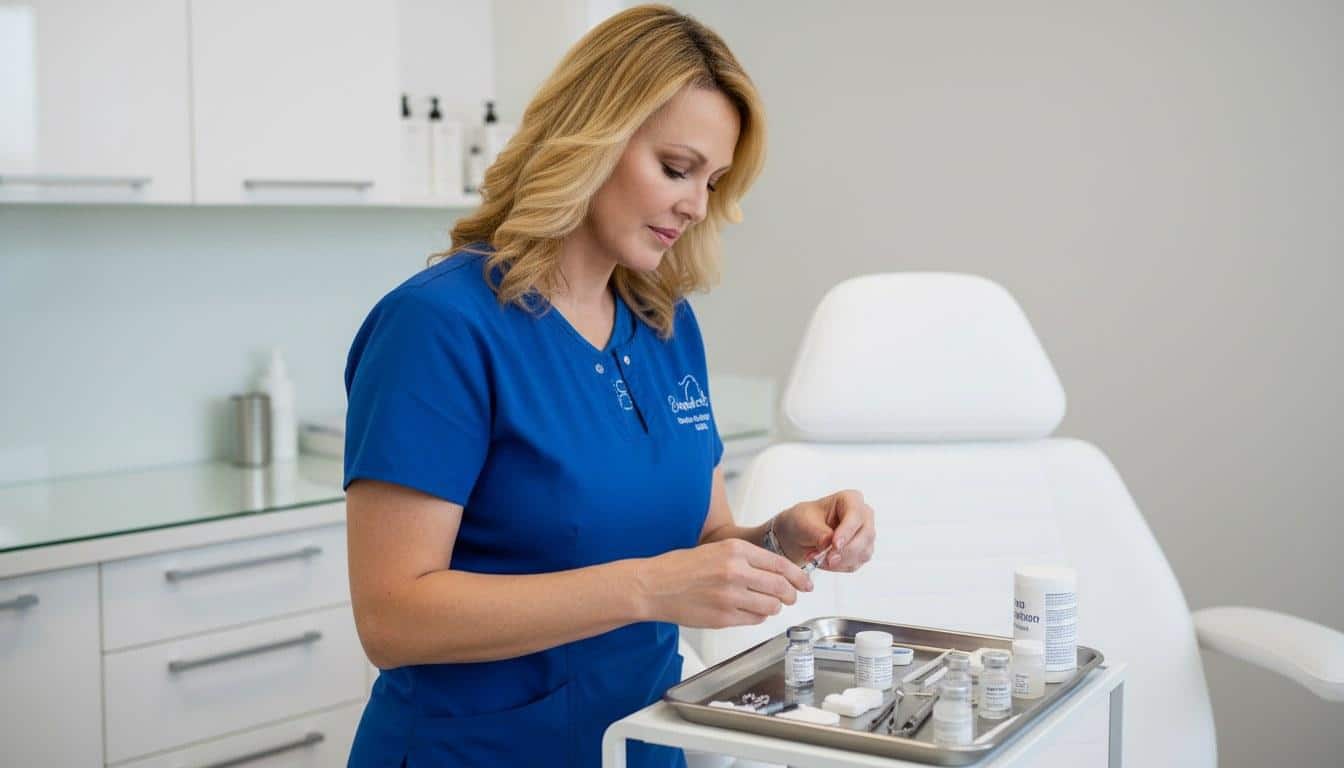
Botox treatments are typically priced either per unit or per area. Per-unit pricing at qualified med spas generally ranges from roughly $12 to $20 per unit depending on the provider’s credentials, the facility, and the areas being treated.
A full forehead and glabella treatment using 30 to 50 units would therefore typically fall in the range of $360 to $1,000. Lip flip treatments using 4 to 8 units are on the lower end of the cost spectrum. Comprehensive multi-area treatments covering the forehead, glabella, and crow’s feet together typically cost more than single-area sessions but often less than booking each area as a separate appointment.
Factors that move the price include the injector’s experience level and credentials (whether a nurse, physician assistant, or physician performs the treatment), the number of units required for your anatomy, and whether any complementary treatments such as a hydrating facial are added. The practice’s geographic market also influences pricing.
As of 2025, FDA-approved Botox Cosmetic (onabotulinumtoxinA) remains the most widely used neuromodulator in this category. Other FDA-approved options — including Dysport, Xeomin, Daxxify, and Jeuveau — are also available at many clinics and may be worth discussing with your provider depending on your goals and anatomy. Each has a slightly different onset time, diffusion profile, and unit conversion ratio, so the choice is not simply interchangeable without clinical guidance.
When evaluating price, it is worth asking whether the quote is per unit or per area, what the unit count estimate is for your specific anatomy, and whether a follow-up assessment is included if results are uneven at the two-week mark. A lower per-unit price with fewer units can produce underwhelming results, while an experienced injector using the right unit count for your muscle mass typically delivers more consistent outcomes.
Staying Consistent: The Single Most Effective Habit
Of all the strategies covered in this guide, appointment consistency has the greatest impact on how your results look over time. Waiting until full movement returns before rebooking means you are starting from zero each cycle — the muscle has fully recovered, the static lines have had more time to deepen, and the injector needs to use more product to achieve the same effect.
Rebooking at the 10-to-12-week mark, before movement fully returns, keeps the muscle in a partially relaxed state. Over multiple consistent cycles, many patients notice that their static lines — those visible even without expression — begin to soften, because the underlying muscle has had extended periods of reduced activity. This is one of the reasons long-term Botox patients often feel they need fewer units over time, not more.
Pair that consistency with daily SPF, adequate hydration, and a basic antioxidant skincare routine, and you have a straightforward maintenance framework that works regardless of the season or climate. The science is not complicated: protect the skin from UV and environmental stress, keep it hydrated, and let your qualified provider handle the rest on a regular schedule.
Frequently Asked Questions
How long does Botox actually last?
Botox typically lasts 3 to 4 months per treatment in most patients. Heat, high physical activity levels, and dry seasonal conditions can push results toward the shorter end of that range. Scheduling your next appointment at the 10-to-12-week mark rather than waiting until full movement returns helps keep results looking consistent and may reduce the total units needed per year.
How many units of Botox do I need for my forehead?
Forehead lines generally require 10 to 30 units depending on the strength of your forehead muscles, the depth of the lines, and the look you want. A qualified injector will assess your anatomy at the appointment and recommend the right unit count for your specific goals. Combining the forehead with the glabella area typically uses 25 to 55 units total.
What should I avoid after getting Botox injections?
For the first 24 hours after Botox injections, avoid strenuous exercise, lying flat, saunas, and direct sun exposure. Do not rub or massage the treated areas for at least 4 hours after the appointment. In warm climates or during hot months, it is especially important to skip outdoor workouts and hot yoga the day of your treatment to avoid speeding up how quickly your body metabolizes the product.
How do I know when my Botox is starting to wear off?
The first sign is usually a gradual return of muscle movement in treated areas, typically starting around weeks 8 to 10. You may notice forehead lines appearing when you raise your brows, or the 11 lines between your brows becoming slightly visible when you concentrate. This is a normal part of the wear-off process and a good signal to contact your provider to schedule your next appointment.
Is Botox safe, and what is it actually made of?
Botox Cosmetic is FDA-approved and has been used in aesthetic medicine for over 20 years. It is made from a purified form of botulinum toxin type A, which temporarily relaxes targeted facial muscles to smooth dynamic wrinkles. When administered by a licensed provider in the correct units, it does not spread beyond the injection site. Always confirm that your provider uses only FDA-approved neuromodulators and follows established injection protocols.