


Microneedling for Acne Scars: What Results Can You Realistically Expect?
Microneedling for Acne Scars: What Results Can You Realistically Expect?
Microneedling can significantly reduce the appearance of acne scars, but the results depend on your scar type, skin tone, and how many sessions you complete. This guide covers what to realistically expect.
What Does Microneedling Actually Do to Acne Scars?
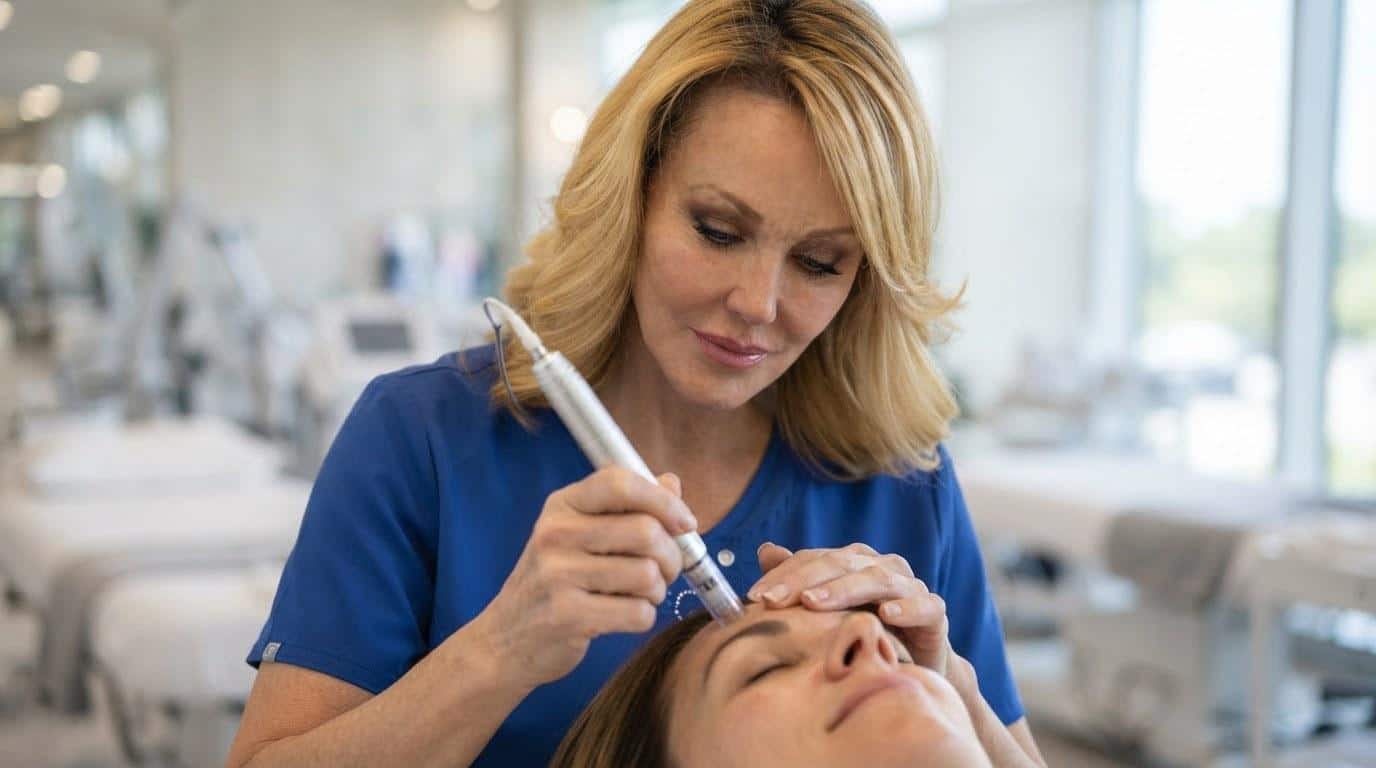
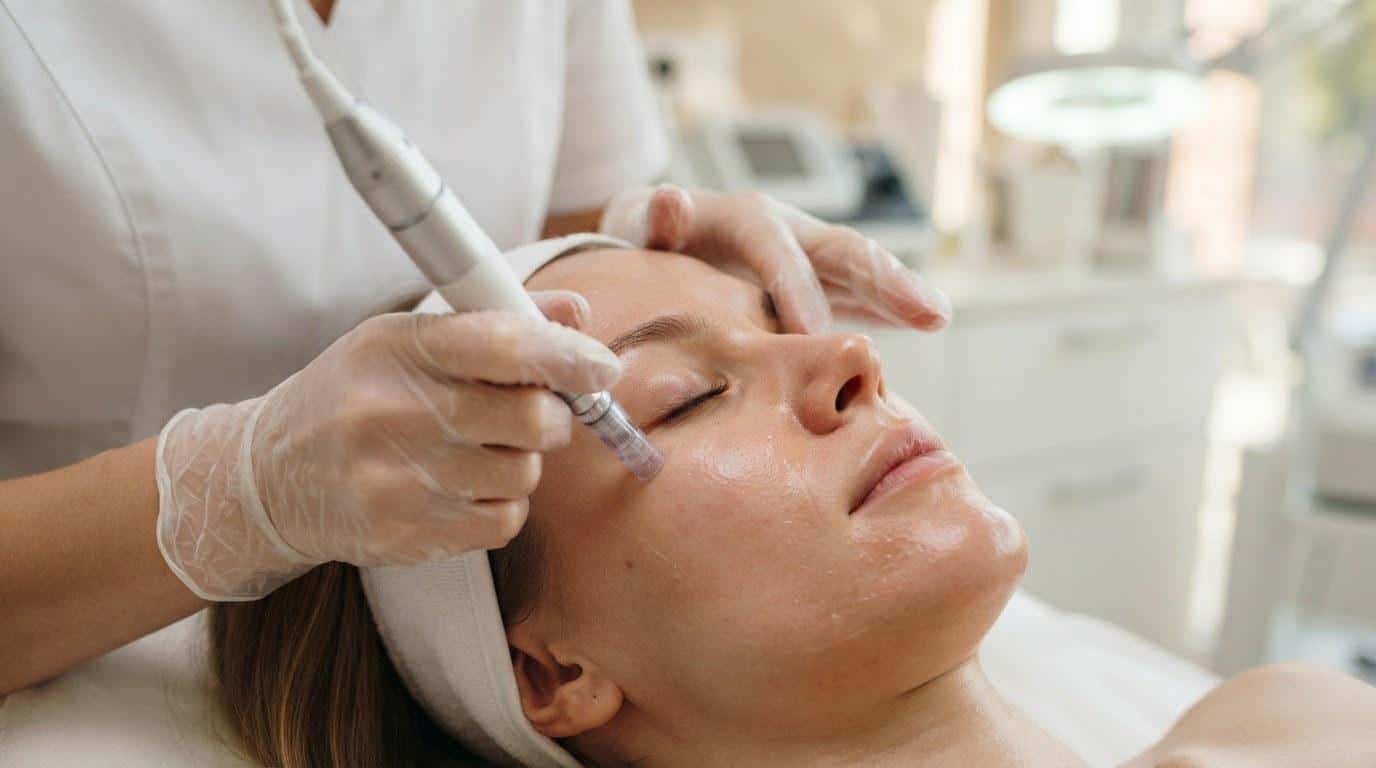
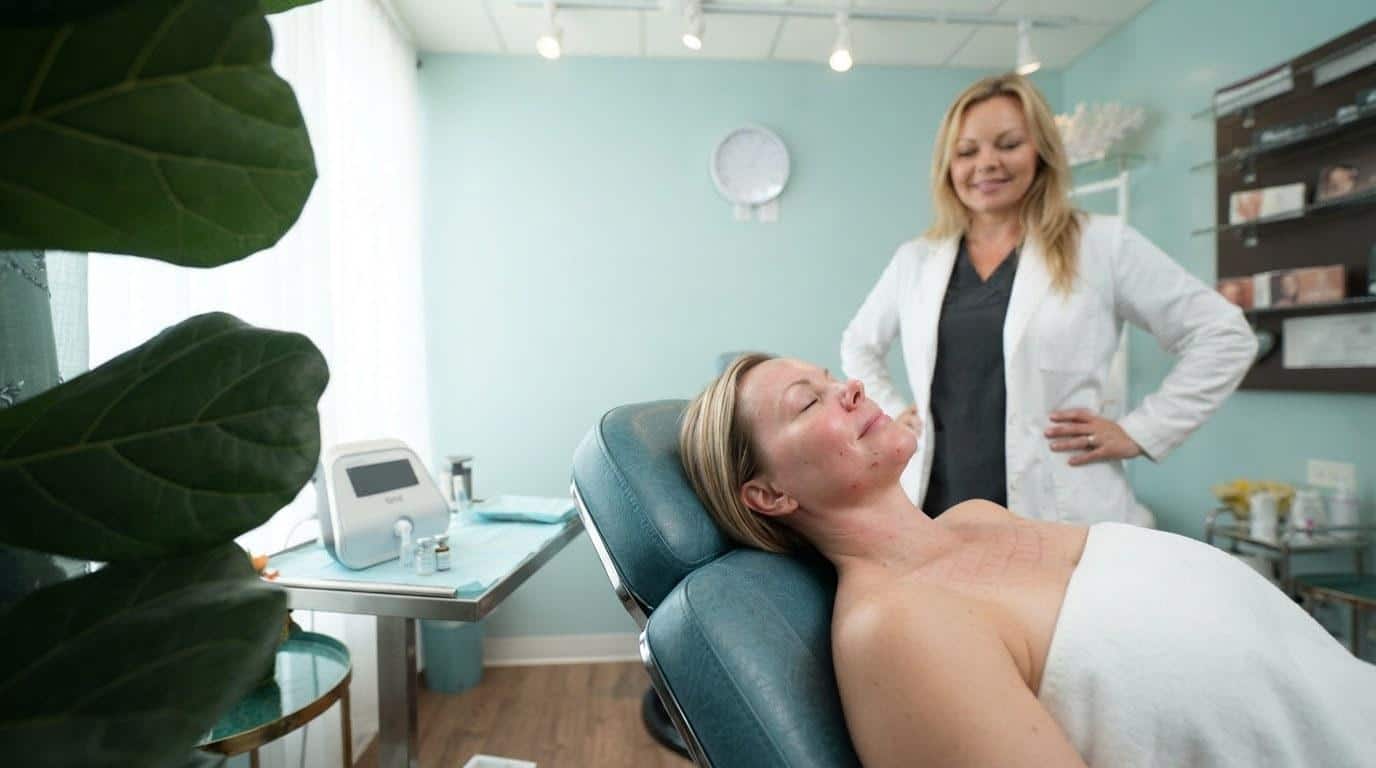
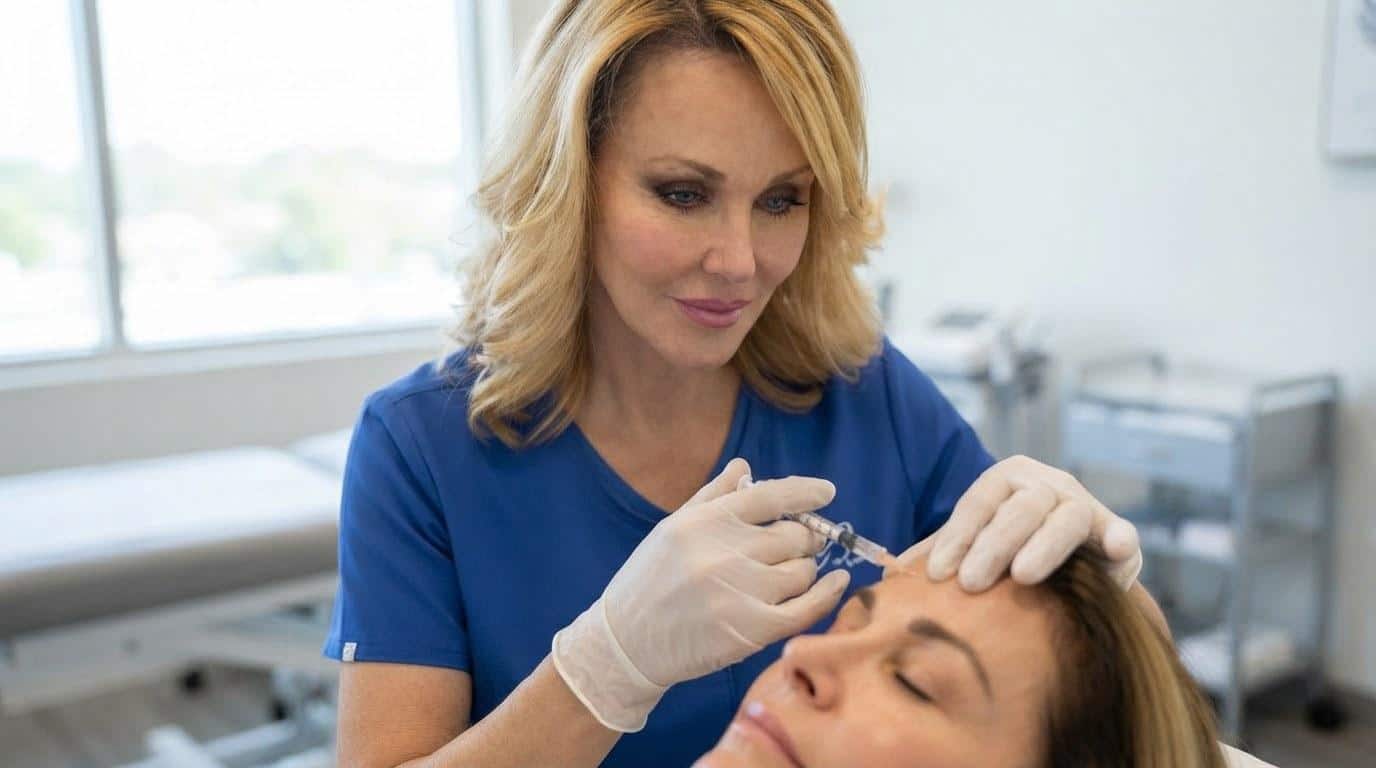
Microneedling works by creating hundreds of tiny, controlled punctures in the skin that trigger the body’s natural wound-healing response. Over the following weeks, that response produces new collagen and elastin, which fill in depressed scars and smooth the skin’s surface. This process is sometimes called collagen induction therapy, and it is one of the most well-studied approaches to reducing atrophic acne scarring.
The needles used in a professional device typically range from 0.5 mm to 2.5 mm in depth, depending on the scar’s depth and your skin’s thickness. A trained provider adjusts the needle depth for different zones of the face, going deeper over thick, scarred tissue and shallower near sensitive areas like the nose and under-eye region.
The micro-injuries also open temporary channels in the skin. When a provider applies a serum, such as hyaluronic acid or a growth-factor blend, immediately after treatment, the skin absorbs it far more effectively than it would through intact skin. This is why many professional microneedling sessions include a targeted serum application as part of the protocol.
If you have been researching this topic, this microneedling for acne scars results guide is designed to give you honest, specific answers about timelines, scar types, and what professional treatment actually involves.
Which Types of Acne Scars Respond Best to Microneedling?
Rolling scars and boxcar scars show the strongest response to microneedling, often improving by 50 to 70 percent after a full treatment series. Ice-pick scars, which are narrow and very deep, are harder to reach with standard needles and may need combination therapy.
Rolling scars and boxcar scars show the strongest response to microneedling, often improving by 50 to 70 percent after a full treatment series.
Understanding your scar type before starting treatment helps you set realistic expectations. Here is a breakdown of the most common acne scar types and how they typically respond:
- Rolling scars: Broad, wave-like depressions caused by fibrous bands pulling the skin downward. These respond very well because collagen remodeling can release the tethering and raise the surface.
- Boxcar scars: Wider, flat-bottomed depressions with defined edges. They respond well, especially when the edges are not too steep or deep.
- Ice-pick scars: Narrow, V-shaped channels that go deep into the dermis. Standard microneedling has limited reach here; a provider may recommend combining it with a chemical peel or TCA cross technique.
- Hypertrophic or raised scars: Less common from acne, these are raised above the skin. Microneedling can help soften them, but results vary more than with depressed scars.
- Post-inflammatory hyperpigmentation (PIH): Technically a discoloration, not a scar. Microneedling with a brightening serum can accelerate fading, though PIH often resolves faster than true textural scars.
Skin tone also matters. People with deeper skin tones (Fitzpatrick types IV through VI) can achieve excellent results, but they need a provider experienced with those tones to minimize the risk of post-inflammatory hyperpigmentation from the treatment itself. Our team sees this concern raised frequently and adjusts needle depth and session spacing accordingly for patients with deeper complexions.
How Many Sessions Do You Need to See Real Results?
Most patients need between 3 and 6 sessions to see significant improvement in acne scarring. Sessions are typically spaced 4 to 6 weeks apart to allow full collagen remodeling between visits. Mild scarring may respond well in 3 sessions, while moderate to severe scarring often requires 5 or 6.
It is important to understand that microneedling results are not immediate. The collagen your skin builds after each session continues to mature for up to 6 months. This means the full benefit of your final session may not be visible until half a year after treatment ends.
The full benefit of your final session may not be visible until 6 months after treatment ends, because collagen continues to mature long after each appointment.
Here is a general timeline of what most patients experience:
- Days 1 to 3: Redness and mild swelling, similar to a moderate sunburn. Skin feels tight.
- Days 4 to 7: Redness fades. Skin may feel slightly rough as the surface heals.
- Weeks 2 to 4: Early collagen production begins. Some patients notice a subtle improvement in texture.
- After session 3 (roughly week 12): Visible reduction in scar depth and smoother overall texture become apparent to most patients.
- 3 to 6 months after the final session: Peak results. Collagen remodeling is complete and the skin reaches its best post-treatment appearance.
Across our patient consultations, we consistently see that patients who complete the full recommended series of sessions and follow aftercare instructions achieve noticeably better outcomes than those who stop after one or two sessions expecting dramatic change.
What Does Microneedling Cost for Acne Scar Treatment?
In the Southern California regional market, professional microneedling sessions for acne scars typically range from $300 to $700 per session, depending on the provider’s credentials, the device used, and whether add-ons like PRP or growth-factor serums are included. A full series of 4 to 6 sessions generally falls between $1,200 and $4,200 in this market.
Several factors move the price within that range:
- Device type: Medical-grade devices with adjustable needle depth and motorized pens cost more to operate than basic rollers, and they deliver more consistent results.
- Add-on serums: PRP (platelet-rich plasma) drawn from your own blood can be applied during the session to boost collagen production. This typically adds $150 to $400 per session.
- Provider credentials: A licensed medical provider or registered nurse in a medical spa setting commands higher fees than an esthetician using a shallower device, and for acne scar depth, the medical-grade device matters.
- Treatment area size: Full-face treatment costs more than spot treatment of a specific scar zone.
- Number of sessions bundled: Many providers offer package pricing for a series, which reduces the per-session cost by 10 to 20 percent compared to paying individually.
Microneedling for acne scars is considered a cosmetic procedure and is not covered by health insurance. Always request a written quote that specifies the device, needle depth range, and any serums included before committing to a series. For a personalized quote based on your scar type and goals, call Beauty Solutions Med Spa at (818) 860-0100.
| Cost Factor | Lower End | Higher End |
|---|---|---|
| Single session (face only) | $300 | $700 |
| PRP add-on per session | $150 | $400 |
| Full series of 4 sessions | $1,200 | $2,800 |
| Full series of 6 sessions | $1,800 | $4,200 |
Prices above reflect typical regional market ranges in Southern California as of 2025. Actual pricing depends on the specific provider, device, and treatment plan.
What Should You Do Before and After Each Session?
Proper preparation and aftercare directly affect how well your skin heals and how much collagen it builds. Skipping aftercare steps is one of the most common reasons patients are disappointed with their results.
Before Your Session
- Stop using retinoids (retinol, tretinoin) at least 5 to 7 days before treatment. These thin the skin and increase sensitivity.
- Avoid active acne breakouts. Needling over active pustules can spread bacteria and worsen inflammation. Most providers will reschedule if you have a significant flare.
- Stay out of direct sun and avoid tanning for at least 2 weeks prior. Treating sunburned or deeply tanned skin raises the risk of hyperpigmentation.
- Do not take anti-inflammatory medications like ibuprofen for 3 to 5 days before your session. Inflammation is part of the healing process you want to trigger.
- Arrive with clean, makeup-free skin. Your provider will apply a topical numbing cream about 30 to 45 minutes before the procedure begins.
After Your Session
- Keep skin clean and moisturized for the first 72 hours. Use only gentle, fragrance-free products your provider recommends.
- Avoid makeup for at least 24 hours, and ideally 48 hours, to keep the microchannels clean while they close.
- Apply SPF 30 or higher every morning starting the day after treatment. New collagen is more vulnerable to UV damage, and sun exposure can cause hyperpigmentation on healing skin.
- Do not use active ingredients like vitamin C serums, AHAs, BHAs, or retinoids for at least 5 to 7 days post-treatment.
- Avoid intense exercise, saunas, and steam rooms for 48 hours. Heat and sweat can irritate healing skin and introduce bacteria.
How Does Professional Microneedling Compare to At-Home Rollers?
Professional microneedling and at-home derma rollers are not the same treatment. Professional devices reach depths of 1.0 to 2.5 mm with medical-grade precision, while most at-home rollers are limited to 0.2 to 0.5 mm, which is not deep enough to stimulate meaningful collagen production for true acne scarring.
Professional devices reach depths of 1.0 to 2.5 mm with medical-grade precision, while most at-home rollers are limited to 0.2 to 0.5 mm, which is not deep enough to stimulate meaningful collagen production for true acne scarring.
At-home rollers can support product absorption and improve mild surface texture, but they are not a substitute for clinical treatment of acne scars. Here is a side-by-side look at the key differences:
| Feature | Professional Microneedling | At-Home Derma Roller |
|---|---|---|
| Needle depth | 0.5 mm to 2.5 mm (adjustable) | 0.2 mm to 0.5 mm (fixed) |
| Collagen stimulation for scars | Strong, clinically documented | Minimal at safe home depths |
| Precision and control | Provider adjusts per zone | User-applied, uniform pressure |
| Numbing cream | Yes, applied before treatment | Generally not used |
| Infection risk | Low, sterile single-use cartridges | Higher if roller not replaced regularly |
| Results for acne scars | Significant with full series | Subtle surface improvement only |
If you are researching how often to microneedle at home, the general guidance for at-home rollers is once every 1 to 2 weeks at depths of 0.2 to 0.3 mm. Going deeper at home without proper training raises the risk of tearing skin, spreading bacteria, and causing hyperpigmentation. For actual acne scar reduction, professional treatment is the evidence-backed path.
As a practical reference point for this microneedling for acne scars results guide: a 2022 review published in the National Library of Medicine found that professional microneedling produced clinically significant improvement in atrophic acne scars in the majority of study participants, with rolling and boxcar scars showing the strongest response. At-home devices were not included in the clinical evidence base.
The U.S. Food and Drug Administration classifies microneedling devices used at depths beyond 0.3 mm as medical devices, which is why they are available only to licensed professionals. This distinction matters when evaluating the difference between what a provider can do and what a consumer roller can safely achieve at home.
For patients in Southern California interested in a treatment that bridges microneedling and thermal energy, Tixel Skin Rejuvenation is another option offered at Beauty Solutions Med Spa that may complement or, in some cases, replace traditional microneedling depending on your skin’s needs. A consultation helps determine the right approach for your specific scar pattern.
The American Academy of Dermatology also notes that microneedling is generally safe for most skin tones when performed by a trained provider, making it one of the more inclusive resurfacing options available compared to laser treatments that carry higher pigmentation risk for darker skin.
Ready to Start Your Acne Scar Treatment?
Acne scars can be significantly improved with the right treatment plan, realistic expectations, and a provider who understands your skin. A full professional microneedling series of 3 to 6 sessions, spaced 4 to 6 weeks apart, gives most patients a 50 percent or greater reduction in scar depth and texture over the course of 6 to 12 months.
Beauty Solutions Med Spa in Woodland Hills offers professional microneedling for acne scars using medical-grade devices calibrated for your scar type and skin tone. The team provides a thorough consultation before any treatment begins so you understand exactly what to expect and how many sessions fit your goals.
Schedule your consultation today. Call (818) 860-0100 to speak with the team and get a personalized treatment plan for your acne scars. Beauty Solutions Med Spa serves patients across Southern California and the greater Los Angeles area.
Related Articles
Frequently Asked Questions
How long does it actually take to see results from microneedling for acne scars?
Most patients notice visible improvement in scar texture after their third session, which is typically around week 12 of a standard treatment plan. The full results, however, continue to develop for 3 to 6 months after the final session as collagen matures. Patience is important because the process is gradual and cumulative.
How many microneedling sessions do I need for acne scars?
Most people with moderate acne scarring need between 4 and 6 sessions spaced 4 to 6 weeks apart. Mild scarring may respond well in 3 sessions, while deep or widespread scarring can require more. A provider should assess your specific scar types during a consultation before recommending a number.
When can I wear makeup after a microneedling session?
Most providers recommend waiting at least 24 hours before applying any makeup, and ideally 48 hours. The microchannels created during treatment are temporarily open, and cosmetics can introduce bacteria or irritants into healing skin. Mineral-based makeup is generally the safest first option when you do return to wearing it.
Does microneedling hurt, and what does the recovery feel like?
A topical numbing cream is applied 30 to 45 minutes before treatment, which makes the procedure tolerable for most patients. Afterward, the skin feels similar to a moderate sunburn for 24 to 72 hours, with redness and mild swelling. Most people return to normal activities within 2 to 3 days.
Is professional microneedling worth it compared to using a derma roller at home?
For actual acne scar reduction, professional microneedling is significantly more effective than at-home rollers. Professional devices reach depths of 1.0 to 2.5 mm, which is the range needed to stimulate meaningful collagen production in scarred tissue. At-home rollers are limited to 0.2 to 0.5 mm, which is not deep enough to address true textural scarring.
