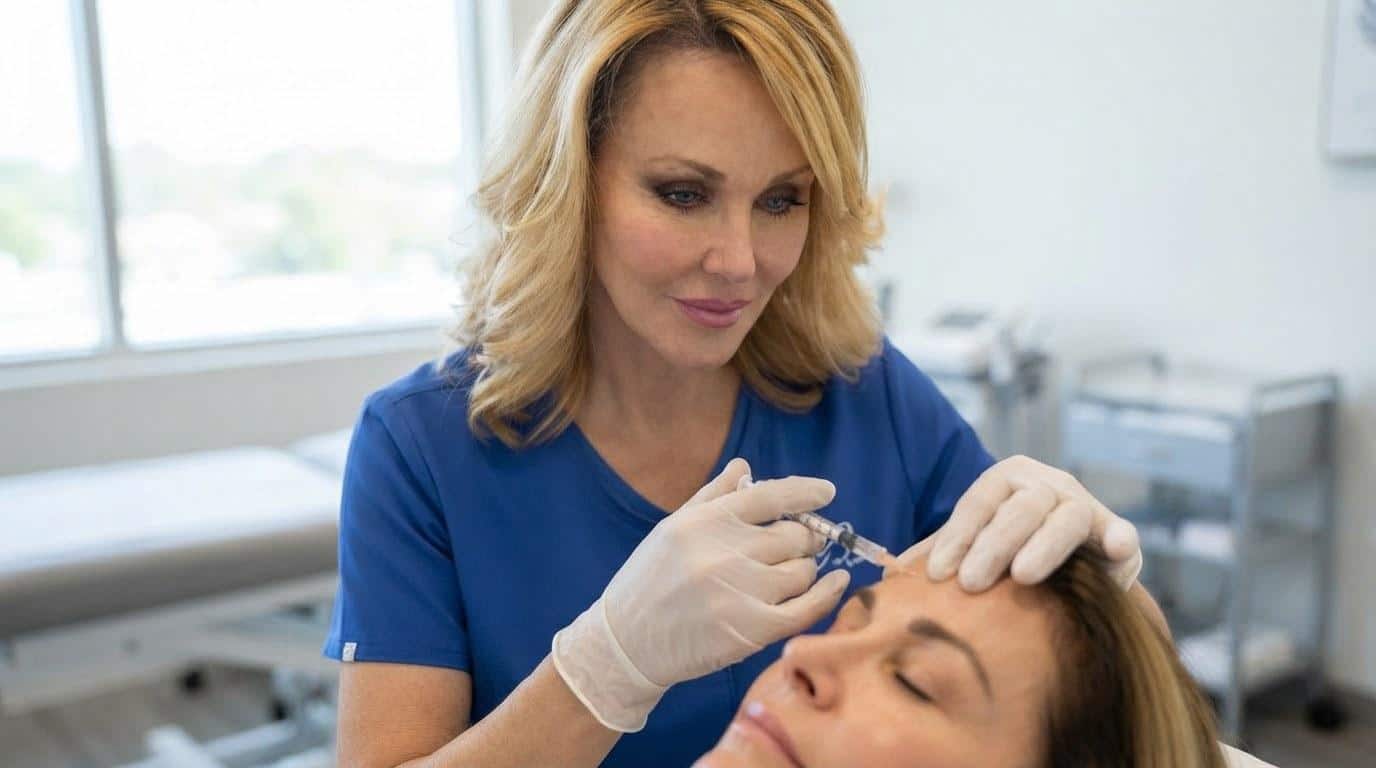



Dysport vs Xeomin: Side-by-Side Look at Two Popular Wrinkle Relaxers
Dysport vs Xeomin: Side-by-Side Look at Two Popular Wrinkle Relaxers
Dysport and Xeomin are both proven wrinkle relaxers, but they work a little differently and suit different goals. This guide breaks down everything you need to know before choosing.

What Are Dysport and Xeomin?
Dysport and Xeomin are both FDA-approved neuromodulators made from botulinum toxin type A. They temporarily relax the muscles that cause expression lines, smoothing wrinkles on the forehead, around the eyes, and between the brows. Neither is a filler. They work by blocking the nerve signal that tells a muscle to contract.
Dysport was developed by Ipsen Biopharmaceuticals and has been used in Europe since the early 1990s. It received FDA approval in the United States in 2009. Xeomin, made by Merz Aesthetics, earned its FDA approval in 2011. Both have well over a decade of real-world safety data behind them.
Botox is the most recognized name in this category, but Dysport and Xeomin have built strong track records of their own. Many patients switch to one of these two after years on Botox and find they prefer the results. Understanding how each formula differs helps you have a smarter conversation with your injector.

How Does Each Formula Work Differently?
The core active ingredient in both products is botulinum toxin type A, but the proteins surrounding that molecule differ, and that changes how each formula behaves under the skin. Dysport contains accessory proteins that cause it to diffuse, or spread, a bit more widely from the injection point. Xeomin is stripped of those accessory proteins entirely, earning it the nickname the “naked” neuromodulator.
Because Xeomin has no complexing proteins, some researchers believe the immune system is less likely to build resistance to it over time. This is relevant for people who have received many rounds of neuromodulator treatment and feel their results are getting shorter or weaker. A 2020 review published in the journal Dermatology and Therapy noted that protein-free formulas may reduce the risk of neutralizing antibody formation, though this remains an area of ongoing study.
Dysport’s wider diffusion is not a flaw. For large, flat treatment areas like the forehead, it can mean fewer injection points are needed to cover the zone evenly. In our consultations, we often notice that patients with stronger forehead muscle activity respond particularly well to Dysport’s natural spread across that broader surface.
Xeomin’s more targeted behavior makes it a precise tool for smaller or more defined areas where you want the product to stay exactly where it is placed. The tradeoff is that placement accuracy matters even more with Xeomin than with a product that diffuses.
Dysport vs Xeomin: Head-to-Head Comparison
Looking at Dysport vs Xeomin side by side shows that they share the same core mechanism but differ meaningfully in formula, dosing, onset, and ideal use cases. The table below summarizes the key differences.
| Factor | Dysport | Xeomin |
|---|---|---|
| Manufacturer | Ipsen Biopharmaceuticals | Merz Aesthetics |
| FDA Approval (cosmetic) | 2009 | 2011 |
| Formula type | Toxin with accessory proteins | Purified toxin, no accessory proteins |
| Typical onset | 2 to 3 days for many patients | 3 to 5 days for most patients |
| Full results visible | Around day 7 to 10 | Around day 10 to 14 |
| Duration of results | 3 to 4 months on average | 3 to 4 months on average |
| Diffusion pattern | Spreads more widely from injection site | Stays closer to injection site |
| Dosing unit ratio vs Botox | Roughly 2.5 to 3 Dysport units per 1 Botox unit | Roughly 1:1 with Botox units |
| Antibody resistance risk | Possible with repeated use | Potentially lower due to pure formula |
| Storage before reconstitution | Requires refrigeration | Stable at room temperature up to 36 months |
| Best suited for | Larger treatment areas, broader diffusion goals | Precise, targeted areas; patients with prior resistance |
| Available at Beauty Solutions Med Spa | Yes | Yes |
One practical note on dosing: Dysport is measured in its own unit system. A typical glabellar (between-brow) treatment with Dysport uses around 50 units, while the same area with Xeomin uses around 20 units. This does not mean Dysport is weaker. The units are simply not interchangeable across brands, and experienced injectors account for this automatically.

Which Areas Can Each Treat?
Both Dysport and Xeomin are FDA-approved for the glabellar lines, the vertical creases between the eyebrows often called “11 lines.” Skilled injectors also use both products off-label for a range of other areas based on clinical evidence and patient outcomes.
Common treatment areas for each product include:
- Forehead lines: Horizontal creases across the upper forehead respond well to both, though Dysport’s diffusion can make coverage more even with fewer punctures.
- Crow’s feet: The fine lines that fan out from the outer corners of the eyes are a popular target. Dysport for crow’s feet is widely used because the lateral eye area is relatively flat and benefits from moderate spread. Xeomin works well here too when precise placement is the priority.
- Brow lift: Small amounts placed under the brow tail can create a subtle lift. Xeomin’s targeted behavior makes it a precise choice for this delicate zone.
- Bunny lines: The diagonal lines on the sides of the nose that appear when you scrunch your face respond to either product in small doses.
- Lip lines: Vertical lines above the upper lip, sometimes called smoker’s lines, can be softened with careful placement of either product.
- Neck bands (platysmal bands): The vertical cords that appear in the neck with age can be relaxed with either neuromodulator in a treatment sometimes called a Nefertiti lift.
- Masseter (jaw) slimming: Injecting the large chewing muscle can soften a wide jaw and reduce teeth grinding. Both products are used for this purpose.
- Hyperhidrosis (excessive sweating): Dysport is used off-label in the underarms, palms, and soles for this condition, though Botox holds the primary FDA approval for hyperhidrosis.
The choice between the two for any given area often comes down to the injector’s assessment of your muscle strength, skin thickness, and the size of the zone being treated rather than a hard rule about which product goes where.
What Does Treatment Cost and What Affects the Price?
Neuromodulator pricing in the California market is typically quoted either per unit or per treatment area, and the total depends on how many units your muscles require to achieve the desired result. Both Dysport and Xeomin fall within a similar overall investment range when the unit differences are accounted for correctly.
In the Southern California regional market, Dysport injections are generally priced per unit, with per-unit rates typically lower than Botox on a unit basis. Because Dysport requires more units per area, the total treatment cost is usually comparable to Botox or Xeomin when treating the same zones. Xeomin is often priced similarly to Botox on a per-unit basis, and a standard glabellar treatment with Xeomin typically uses 15 to 25 units depending on muscle mass.
Several factors move the final price up or down:
- Number of areas treated: Treating only crow’s feet costs less than combining the forehead, glabella, and crow’s feet in one session.
- Muscle strength: Patients with stronger facial muscles often need more units to achieve the same result as someone with lighter muscle activity.
- Provider experience and setting: A board-certified provider at a licensed medical spa typically charges more than a basic injector, and the difference in outcome often justifies it.
- Frequency of treatment: Most patients return every 3 to 4 months. Some providers offer loyalty pricing or package rates for repeat patients.
- Geographic market: Rates in metropolitan Southern California markets tend to run higher than national averages, reflecting local overhead and demand.
For an accurate quote based on your specific goals and muscle assessment, request a custom consultation. Contact Beauty Solutions Med Spa at (818) 860-0100 to discuss your options and get personalized pricing.
How Do You Choose Between Dysport and Xeomin?
The best way to choose between Dysport and Xeomin is to have a qualified injector assess your facial anatomy, muscle activity, and treatment history before recommending one over the other. That said, several patterns help guide the decision.
Consider Dysport if:
- You want results to appear as quickly as possible. Many patients see initial softening within 2 to 3 days.
- Your primary concern is the forehead or another broad, flat area where even diffusion is an advantage.
- You have tried Botox and found it worked well, since Dysport behaves similarly but with a slightly different spread pattern.
- You are treating crow’s feet and want a natural softening across the eye area.
Consider Xeomin if:
- You have received many rounds of neuromodulator treatment over the years and feel your results are diminishing. Xeomin’s protein-free formula may work better for patients who have developed antibody resistance.
- You want a very precise, targeted result in a small or sensitive area where spread could affect nearby muscles.
- You prefer a formula with minimal additives and a clean ingredient profile.
- Your injector recommends it based on your facial structure and muscle pattern.
It is also worth knowing that switching between neuromodulators is common and safe. Many patients rotate between products across treatment cycles to see which delivers the best result for their particular anatomy. There is no medical reason you must stay with one product forever.
As of 2026, all four major neuromodulators available in the United States, including Dysport and Xeomin, carry FDA approval for cosmetic use and have established safety profiles documented by the FDA. The key variable is not the product alone but the skill and judgment of the person administering it.
In our consultations, we find that patients who come in having done their research, like comparing Dysport vs Xeomin in detail, are better able to describe what they want and what they have experienced before, which leads to a more tailored treatment plan from the first session.

The FDA recommends that all botulinum toxin treatments be performed by a licensed healthcare professional who can assess your medical history and tailor the dosage. California providers must hold a valid license through the appropriate state medical board, and medical spas operate under physician oversight as required by state law. You can verify a provider’s license status through the California Medical Board.
Ready to Find Your Best Match? Talk to Beauty Solutions Med Spa
Both Dysport and Xeomin are excellent options, and the right one for you depends on your specific facial anatomy, treatment history, and aesthetic goals. A qualified injector can assess all of those factors and recommend the product and dosage that will give you the most natural, lasting result.
Beauty Solutions Med Spa offers Dysport, Xeomin, and the full range of FDA-approved neuromodulators so your treatment plan is never limited to a single option. Whether you are exploring wrinkle relaxers for the first time or looking to refine your results after years of treatment, the team can help you find the right fit.
Schedule your consultation with Beauty Solutions Med Spa, serving patients across Southern California. Call (818) 860-0100 to book your appointment and get a personalized recommendation based on your goals.
Frequently Asked Questions
How is Dysport different from Xeomin?
Dysport contains accessory proteins that cause it to spread a bit more from the injection point, while Xeomin is a purified formula with no added proteins, so it stays closer to where it is placed. Dysport often shows results within 2 to 3 days, while Xeomin typically takes 3 to 5 days for initial results to appear. Both last about 3 to 4 months on average. The best choice depends on your treatment area and how your body has responded to neuromodulators before.
Is Dysport or Xeomin better for crow's feet?
Both work well for crow's feet, and the choice comes down to your injector's assessment of your eye area and muscle strength. Dysport's moderate diffusion can create a naturally even softening across the fan-shaped lines around the outer eye. Xeomin is a good option when very precise placement is needed or when a patient has shown resistance to other neuromodulators. A consultation with a qualified provider is the best way to decide.
How long does Dysport last compared to Xeomin?
Both Dysport and Xeomin typically last 3 to 4 months for most patients. Individual results vary based on muscle strength, metabolism, the number of units used, and how often you have been treated. Some patients find that one product holds slightly longer for them than the other, which is why it can be worth trying both over time to see which fits your biology better.
Can Dysport or Xeomin cause resistance over time?
Repeated exposure to any botulinum toxin product can, in rare cases, lead the immune system to produce antibodies that reduce the product's effectiveness. Xeomin's protein-free formula is thought to carry a lower risk of this because the accessory proteins in other formulas are believed to play a role in triggering that immune response. If you feel your current neuromodulator is not lasting as long as it used to, switching to Xeomin is worth discussing with your provider.
How do I know which neuromodulator is right for me?
The best way to decide is through a face-to-face consultation with a licensed injector who can assess your facial anatomy, muscle activity, skin quality, and treatment history. Factors like the size of the area you want to treat, how strong your muscles are, and whether you have had neuromodulators before all shape the recommendation. Beauty Solutions Med Spa offers consultations to help you find the right product and dosage for your goals. Call (818) 860-0100 to get started.