


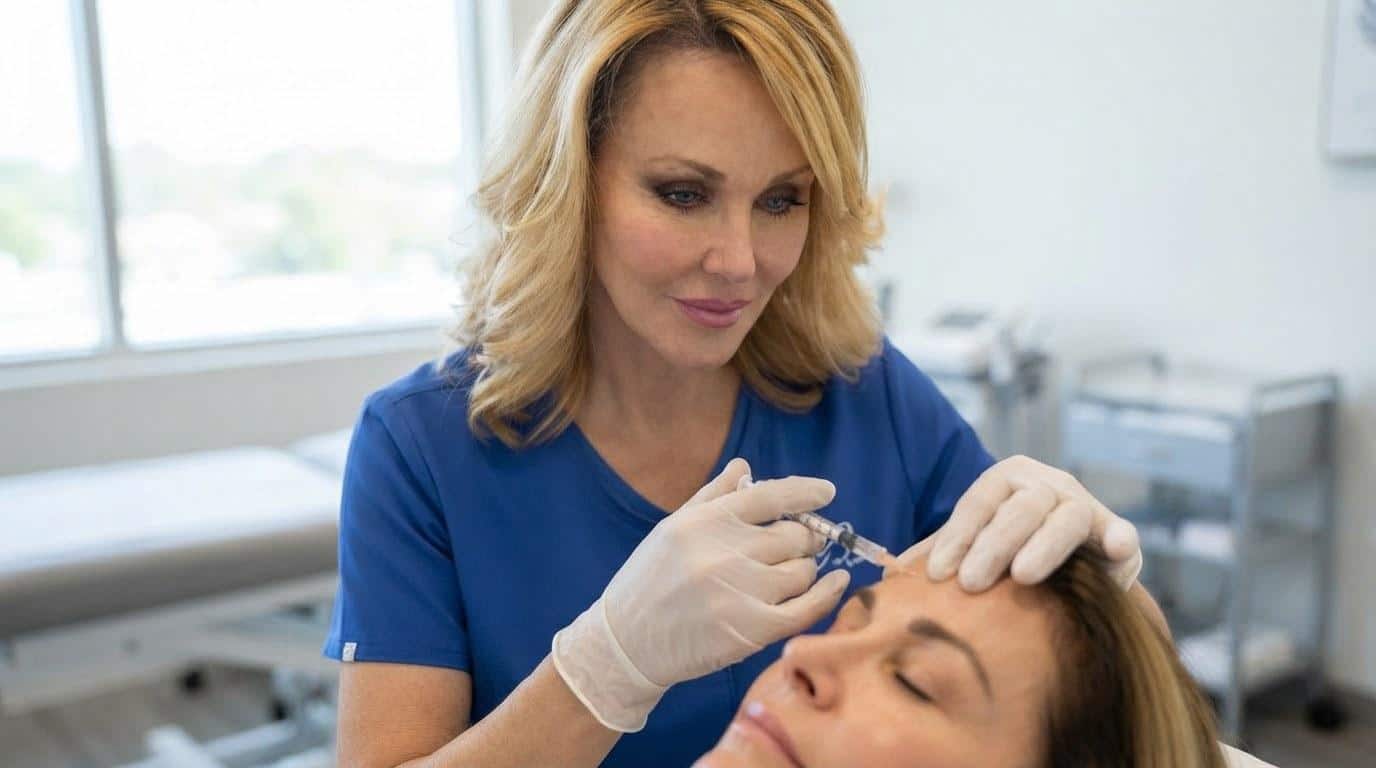
Dysport for Crow’s Feet: How It Compares to Botox for That Area
Dysport for Crow's Feet: How It Compares to Botox for That Area
Dysport and Botox both soften crow's feet, but they behave differently around the eyes. This guide breaks down the key differences so you know what to expect before your appointment.
What Is Dysport and How Does It Work on Crow’s Feet?
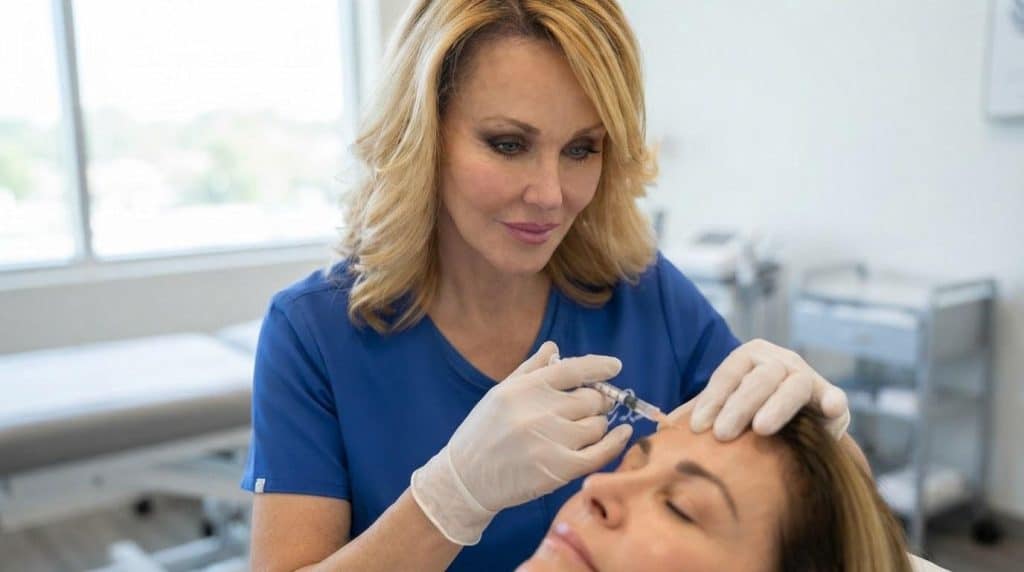
Dysport is an FDA-approved botulinum toxin type A injection that temporarily relaxes the muscles responsible for dynamic wrinkles. For crow’s feet, it targets the orbicularis oculi, the circular muscle that contracts every time you squint or smile. When that muscle is gently relaxed, the radiating lines at the outer corners of the eyes soften or disappear for several months.
Dysport was first approved in the United States in 2009 for moderate to severe glabellar lines (the lines between the brows), and its use for crow’s feet has grown steadily since then as injectors became more familiar with its spread pattern. It is manufactured by Galderma and contains a slightly different protein load than daxxify-vs-jeuveau-which-neuromodulator-is-right-for-you-in-2026/” title=”Botox vs. Dysport vs. Daxxify vs. Jeuveau: Which Neuromodulator Is Right for You in 2026?”>Botox, which affects how it diffuses through tissue.
The active ingredient in all botulinum toxin type A products works the same way at the cellular level: it blocks the nerve signal that tells a muscle to contract. The differences between products come down to formulation, dilution, and how the protein complex behaves once it is injected. Those differences matter most in areas like the outer eye, where precision and spread both play a role.

How Does Dysport Compare to Botox for Crow’s Feet?
Dysport tends to diffuse over a slightly wider area than Botox after injection, and crow’s feet is one of the treatment zones where that property can work in a patient’s favor. The fan-shaped spread of lines around the eye often benefits from a product that distributes more evenly across the zone rather than staying tightly localized.
Botox (onabotulinumtoxinA, made by AbbVie) has a longer track record in the United States and is still the most recognized name in the category. Both products are safe and effective when administered by a trained injector. The real differences come down to four factors: onset speed, spread, dosing units, and duration.
| Factor | Dysport | Botox |
|---|---|---|
| Onset speed | Results often visible in 2 to 3 days | Results typically appear in 3 to 5 days |
| Spread pattern | Wider diffusion; covers broader muscle zones | More localized; precise placement required |
| Unit dosing | Higher unit count per area (units are smaller) | Lower unit count per area (units are larger) |
| Duration around eyes | Typically 3 to 4 months | Typically 3 to 4 months |
| FDA approval status | FDA-approved for glabellar lines; widely used off-label for crow’s feet | FDA-approved for crow’s feet since 2013 |
| Protein load | Lower complexing protein load per unit | Higher complexing protein load per unit |
| Best fit | Any patient seeking natural, smooth results across the eye area | Any patient seeking precise, targeted results |
One practical note on units: Dysport and Botox units are not interchangeable. The general conversion ratio used in clinical practice is roughly 2.5 to 3 Dysport units for every 1 Botox unit. This does not mean Dysport is less potent; it means the unit sizes are defined differently by each manufacturer. Your injector will quote you a total unit count based on whichever product you choose.
For crow’s feet specifically, many injectors find that Dysport’s wider diffusion reduces the number of injection points needed to cover the full fan of lines. Fewer needle sticks in a sensitive area around the eye can mean a more comfortable experience for patients who are needle-shy.

How Many Units of Dysport Do You Need for Crow’s Feet?
Most patients need between 20 and 30 Dysport units per side for crow’s feet, for a typical total of 40 to 60 units across both eyes. The exact count depends on the depth of the lines, the strength of the underlying muscle, and how much expression the patient wants to preserve.
Injectors generally use 2 to 4 injection points per side in the crow’s feet zone. Because Dysport spreads more than Botox, fewer points are often sufficient to cover the full treatment area. A lighter touch preserves natural expression while still softening the lines that bother most patients.
Our team sees a consistent pattern: patients who have strong orbicularis oculi muscles from years of squinting in bright sunlight often need doses toward the higher end of that range, while patients with fine, early-stage crow’s feet typically do well at the lower end. We treat a significant number of patients in Southern California where year-round sun exposure accelerates crow’s feet formation, and the 40-to-60-unit range covers the vast majority of cases we see.
- Mild crow’s feet: 20 to 30 total Dysport units across both sides.
- Moderate crow’s feet: 30 to 50 total units, with 2 to 3 injection points per side.
- Deep or well-established lines: 50 to 60 units; some patients also benefit from a small amount of dermal filler to address static lines that remain at rest.
- Combination treatments: Dysport paired with a skin-resurfacing treatment such as microneedling or a VI Peel can address both dynamic and surface-texture components of crow’s feet.
Always get a personalized unit recommendation during a consultation. Online estimates are useful for budgeting, but the right dose is determined by watching your muscle movement in person, not by a formula.
How Long Does Dysport Last Around the Eyes?
Dysport results for crow’s feet typically last 3 to 4 months, which is consistent with Botox in the same area. Some patients report that Dysport appears to kick in about a day or two faster, though both products reach full effect by the 2-week mark.
Duration is influenced by several factors beyond which product you choose. Metabolism plays a large role: patients who exercise intensely several days a week or who have faster metabolisms often find that any neurotoxin wears off closer to the 3-month mark. First-time patients sometimes notice shorter duration on their initial treatment as the muscle is still building a response pattern.
Repeat treatments scheduled consistently every 3 to 4 months can lead to a gradual weakening of the target muscle over time. Some long-term patients find they need fewer units or less frequent touch-ups after 2 to 3 years of regular treatment, because the muscle has become conditioned to contracting less forcefully.
- First treatment: Results often last 10 to 12 weeks as the body adjusts.
- Ongoing maintenance: Duration typically extends to 3 to 4 months with consistent scheduling.
- High-activity patients: Plan for the shorter end of the range and schedule accordingly.
- Sun exposure: Chronic UV exposure accelerates skin aging and can make crow’s feet return faster; daily SPF 30 or higher is strongly recommended by the American Academy of Dermatology.
What Does Dysport Treatment for Crow’s Feet Actually Feel Like?
Most patients describe Dysport injections for crow’s feet as a quick pinch lasting less than a second per injection point. The entire treatment for both sides of the face typically takes under 15 minutes from the first injection to the last.
A topical numbing cream can be applied 20 to 30 minutes before the session to reduce discomfort, though many patients skip it because the sensation is brief. Ice is also commonly used immediately before each injection point to further minimize any sting.
After the injections, patients can expect mild redness or small raised spots at each injection site. These typically resolve within 20 to 30 minutes. Bruising is possible in the thin skin around the eyes and may last 3 to 5 days. Avoiding blood thinners like aspirin, ibuprofen, fish oil, and alcohol for at least 48 hours before treatment reduces bruising risk.

Post-treatment instructions for Dysport around the eyes are straightforward:
- Stay upright for at least 4 hours after treatment. Do not lie flat.
- Avoid rubbing or pressing on the treated area for 24 hours.
- Skip strenuous exercise for the rest of the treatment day.
- Avoid saunas, steam rooms, and hot yoga for 24 to 48 hours.
- Do not schedule a facial, microdermabrasion, or any skin treatment on the same day.
Results begin to appear within 2 to 3 days for most patients and reach their full effect by day 14. A follow-up appointment at the 2-week mark gives your injector a chance to assess the result and add a small touch-up if any area needs more coverage.
Who Is a Good Candidate for Dysport Injections Near the Eyes?
Adults of any age who notice crow’s feet when they smile or squint, and who want a non-surgical way to soften those lines, are generally good candidates for Dysport injections. The treatment works best on dynamic lines, meaning lines that appear with muscle movement, rather than deep static creases that are visible even at rest.
Dysport is not appropriate for patients who are pregnant or breastfeeding, have a known allergy to botulinum toxin or cow’s milk protein (Dysport contains a trace of cow’s milk protein, unlike some other neurotoxins), or have a neuromuscular disorder such as myasthenia gravis or Lambert-Eaton syndrome. A thorough medical history review at your consultation will confirm whether Dysport is the right choice for you.
According to FDA guidance on botulinum toxin products, patients should always disclose all medications and supplements to their injector before treatment, as certain antibiotics and muscle relaxants can interact with the product.
Patients who are good candidates typically share these characteristics:
- Dynamic crow’s feet: Lines that appear when smiling or squinting but are minimal at rest.
- Good skin elasticity: Skin that still has some rebound; very lax skin may need additional skin-tightening treatments alongside neurotoxin.
- Realistic expectations: Understanding that Dysport softens lines significantly but does not erase every trace, especially in patients with deep static creases.
- No contraindications: No allergy to botulinum toxin, no neuromuscular disease, and not pregnant or nursing.
- Commitment to maintenance: Willingness to return every 3 to 4 months to maintain results.
Across our injections for crow’s feet, we find that patients in their 30s through 50s make up the largest share of Dysport appointments in this zone. However, patients in their late 20s who notice early dynamic lines often benefit from starting treatment before lines deepen, and patients in their 60s and beyond see meaningful softening even if some static component remains. The American Society of Plastic Surgeons notes that botulinum toxin treatments are among the most commonly performed minimally invasive cosmetic procedures in the United States, with millions of treatments performed each year across all age groups.
Ready to Smooth Crow’s Feet? Schedule Your Consultation
If you are researching dysport for crow’s feet and want a clear, honest assessment of whether it is the right option for your skin, a one-on-one consultation with a trained injector is the best next step. No article can replace the evaluation of your actual muscle movement, skin quality, and treatment goals.
Beauty Solutions Med Spa offers Dysport injections alongside a full range of neurotoxin options including Botox, Daxxify, Jeuveau, and Xeomin, so your injector can recommend the product that genuinely fits your anatomy and goals rather than defaulting to a single option. Serving patients across Southern California, the team at Beauty Solutions Med Spa brings a personalized approach to every crow’s feet consultation.
Call (818) 860-0100 to schedule your consultation. Come in with your questions, and leave with a clear treatment plan tailored to what you actually want to see in the mirror.
Related Articles




Frequently Asked Questions
Is Dysport or Botox better for crow's feet?
Both Dysport and Botox produce excellent results for crow's feet, and the better choice depends on your anatomy and goals. Dysport tends to spread slightly more after injection, which can be an advantage in the wider crow's feet zone. Botox stays more localized and has a slightly longer track record for this specific area. An experienced injector can evaluate your muscle strength and skin type and recommend which product fits your situation best.
How long does Dysport last for crow's feet?
Dysport typically lasts 3 to 4 months in the crow's feet area. First-time patients often see results closer to 10 to 12 weeks, while patients who maintain regular treatment schedules may find results extend toward the 4-month mark over time. Metabolism, activity level, and sun exposure all influence how quickly the product wears off.
How many units of Dysport do I need for crow's feet?
Most patients need between 40 and 60 total Dysport units to treat crow's feet on both sides. Mild cases may need as few as 20 to 30 units, while patients with stronger muscles or deeper lines may need closer to 60. Keep in mind that Dysport units are not the same size as Botox units, so the numbers are not directly comparable between the two products.
What is Dysport and how is it different from other neurotoxins?
Dysport is an FDA-approved botulinum toxin type A injection made by Galderma. Like Botox, Jeuveau, Xeomin, and Daxxify, it works by blocking the nerve signal that causes a muscle to contract, which smooths dynamic wrinkles. Dysport is formulated with a lower complexing protein load and tends to diffuse more widely than some competing products, which can be useful in broader treatment areas like crow's feet.
Does getting Dysport injections around the eyes hurt?
Most patients describe the sensation as a brief pinch lasting less than a second at each injection point. The full crow's feet treatment on both sides usually takes under 15 minutes. Topical numbing cream or ice applied before the injection can reduce discomfort further. Mild redness or small bumps at the injection sites are normal and typically resolve within 30 minutes.
